(866) 865-1552
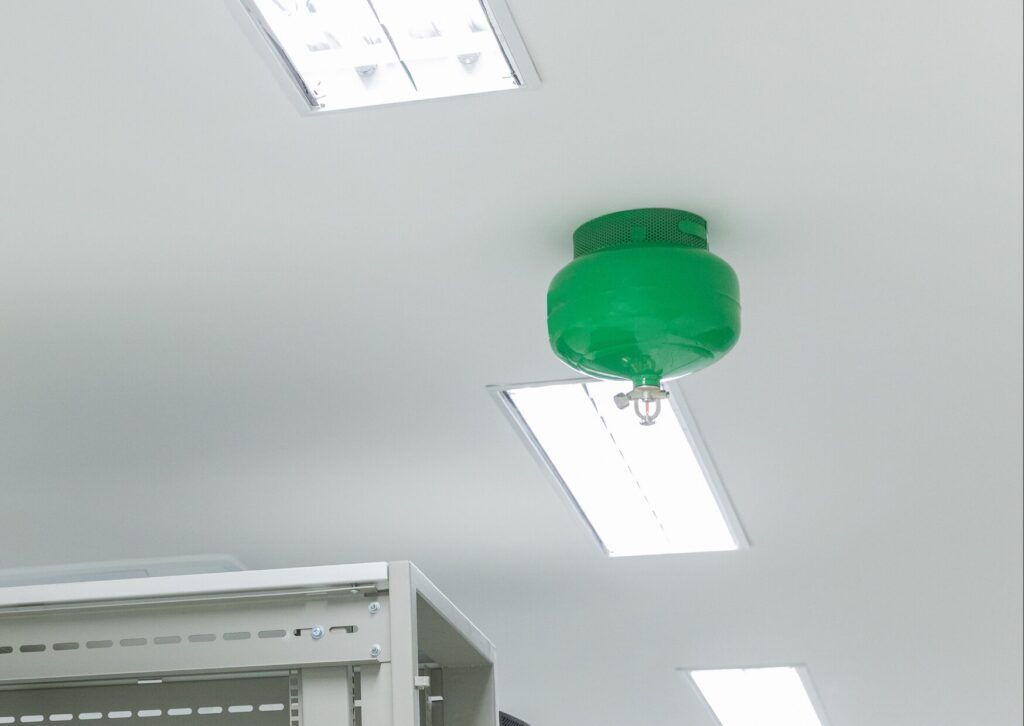
Commercial fire sprinkler systems need professional inspections every week or month, depending on the components. Residential systems need simpler checks that homeowners can do themselves every month or two. The difference comes down to complexity, code requirements, and liability.Most commercial building owners pay between $1,500 and $3,000 per year for maintenance contracts that cover all required inspections and testing. Residential maintenance costs almost nothing if you do it yourself, or around $200 to $400 per year if you hire a professional.Skip maintenance and you risk insurance claim denials, code violations, system failures during fires, and fines from your local fire marshal. Your system might work for years without attention, but when something goes wrong, the consequences get expensive fast.
Do You Need Professional Maintenance or Can You Do It Yourself?
You need professional maintenance if:
- Your building is commercial, industrial, or multi-family (three or more units)
- Your system protects a business or rental property
- Local codes require documented inspections by licensed contractors
- Your insurance policy mandates professional maintenance
- You have a dry pipe, pre-action, or deluge system
- Your system includes fire pumps or storage tanks
You can handle maintenance yourself if:
- You own a single-family home with sprinklers
- You have a duplex or small townhome (two units or fewer)
- Your system is a simple wet pipe design
- You’re willing to learn basic inspection tasks
- You keep records of what you check and when
Most states require licensed fire protection contractors to maintain commercial systems. California requires a C-16 (fire protection) license for any work beyond basic visual inspections. Homeowners can maintain their own residential systems, but many hire professionals anyway because insurance companies offer discounts for documented professional maintenance.
Maintenance Requirements by System Type
Different sprinkler systems need different maintenance approaches. A wet pipe system that keeps water in the pipes at all times needs less attention than a dry pipe system that uses compressed air.
Wet Pipe System Maintenance
Wet pipe systems are the simplest and most common. Water sits in the pipes ready to flow when a sprinkler head opens. These systems need:
Monthly checks:
- Control valves are open and locked in position
- Gauges show proper water pressure
- No visible leaks at pipes or fittings
- Sprinkler heads are clean and unobstructed
Quarterly checks:
- Alarm test (make sure waterflow alarms work)
- Drain test to check for sediment in pipes
- Inspect all accessible piping for corrosion
Annual checks:
- Full system flow test
- Backflow preventer testing (required by law in California)
- Main drain test to verify water supply
- All control valves operated through full range
Every 5 years:
- Internal pipe inspection to check for corrosion and blockages
- Sprinkler head replacement if showing signs of age
- Gauge calibration or replacement
Wet pipe systems rarely have major problems if you catch small issues early. A leaking fitting costs $50 to fix now or thousands in water damage later.
Dry Pipe System Maintenance
Dry pipe systems use compressed air or nitrogen in the pipes instead of water. When a sprinkler opens, the air escapes and water flows in. These systems protect spaces that might freeze, like parking garages or unheated warehouses.
Dry pipe systems need everything wet pipe systems need, plus:
Weekly checks:
- Air pressure gauge readings (must stay within specified range)
- Air compressor operation
- Low-air alarms functioning
Monthly checks:
- Trip test to verify system activates properly
- Check for condensation in pipes (water accumulation causes corrosion)
- Inspect air compressor for proper operation
Quarterly checks:
- Full trip test with timing
- Drain all condensate from low points in piping
Dry pipe systems cost more to maintain because compressed air components need regular attention. Air compressors fail, pressure switches stick, and condensation builds up inside pipes. Budget an extra $500 to $1,000 per year for dry pipe maintenance compared to wet pipe systems.
Pre-Action System Maintenance
Pre-action systems hold water back with an electronic valve. Both a fire detection system and a sprinkler head must activate before water flows. These systems protect areas where accidental discharge would cause major damage, like server rooms or museums.
Pre-action systems need everything dry pipe systems need, plus:
Monthly checks:
- Detection system testing
- Electronic valve operation
- Control panel functionality
- Battery backup systems
Quarterly checks:
- Full sequence test (detection system triggers valve)
- Manual release testing
- Solenoid valve inspection
Annual checks:
- Complete integrated system test
- Detection device sensitivity testing
- Control panel calibration
Pre-action systems are the most complex and expensive to maintain. Annual maintenance contracts typically run $3,000 to $6,000 because testing requires specialized knowledge of both fire sprinkler and fire alarm systems.
Residential System Maintenance
Home fire sprinkler systems follow simpler rules designed for homeowner maintenance. NFPA 13D sets the standard for residential systems and keeps requirements manageable.
Monthly tasks homeowners should do:
- Check that control valves are open
- Look at visible sprinkler heads for damage or paint
- Check water storage tanks (if present) are full
- Test pumps (if present) to make sure they turn on
Every 6 months:
- Test waterflow alarms if your system has them
- Run water through the test connection
- Clean dust off exposed sprinkler heads with compressed air
Annual tasks:
- Operate control valves through full range
- Test pressure downstream of any pressure-reducing valves
- Inspect all visible components for corrosion or damage
When selling your home:
- Have a professional inspect the entire system
- Document that all components work correctly
- Provide records to the buyer
Most residential maintenance takes 15 minutes every month or two. The biggest issue homeowners face is accidentally shutting off the water supply valve and not realizing it. Lock your sprinkler control valve in the open position to prevent this problem.
Weekly Maintenance Tasks (Commercial Systems Only)
Commercial buildings need weekly attention to certain components. These checks take 10 to 20 minutes and catch problems before they become emergencies.
Control valve inspection: Walk through and verify every sprinkler control valve is open and locked. Buildings with multiple zones might have 5 to 10 control valves. Someone closing a valve for maintenance and forgetting to reopen it is the most common reason sprinkler systems fail during fires.
Gauge readings: Check pressure gauges on wet pipe systems and air pressure gauges on dry pipe systems. Write down the readings. Dropping pressure means leaks. Rising pressure means problems with pressure-reducing valves or thermal expansion.
Visual inspection of sprinkler heads: Look for damaged, painted, or corroded sprinkler heads during your weekly walk-through. Also check that nothing is hanging from sprinklers or blocking their spray pattern. Storage items stacked too close to sprinklers cause problems in warehouses.
Fire pump testing (if present): Buildings with fire pumps need weekly no-flow tests. Start the pump and let it run for 10 minutes. Check for unusual noises, vibrations, or overheating. Make sure the pump doesn’t trip circuit breakers when starting.
Some building owners assign these weekly tasks to maintenance staff. Others hire fire protection companies for weekly service visits. A weekly service visit typically costs $150 to $300 depending on building size and system complexity.
Monthly Maintenance Tasks
Monthly tasks apply to both commercial and residential systems, though commercial systems have additional requirements.
For all systems: Test the main drain to verify water supply adequacy. Open the main drain valve fully for one minute and observe the pressure gauge. Pressure should stabilize at a reading that meets design specifications. Dropping pressure indicates water supply problems.
Check all alarm devices. Most systems have bells or horns that sound when water flows. Test these by opening a test connection or inspector’s test valve. Make sure monitoring companies receive the alarm signal if your system reports to them.
Inspect accessible piping for leaks, corrosion, or damage. Look at hangers and supports to verify pipes aren’t sagging. Pay attention to pipe joints and fittings where leaks usually start.
For commercial systems only: Document everything you check and any readings you take. NFPA 25 requires written records of all inspections and tests. Your fire marshal will ask for these records during inspections. Insurance companies want them after claims.
Test supervisory signals that monitor control valve position. These devices send an alarm when someone closes a sprinkler valve. Make sure the signal reaches your monitoring station or building alarm panel.
Quarterly Maintenance Tasks
Every three months, commercial systems need more involved testing that usually requires a licensed contractor.
Waterflow alarm testing: Activate the system’s waterflow detection device and verify alarms sound locally and at monitoring stations. This test confirms the entire alarm chain works from detection to notification.
Dry pipe trip testing: Dry pipe systems need full trip tests every quarter. Open a test valve to release air pressure and verify water reaches the test valve within the time specified by code (usually 60 seconds). Measure and record the trip time.
Backflow preventer inspection: Check backflow preventers for leaks and proper operation. California requires annual testing by certified testers, but quarterly visual inspections catch problems early.
Pump flow testing: If your building has a fire pump, quarterly flow tests verify the pump delivers the required gallons per minute at the correct pressure. This test requires special equipment and a licensed contractor.
Quarterly maintenance visits typically cost $300 to $600 depending on system size and components. Buildings in Los Angeles County often pay more because of stricter local requirements and higher contractor rates.
Annual Maintenance Requirements
Annual testing provides the most thorough assessment of your system’s condition and performance.
Full flow test: The main drain gets fully opened to simulate actual fire conditions. Contractors measure flow rate and pressure to verify the water supply can handle the sprinkler system’s demands. This test identifies water supply problems before you need the system in a real fire.
Internal valve inspection: All control valves get opened and closed through their full range. Contractors check for corrosion, sticking, or other problems that prevent valves from operating smoothly.
Sprinkler head inspection: Every sprinkler head gets visually inspected for damage, corrosion, paint, or loading (dust and debris accumulation). Damaged or questionable heads get replaced immediately.
Backflow preventer testing: California requires annual testing of all backflow prevention devices by state-certified testers. This test ensures contaminated water can’t flow backward into the public water supply. Testing costs $100 to $200 per device.
Fire pump annual test: Fire pumps get comprehensive flow testing annually to verify they still meet their original performance specifications. The test measures flow rate, pressure, power consumption, and component condition. Expect to pay $500 to $1,500 for annual fire pump testing.
Documentation and reporting: Annual inspections generate detailed reports that document system condition and test results. Keep these reports for at least five years. You’ll need them when selling the property, dealing with insurance claims, or responding to fire marshal inspections.
Many building owners schedule annual maintenance in spring or fall to avoid conflicts with busy seasons. Annual comprehensive inspections typically cost $800 to $2,000 for a standard commercial building, more for larger or more complex properties.
Five-Year Internal Pipe Inspection
Every five years, NFPA 25 requires opening up the piping system to look inside. This inspection checks for internal corrosion, sediment buildup, and foreign materials that could clog sprinkler heads or restrict water flow.
Contractors remove sprinkler heads or open flushing connections to examine pipe interiors. They look for rust, scale, biological growth (yes, bacteria and algae can grow in pipes), and any debris that shouldn’t be there.
Problems found during five-year inspections include:
Microbiologically influenced corrosion (MIC): Bacteria colonies grow inside pipes and accelerate corrosion. MIC shows up as tubercles (rust mounds) inside pipes and can cause failures in pipes that should last decades longer.
Sediment accumulation: Minerals from water supplies build up over time. Heavy sediment can partially block pipes or clog sprinkler orifices.
Foreign materials: Sometimes construction debris, pipe dope, thread sealant, or other materials end up in sprinkler systems during installation or repairs. These materials can clog sprinkler heads.
Five-year internal inspections cost $1,500 to $5,000 depending on building size and how many inspection points contractors need to open. Finding problems means additional costs to flush the system, treat for MIC, or replace corroded piping sections.
Maintenance Tasks You Can Do Yourself vs Tasks That Need Professionals
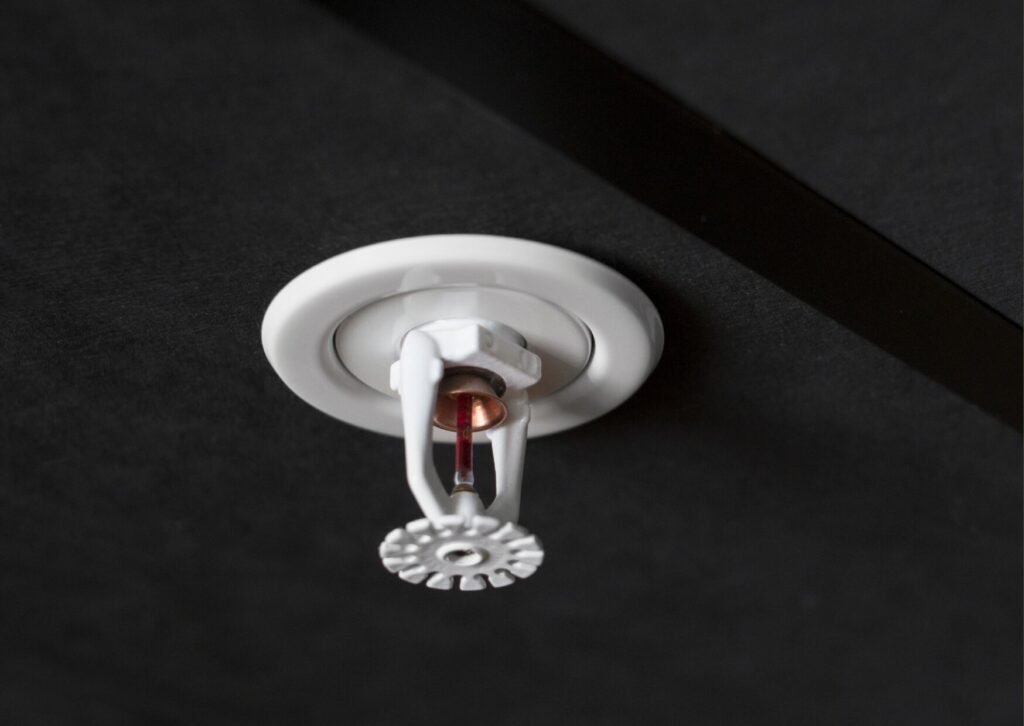
Homeowners and building maintenance staff can handle:
- Visual inspections of sprinkler heads and piping
- Checking that control valves are open
- Reading pressure gauges
- Testing waterflow alarms (just opening test valves)
- Weekly fire pump run tests
- Basic cleaning around sprinkler components
- Documenting inspection findings
Licensed fire protection contractors must handle:
- Internal pipe inspections
- Flow testing with specialized equipment
- Fire pump annual performance testing
- Backflow preventer testing and certification
- Sprinkler head replacement
- Valve repairs or replacements
- Pipe repairs or modifications
- System design changes
- Anything requiring cutting or welding pipes
California law requires a C-16 fire protection contractor license for installation, alteration, or repair of fire sprinkler systems. Simple inspections and testing don’t require a license, but repairs and modifications do.
Some building owners try to save money by having unlicensed maintenance staff make repairs. This creates problems when the fire marshal inspects or when insurance companies investigate claims after fires. Always use licensed contractors for anything beyond basic inspections.
How to Find and Hire Fire Sprinkler Maintenance Companies
Look for companies that specialize in fire sprinkler maintenance, not general contractors who occasionally work on sprinklers. Check for:
Proper licensing: Verify the company holds a current C-16 fire protection contractor license in California. Check license status at cslb.ca.gov. Make sure the license isn’t expired, suspended, or revoked.
Insurance coverage: Ask for proof of general liability insurance and workers compensation coverage. Most commercial property owners require $1 million in general liability coverage minimum.
References and experience: Ask for references from clients with similar systems. A company that mainly does residential work might not understand complex commercial systems. Look for experience with your specific system type (wet pipe, dry pipe, pre-action).
Response time commitments: Find out how quickly they respond to service calls. System problems need fast attention to restore fire protection.
Service contracts vs per-visit pricing: Most companies offer annual service contracts that include all required inspections and testing for a flat yearly fee. Compare this to per-visit pricing. Service contracts usually cost less overall and guarantee your maintenance schedule stays on track.
After-hours availability: Fire sprinkler emergencies don’t wait for business hours. Make sure the company provides 24/7 emergency service.
Get written quotes from at least three companies before deciding. The cheapest quote isn’t always the best value. Companies that cut corners on inspections or skip required tests save money but leave you exposed to system failures and code violations.
Typical Maintenance Costs and Service Contracts
Residential maintenance:
- DIY maintenance: $0 to $50 per year (compressed air, cleaning supplies)
- Professional annual inspection: $200 to $400
- Per-visit service call: $150 to $250
Small commercial buildings (under 10,000 square feet):
- Annual service contract: $1,500 to $2,500
- Per-visit pricing: $200 to $400 per visit
- Emergency service calls: $300 to $600
Medium commercial buildings (10,000 to 50,000 square feet):
- Annual service contract: $2,500 to $5,000
- Per-visit pricing: $300 to $600 per visit
- Emergency service calls: $500 to $1,000
Large commercial buildings or complex systems:
- Annual service contract: $5,000 to $15,000+
- Per-visit pricing: $500 to $1,500 per visit
- Emergency service calls: $1,000+
Service contracts typically include:
- All required weekly, monthly, quarterly, and annual inspections
- Basic repairs (valve packing, gauge replacement, minor leaks)
- Detailed documentation and reporting
- Priority scheduling for service calls
Service contracts usually don’t include:
- Major repairs or component replacement
- Sprinkler head replacement
- Pipe repairs requiring cutting or welding
- System modifications or upgrades
- Five-year internal pipe inspections
Most companies charge extra for these items when they’re needed. Get pricing in writing before authorizing any work beyond routine maintenance.
Buildings in Riverside County and San Bernardino County typically pay 10% to 20% less than properties in Los Angeles or Orange County because of lower labor rates and less stringent local requirements.
What Happens When You Skip Maintenance
Fire sprinkler systems can run for years without attention and still work when needed. But skipping maintenance creates risks that eventually catch up with you.
Insurance claim denials: Most commercial property insurance policies require documented maintenance. If your sprinkler system fails during a fire and you can’t produce maintenance records, your insurance company can deny part or all of your claim. A $500,000 fire loss that insurance refuses to cover destroys businesses.
Code violations and fines: Fire marshals can red-tag buildings with improperly maintained fire sprinkler systems. This means you can’t occupy the building until you bring the system into compliance. Daily fines range from $500 to $2,500 depending on jurisdiction.
System failures during fires: Neglected systems fail at higher rates when you need them. Corroded pipes leak instead of delivering water. Painted or loaded sprinkler heads activate late or not at all. Closed valves nobody noticed mean entire building sections have no protection.
Increased repair costs: Small problems caught during routine maintenance cost little to fix. A leaking valve packing costs $50 to repair today or $5,000 in water damage and mold remediation next month. Catching corrosion early means a $200 pipe section replacement instead of a $10,000 pipe replacement project later.
Property sale problems: Buyers discover maintenance issues during due diligence inspections. Missing maintenance records or system problems identified in pre-sale inspections reduce property values or kill deals entirely.
Liability exposure: Building owners who knowingly operate buildings with defective or improperly maintained life safety systems face serious liability when people get hurt. Attorneys love cases where building owners ignored maintenance requirements.
The National Fire Protection Association tracks fire sprinkler system performance. Systems fail to operate during fires 7% of the time. Of those failures, 60% happen because the system was shut off. Another 20% fail because of frozen or broken components that maintenance would have caught.
How to Get Back on Track After Years of Neglect
Bought a building where the previous owner ignored maintenance? Here’s how to catch up:
Start with a professional assessment: Hire a licensed fire protection contractor to inspect the entire system and document its condition. This inspection costs more than routine maintenance because contractors need to check everything carefully. Expect to pay $1,000 to $3,000 for a comprehensive assessment.
Prioritize immediate safety issues: Fix anything that makes the system non-functional right away. This includes:
- Opening closed control valves
- Replacing missing or obviously damaged sprinkler heads
- Repairing active leaks
- Restoring fire pump operation if not working
- Fixing waterflow alarms that don’t work
Create a compliance plan: Your contractor should provide a written list of everything that needs attention, organized by priority. Some items need immediate fixes. Others can wait until your next scheduled maintenance cycle.
Document everything: Start keeping detailed maintenance records from now forward. You can’t go back and create records you don’t have, but you can demonstrate current compliance going forward.
Schedule regular maintenance: Set up a service contract that includes all required inspections and testing. Don’t skip maintenance again.
Budget for catch-up work: Systems that haven’t been maintained for years typically need $2,000 to $10,000 in repairs and component replacement to bring them into full compliance. Get written estimates before authorizing work.
Notify your insurance company: Tell your insurance carrier you’re bringing the system into compliance. Some companies offer discounts for properties with documented maintenance programs.
Record-Keeping Requirements
California fire marshals and insurance companies want to see documented proof that you maintain your fire sprinkler system properly.
Keep records of:
- All inspection dates and findings
- Test results with actual measurements (pressure readings, flow rates, etc.)
- Repairs and component replacements
- Contractor certifications and licenses
- Backflow preventer test reports
- Fire pump test results
- Five-year internal inspection reports
How long to keep records:
- Current year plus five years minimum
- Some jurisdictions require 10 years
- Keep records for the life of the system when possible
Record formats: Paper or electronic records both work. Many maintenance companies provide web-based portals where you can access all your inspection and test reports. Make sure you can retrieve records easily when fire marshals ask for them.
Who needs to see records:
- Fire marshals during routine inspections
- Building inspectors during permit reviews
- Insurance companies after claims
- Property buyers during due diligence
- Attorneys during liability investigations
Missing records create problems even when you did the maintenance. Fire marshals assume you didn’t do work you can’t prove. Insurance companies use missing records as grounds to deny claims or reduce payouts.
Red Flags That Need Immediate Attention
Some problems can’t wait until your next scheduled maintenance visit. Call a fire protection contractor immediately if you notice:
Water leaks: Any water leaking from sprinkler pipes or components needs attention right away. Small leaks become big leaks. Water damage gets expensive fast.
Frozen pipes: If you find ice on sprinkler pipes or in dry pipe systems during winter, shut down the affected areas and call for emergency service. Frozen pipes burst and cause catastrophic water damage.
Pressure problems: Pressure gauges showing unexpected readings mean something changed. Rising pressure can burst pipes or damage components. Dropping pressure means leaks or water supply problems.
Alarm malfunctions: Waterflow alarms that sound without water flowing or don’t sound during tests need immediate repair. You need working alarms to know when your system activates.
Visible corrosion or damage: Pipes showing heavy rust, damaged sprinkler heads, or broken hangers need attention before they fail completely.
Closed valves: If you discover a closed control valve during a walk-through, open it immediately and figure out why it was closed. Notify everyone in the building that fire protection was temporarily compromised.
Don’t wait until your next scheduled maintenance visit to address these issues. Emergency service costs more than routine maintenance, but it costs far less than the damage that happens when systems fail.
Final Thoughts
Fire sprinkler system maintenance keeps your fire protection reliable. Commercial systems need professional attention every week or month. Residential systems need simpler checks you can do yourself. Either way, staying on schedule prevents system failures and keeps you compliant with codes and insurance requirements.
Spectrum Fire Protection provides fire sprinkler maintenance throughout Southern California. We handle everything from routine inspections to complete system overhauls. Our technicians are licensed, experienced, and understand California’s specific requirements. Call us at (866) 441-2421 to discuss a maintenance program for your property.