(714) 213-8451
Most commercial fire alarm systems cost between $3 and $7 per square foot installed. A 5,000 square foot building typically runs $15,000 to $35,000 for a complete system. Residential fire alarm installations cost $2,000 to $5,000 for an average home. Final pricing depends on building size, system type, device count, and local code requirements.
These costs include equipment, labor, permits, and basic system programming. They don’t include ongoing monitoring fees, which run $30 to $60 per month for most commercial buildings.
Average Fire Alarm Installation Costs by Building Type
Residential Buildings
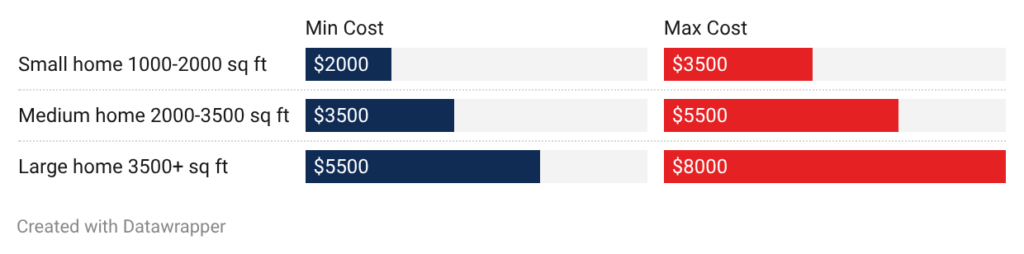
Small homes (1,000-2,000 sq ft): Most small residential fire alarm installations fall between 2000 and 3500. This covers 6 to 10 smoke detectors, 2 to 4 notification devices, a small control panel, and basic monitoring equipment. The lower end assumes new construction with easy wiring access. The higher end reflects retrofit installations in finished homes.
Medium homes (2,000-3,500 sq ft): Installations for medium-sized homes run 3500 to 5500. These systems need 10 to 14 smoke detectors and 4 to 6 notification devices to meet coverage requirements. Two-story homes cost more than single-story homes because of additional wiring between floors.
Large homes (3,500+ sq ft): Large home installations cost 5500 to 8000. Multiple levels, complex layouts, and high ceilings push costs higher. Homes with basements or special spaces like wine cellars need additional detection devices that add to the total.
Commercial Buildings
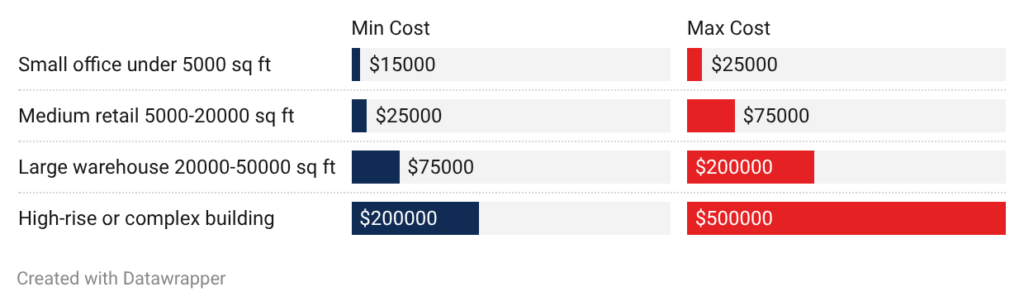
Small offices (under 5,000 sq ft): Small commercial buildings need 15000 to 25000 for complete fire alarm systems. This includes 10 to 20 smoke detectors, 4 to 8 pull stations, 8 to 15 horn/strobe devices, control panel, monitoring equipment, and all installation labor. Medical offices and restaurants at the higher end need more devices because of room count and special hazards.
Medium retail (5,000-20,000 sq ft): Medium commercial installations run 25000 to 75000. Device count scales with building size. A 10,000 square foot retail space needs roughly twice the devices of a 5,000 square foot space. High ceilings in retail environments sometimes require beam detectors or air sampling systems that cost more than standard spot detectors.
Large warehouses (20,000-50,000 sq ft): Large buildings cost 75000 to 200000 for fire alarm installations. These projects almost always use addressable systems because of device count. Warehouse heights affect detector selection and spacing. Buildings over 30 feet tall need specialized detection methods that increase costs.
High-rise or complex buildings: Buildings over 75 feet tall or those with complex occupancies start at 200000 and can exceed 500000. Voice evacuation systems are required in most high-rises. Multiple floors, elevator recall, stair pressurization controls, and extensive notification coverage drive costs up significantly.
The per-square-foot cost drops as building size increases because fixed costs like control panels and monitoring equipment spread across more square footage. A 50,000 square foot warehouse might run $3.50 per square foot while a 2,000 square foot office runs $6 per square foot.
Fire Alarm Installation Cost Breakdown in Orange County
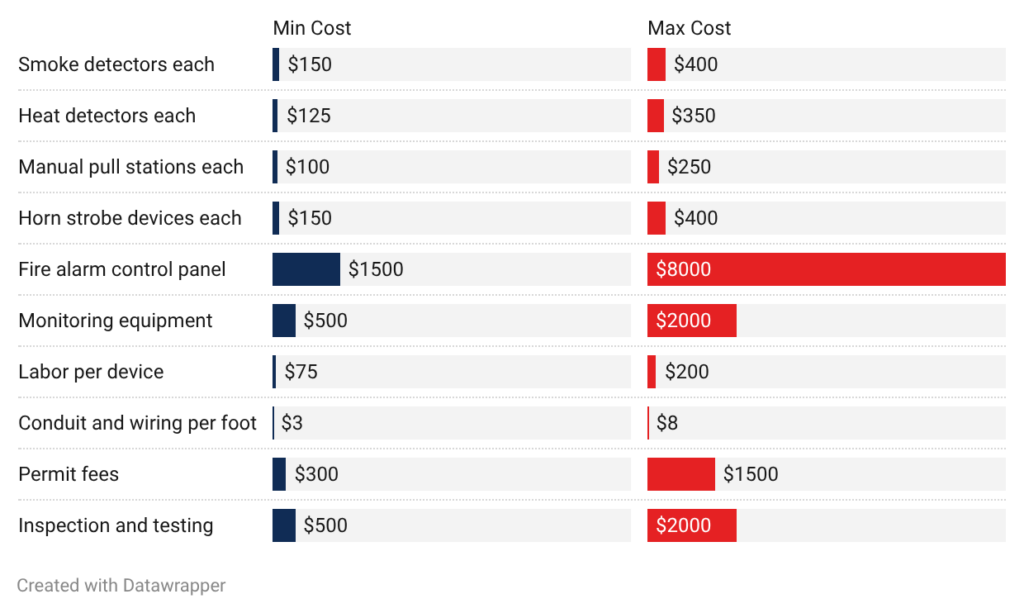
Smoke detectors: Each smoke detector costs 150 to 400 installed. Basic photoelectric detectors fall at the low end around 150 to 200. Addressable detectors with multi-criteria sensing (smoke plus heat or carbon monoxide) run 300 to 400. Installation includes the device, mounting base, wiring connection, and programming into the system.
Heat detectors: Heat detector installations run 125 to 350 each. Fixed-temperature heat detectors cost less than rate-of-rise detectors. These go in kitchens, mechanical rooms, attics, and other areas where smoke detectors would false alarm. Most buildings need a mix of smoke and heat detection.
Manual pull stations: Pull station installations cost 100 to 250 each. Standard pull stations fall around 100 to 150. Addressable pull stations with LED status indicators cost 200 to 250. Code requires pull stations at every exit and along egress paths at maximum 200-foot spacing.
Horn and strobe notification devices: Each horn/strobe device costs 150 to 400 installed. Wall-mounted devices run cheaper than ceiling-mounted versions. High-output devices for noisy environments or large spaces cost more. Buildings need enough devices to meet minimum decibel levels throughout all occupied areas.
Fire alarm control panels: Control panels range from 1500 to 8000 depending on system size. Small conventional panels for buildings under 5,000 square feet cost 1500 to 3000. Addressable panels for larger buildings run 3500 to 8000. Network-capable panels that connect multiple buildings cost even more.
Monitoring equipment: Monitoring communication equipment costs 500 to 2000. Cellular communicators run 500 to 1000. Network communicators with backup cellular cost 1200 to 2000. This equipment connects your fire alarm system to the central monitoring station that notifies the fire department.
Labor per device: Installation labor runs 75 to 200 per device. New construction with open walls averages 75 to 100 per device. Retrofit installations in finished buildings run 125 to 200 per device because technicians work around existing construction. High ceilings requiring lifts add to labor costs.
Conduit and wiring: Conduit and wire installation costs 3 to 8 per foot. Surface-mounted conduit in exposed areas runs 3 to 4 per foot. Concealed wiring in walls and ceilings costs 5 to 6 per foot. Core drilling through concrete for concealed conduit runs 7 to 8 per foot.
Permit fees: Fire alarm permit fees range from 300 to 1500 depending on jurisdiction and project size. Small residential projects in affordable jurisdictions pay 300 to 500. Large commercial projects in cities with high fee structures pay 1000 to 1500. Los Angeles charges higher permit fees than most surrounding cities.
Inspection and testing: Final inspection and acceptance testing costs 500 to 2000. Small systems with under 20 devices run 500 to 800. Large systems requiring full-day testing sessions cost 1500 to 2000. This covers the contractor’s time activating every device and documenting results for the fire marshal.
What Affects Fire Alarm Installation Cost in Orange County
Building Size and Layout
Square footage directly affects cost because larger buildings need more detection and notification devices. But layout matters as much as total size. A 10,000 square foot building with an open floor plan needs fewer devices than a 10,000 square foot building divided into 40 small rooms.
Hallway length affects pull station and notification device counts. Long corridors need devices spaced at code-required intervals. Buildings with complex layouts and many turns need more notification devices to meet coverage requirements.
Ceiling Height
Standard ceiling heights (8 to 12 feet) allow normal device spacing. Ceilings over 12 feet require different detector spacing and sometimes beam-type smoke detectors instead of spot-type detectors. Beam detectors cost more to install and calibrate.
Very high ceilings (20+ feet) in warehouses or atriums create special challenges. You might need smoke detection at multiple levels or specialized air sampling systems. These high-ceiling solutions cost significantly more than standard spot detectors.
Construction Type
Wood frame buildings are easier and cheaper to wire than concrete or masonry buildings. Running conduit through concrete requires core drilling, which adds labor time and cost. Steel frame buildings fall somewhere in the middle.
Retrofit installations in existing buildings cost more than new construction because contractors work around finished walls and ceilings. Access to concealed spaces affects labor costs. Buildings with accessible attics and crawl spaces cost less to retrofit than buildings built on slabs with no attic access.
System Type: Conventional vs Addressable
Conventional fire alarm systems cost less upfront but more over time. Each device connects to the control panel through a zone circuit. The panel knows which zone activated but not which specific device. Troubleshooting requires checking every device on the affected zone.
Addressable systems cost 20% to 40% more upfront but each device has a unique address. The control panel tells you exactly which device activated or has a problem. This saves time and money during maintenance and troubleshooting.
For buildings under 10,000 square feet, conventional systems usually make financial sense. Larger buildings benefit from addressable systems because maintenance savings offset the higher initial cost.
Code Requirements and Fire Marshal Preferences
California uses the California Fire Code and California Building Code, which add requirements beyond national codes. Some jurisdictions within California add even more requirements. Your local fire marshal interprets and enforces these codes.
Voice evacuation systems cost more than standard horn/strobe systems but some occupancy types require them. High-rise buildings almost always need voice evacuation. The fire marshal might require voice evacuation in other buildings based on occupancy type or special hazards.
Duct detectors in HVAC systems add cost. Large buildings with complex HVAC systems might need dozens of duct detectors. Each detector needs installation in the ductwork and connection to the fire alarm system.
Elevator recall adds devices and programming. Multi-story buildings need elevator recall connections so the fire alarm system sends elevators to the ground floor during alarms. This requires additional modules and wiring.
Monitoring Requirements
All commercial fire alarm systems in California need monitoring by a central station. The monitoring company receives alarm signals and notifies the fire department. Monitoring setup costs $500 to $2,000 for the communication equipment.
Monthly monitoring fees run $30 to $60 for most commercial buildings. Larger buildings or buildings with complex systems pay more. This ongoing cost adds up over the system’s lifetime.
Residential Fire Alarm System Costs
Basic residential systems (6-10 devices): Basic systems cost 2000 to 3500 installed. This includes 6 to 10 smoke detectors, 2 to 4 notification devices, and a small control panel. New construction installations fall at the low end. Retrofit installations in finished homes cost more because of the additional labor to conceal wiring.
Standard residential systems (10-15 devices): Standard systems for larger homes run 3500 to 5500. These systems cover 2,000 to 3,500 square foot homes with multiple levels. The additional devices provide better coverage and meet code requirements for larger floor plans.
Large residential systems (15+ devices): Large home systems cost 5500 to 8000. Homes over 3,500 square feet need 15 or more devices for adequate coverage. Multiple floors, basements, and complex layouts require more devices and more wiring.
Luxury custom systems: Custom systems for luxury homes run 10000 to 15000. High ceilings, extensive square footage, special spaces like wine cellars and home theaters, and integration with home automation systems push costs higher. Some luxury installations use addressable systems for better monitoring and control.
Single-family homes need simpler fire alarm systems than commercial buildings. Many homes only need interconnected smoke detectors rather than a full monitored fire alarm system. But some California jurisdictions require monitored systems in new construction or when selling homes.
Residential monitoring costs less than commercial monitoring. Expect $25 to $40 per month for residential fire alarm monitoring in Southern California.
Small Commercial Building Costs
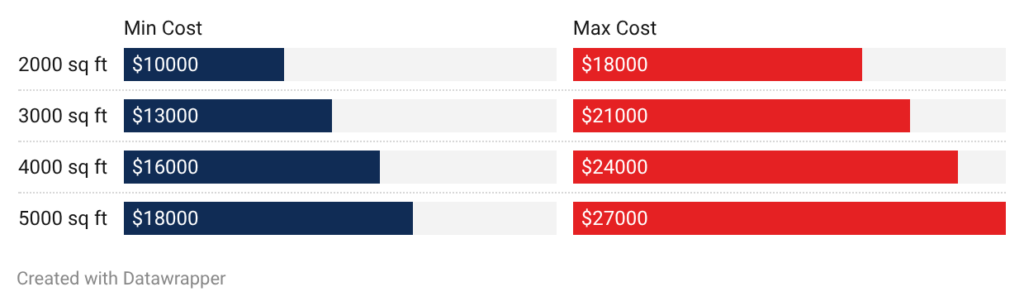
2,000 sq ft commercial buildings: Small commercial spaces around 2000 square feet cost 10000 to 18000 for complete fire alarm systems. This includes 8 to 12 smoke detectors, 3 to 5 pull stations, 6 to 10 notification devices, control panel, and monitoring equipment. Simple open layouts fall at the low end. Spaces divided into many small rooms cost more.
3,000 sq ft commercial buildings: Buildings around 3000 square feet run 13000 to 21000. Device count increases proportionally with square footage. Medical offices with many exam rooms need more devices than open office layouts. Restaurants need additional heat detectors in kitchen areas.
4,000 sq ft commercial buildings: Installations for 4000 square foot spaces cost 16000 to 24000. Retail stores with high ceilings might need beam detectors that cost more than standard spot detectors. Ceiling height and layout complexity affect final pricing as much as total square footage.
5,000 sq ft commercial buildings: Buildings around 5000 square feet need 18000 to 27000 for fire alarm installations. This size marks the transition point where some buildings benefit from addressable systems. The upfront cost is higher but maintenance savings can justify the investment for buildings with complex layouts.
Small commercial buildings under 5,000 square feet typically use conventional fire alarm systems unless the layout is particularly complex. Restaurants need more heat detectors because of cooking equipment. Medical offices need more notification devices because of ADA requirements. Retail stores with high ceilings might need beam detectors or air sampling systems.
The exact device count depends on building layout, ceiling height, and occupancy type. A 3,000 square foot open office needs fewer devices than a 3,000 square foot medical suite divided into 15 exam rooms.
Large Commercial Building Costs
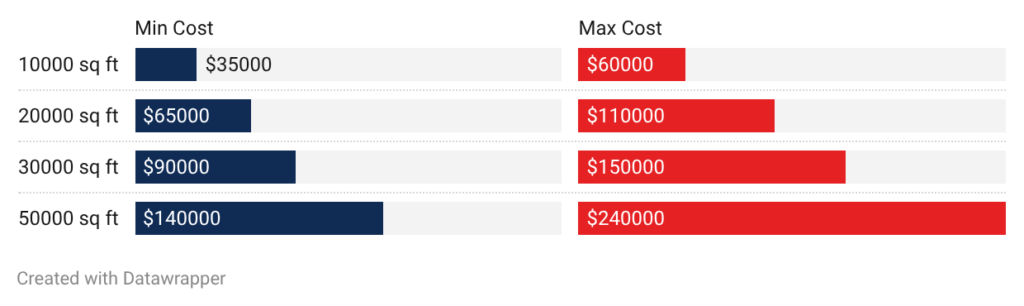
10,000 sq ft commercial buildings: Buildings around 10000 square feet cost 35000 to 60000 for fire alarm installations. This size almost always uses addressable systems. The system includes 25 to 40 detection devices, 8 to 12 pull stations, 20 to 35 notification devices, addressable control panel, and monitoring equipment.
20,000 sq ft commercial buildings: Installations for 20000 square foot buildings run 65000 to 110000. Multiple zones, elevator recall, and HVAC integration add complexity. Warehouses with high storage need air sampling or beam detection. Office buildings need standard spot detectors and pull stations at all exits.
30,000 sq ft commercial buildings: Buildings around 30000 square feet need 90000 to 150000 for complete systems. Device counts reach 60 to 100 detectors plus corresponding pull stations and notification devices. Duct detectors for HVAC systems add 10 to 20 additional devices. Voice evacuation might be required depending on occupancy type.
50,000 sq ft commercial buildings: Large buildings around 50000 square feet cost 140000 to 240000. The per-square-foot cost drops because fixed costs like control panels spread across more devices. These installations include comprehensive coverage with 100+ detection devices, extensive notification circuits, and full building integration.
Buildings over 20,000 square feet almost always use addressable fire alarm systems because of the device count and troubleshooting benefits. Addressable systems cost more upfront but the total installed cost per square foot often drops below smaller buildings because of economies of scale.
High-rise buildings need voice evacuation systems with speakers instead of horns. Voice systems cost 30% to 50% more than horn/strobe systems but provide better emergency communication. A 10-story office building might spend $200,000 to $400,000 on a complete voice evacuation fire alarm system.
Conventional vs Addressable Fire Alarm Systems

Conventional system costs: Conventional systems use control panels costing 1500 to 3000. Devices cost standard pricing as shown in earlier tables. Installation labor is similar to addressable systems. Total system cost for a 5,000 square foot building runs 15000 to 22000 with a conventional system.
Addressable system costs: Addressable systems use control panels costing 3500 to 8000. Each device costs 20% to 30% more than conventional equivalents. A smoke detector that costs 150 in a conventional system might cost 200 in an addressable system. Total system cost for a 5,000 square foot building runs 18000 to 28000 with an addressable system.
Conventional systems group devices into zones. Each zone connects to the control panel through a circuit with multiple devices on it. When any device activates, the panel shows which zone but not which specific device. Finding the activated device means checking every device on that zone.
Addressable systems give each device a unique address. The control panel displays exactly which device activated or has a fault. This saves significant time during maintenance and troubleshooting.
The breakeven point sits around 10,000 to 15,000 square feet. Smaller buildings save money with conventional systems. Larger buildings recover the addressable premium through reduced maintenance costs over the system’s 15 to 20 year lifespan.
Additional Costs to Consider
Duct detectors: HVAC systems over a certain size need duct detectors costing 300 to 600 each installed. These devices shut down air handlers during fires to prevent smoke spread through ductwork. Large buildings might need 10 to 30 duct detectors depending on HVAC system complexity. Installation requires coordination with HVAC contractors.
Waterflow switches: Buildings with fire sprinkler systems need waterflow switches costing 400 to 700 installed. These devices connect the sprinkler system to the fire alarm system. When sprinklers activate, the waterflow switch signals the fire alarm panel. A building might need 2 to 10 waterflow switches depending on sprinkler system zoning.
Tamper switches: Sprinkler system tamper switches cost 300 to 500 installed. These monitor sprinkler control valves and send an alarm if someone closes them. Each sprinkler zone needs a tamper switch. Buildings with multiple sprinkler zones need multiple tamper switches.
Battery replacement: Fire alarm system batteries need replacement every 3 to 5 years. Replacement costs run 200 to 1000 depending on system size. Small systems use batteries in the control panel costing 200 to 400. Large systems need separate battery cabinets with batteries costing 600 to 1000.
Seismic bracing: California requires seismic bracing for fire alarm equipment adding 5% to 10% to total installation costs. Control panels need seismic mounting brackets. Conduit needs lateral bracing at specified intervals. This premium applies to labor costs for the additional installation time and materials for bracing hardware.
Permit, Inspection, and Monitoring Costs
Plan review fees: Fire alarm plans need approval before installation. Plan review fees range from 300 to 1500 depending on project size and jurisdiction. Small residential projects pay 300 to 500. Large commercial projects in major cities pay 1000 to 1500. Los Angeles and other large cities charge higher plan review fees than smaller municipalities.
Permit fees: Installation permits cost 300 to 1000 separate from plan review fees. Small projects pay 300 to 500. Large commercial installations pay 700 to 1000. Total permit costs including plan review run 600 to 2500 for typical commercial projects.
Acceptance testing: Fire marshals require acceptance testing before issuing certificates of occupancy. Contractor time for acceptance testing costs 500 to 2000. Small systems with under 20 devices run 500 to 800. Large systems requiring full-day testing sessions cost 1500 to 2000. This covers activating every device and documenting results.
Monitoring setup: Central station monitoring requires communication equipment costing 500 to 1500. Cellular communicators run 500 to 1000. Network communicators with backup cellular cost 1200 to 1500. Programming and testing add 200 to 500 to setup costs.
Monthly monitoring: Ongoing monitoring fees run 30 to 60 per month for commercial buildings. Small buildings with simple systems pay 30 to 40. Large buildings with complex systems pay 50 to 60. Residential monitoring costs 25 to 40 per month.
Annual inspection: California requires annual inspections by qualified technicians costing 400 to 1200. Small systems run 400 to 600. Large or complex systems cost 800 to 1200 because testing takes longer. Some buildings need semi-annual or quarterly inspections adding to annual costs.
California-Specific Requirements That Affect Costs
CSFM Listing Requirements
All fire alarm equipment installed in California must carry California State Fire Marshal (CSFM) approval listings. CSFM-listed equipment sometimes costs more than standard UL-listed equipment available in other states. This adds 5% to 10% to equipment costs compared to states that accept standard UL listings.
Title 24 Energy Code Compliance
California’s Title 24 energy code requires fire alarm systems to integrate with HVAC controls in specific ways. Fire alarm activation must shut down HVAC systems to prevent smoke spread. This integration requires additional programming and interface modules that add $500 to $2,000 to installation costs.
Voice Evacuation Requirements
California has stricter voice evacuation requirements than many states. High-rise buildings, large assembly occupancies, and some healthcare facilities must use voice evacuation systems instead of standard horn/strobe systems.
Voice evacuation systems cost 30% to 50% more than horn/strobe systems. A building that would need a $40,000 horn/strobe system might need a $55,000 to $60,000 voice evacuation system to meet California requirements.
Seismic Design Standards
California’s seismic requirements add costs throughout the installation. Control panels need seismic mounting brackets. Conduit needs lateral bracing. Cable trays need seismic supports. These requirements add 5% to 10% to labor costs.
The additional engineering for seismic design adds to plan review fees. California fire alarm plans need more detail than plans in non-seismic states.
Fire Alarm Installation Costs Across Southern California
Los Angeles County: Los Angeles County has the highest fire alarm installation costs in Southern California. Labor rates run 85 to 120 per hour for licensed technicians. Permit fees run 20% to 30% higher than surrounding counties. A typical 5,000 square foot commercial building costs 20000 to 30000 for complete fire alarm installation.
Orange County: Orange County installation costs fall slightly below LA County. Labor rates run 75 to 100 per hour. Permit fees are moderate compared to LA but higher than inland counties. A 5,000 square foot commercial building costs 18000 to 27000 in most Orange County cities.
Riverside County: Riverside County offers lower installation costs than coastal counties. Labor rates run 70 to 90 per hour. Permit fees are more reasonable. A typical 5,000 square foot commercial installation costs 15000 to 24000 in most Riverside County locations.
San Bernardino County: San Bernardino County has the most affordable fire alarm installation costs in Southern California. Labor runs 65 to 85 per hour. Lower permit fees and competitive contractor rates make this the most budget-friendly region. A 5,000 square foot commercial building costs 14000 to 22000 for complete fire alarm installation.
Installation costs vary across Southern California based on local permit fees, labor rates, and fire marshal requirements. These regional cost differences matter for businesses with multiple locations. A retail chain installing fire alarms in 10 locations could save $50,000 to $100,000 by factoring in regional pricing when budgeting projects.
Final Thoughts
Fire alarm system installation costs range from $2,000 for simple residential systems to $200,000+ for large commercial buildings. Most commercial buildings pay $3 to $7 per square foot for complete systems including equipment, labor, permits, and testing.
Understanding what drives these costs helps you budget accurately and evaluate contractor quotes fairly. The lowest bid isn’t always the best value. A properly designed and installed fire alarm system protects lives and property for 15 to 20 years. For complete fire protection, many buildings also require fire sprinkler services and regular maintenance of fire hydrant services to meet code requirements.
Spectrum Fire Protection designs and installs fire alarm systems throughout Southern California. We hold California C-10 and C-16 licenses and have installed systems in hundreds of commercial and residential buildings. Call us at (714) 213-8451 to discuss your fire alarm project or contact us here for a free consultation.