(714) 213-8451
Ask most business owners in Orange County whether their building is “fire safe,” and they’ll point to the sprinkler heads on the ceiling or the red extinguisher mounted by the exit door. That answer is technically correct, but it’s only half the picture.
True fire safety for any commercial property is built on two distinct and equally critical disciplines: fire prevention and fire protection. These terms are frequently used interchangeably, but they describe fundamentally different strategies. One acts before a fire ever starts. The other activates when it does.
Understanding the difference, and making sure your Orange County property has both working properly, is not just good practice. It’s what separates a business that survives a fire incident from one that doesn’t reopen.
At Spectrum Fire Protection, we’ve spent over 39 years helping commercial and industrial property owners build complete fire protection in Orange County programs that address both prevention and protection. This guide explains how both work, why both are required, and what you need to do to stay ahead of California code requirements and OCFA inspections.
What Is Fire Prevention?

Fire prevention is the proactive side of fire safety. It encompasses all the measures, policies, practices, and inspections designed to stop a fire from ever starting in the first place.
Every fire requires three elements to ignite: fuel, heat, and oxygen, the fire triangle. Fire prevention strategies work by eliminating or controlling at least one of those elements before conditions can combine to create a fire.
Fire prevention is about reducing what fire professionals call the building’s fire load, the total amount of combustible material present and the number of potential ignition sources. The lower the fire load, the lower the probability and severity of a fire event.
Fire Prevention in Practice: What It Looks Like for Orange County Businesses
Electrical System Maintenance
Faulty wiring, overloaded circuits, and aging electrical panels are among the leading causes of commercial fires in California. Regular inspection of electrical systems by licensed contractors is a core fire prevention measure, particularly in older commercial buildings throughout cities like Anaheim, Santa Ana, and Fullerton.
Proper Storage of Flammable and Combustible Materials
Warehouses, manufacturing facilities, auto shops, restaurants, and chemical distributors across Orange County deal with flammable liquids, gases, and combustible materials daily. Fire prevention requires that these materials be stored in approved containers, away from ignition sources, and in quantities that comply with California Fire Code and OCFA regulations.
Housekeeping and Clutter Control
Accumulation of paper, cardboard, grease, dust, and other combustibles dramatically increases fire risk. Regular housekeeping, especially in storage rooms, utility areas, and commercial kitchens, is a basic but highly effective fire prevention measure. Grease buildup on restaurant hood systems is one of the most preventable fire hazards in Orange County’s food service industry.
Fire Hazard Inspections and Risk Assessments
Identifying hazards before they cause fires is the foundation of prevention. A thorough fire hazard inspection examines ignition sources, fuel sources, storage practices, electrical systems, and building-specific risks. Many fire incidents are traced back to hazards that were present and visible long before the fire.
Employee Fire Safety Training
Human error is a leading contributor to workplace fires. Training staff on proper use of equipment, safe chemical handling, cooking safety, and emergency procedures reduces risk significantly. California employers are required to provide fire safety training and maintain documented fire prevention plans under Title 8 of the California Code of Regulations (Cal/OSHA).
Fire Prevention Plans
Under OSHA and California regulations, businesses with certain occupancy types or hazard levels are required to maintain a written fire prevention plan. This document identifies fire hazards, establishes housekeeping procedures, names responsible individuals, and outlines procedures for controlling fuel sources.
Equipment Maintenance
Heating units, cooking appliances, generators, and other heat-producing equipment that isn’t maintained properly becomes an ignition source. Scheduled maintenance intervals and keeping service records, form part of a defensible fire prevention program.
What Is Fire Protection?
If fire prevention is the offense, fire protection is the defense. Fire protection encompasses all the systems, equipment, and structural features designed to detect a fire, alert occupants, suppress or contain the fire, and facilitate safe evacuation once a fire has started.
Fire protection does not try to prevent fires from occurring , it accepts that fires can and do happen, and ensures that when they do, the consequences are minimized: fewer injuries, less property damage, lower financial loss, and faster recovery.
Fire protection systems are divided into two categories, active and passive, both of which are required for complete protection in any commercial building.
Active Fire Protection Systems
Active fire protection systems require an action, either automatic or manual, to detect and respond to a fire. These are the systems most people associate with fire safety:
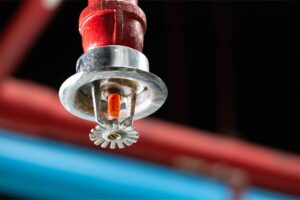
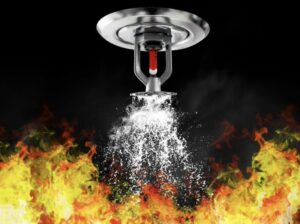
Fire Sprinkler Systems
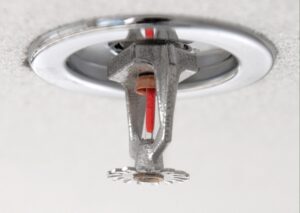
Automatic sprinklers are the most effective life safety technology in commercial buildings. Individual sprinkler heads activate when local temperatures reach their rated threshold, directing water at the fire source. Properly designed and maintained sprinkler systems have a documented effectiveness rate above 97% in controlling commercial fires.
Spectrum Fire Protection provides complete fire sprinkler installation, inspection, and repair services for commercial and industrial properties throughout Orange County, fully compliant with NFPA 13 and NFPA 25.
Fire Alarm and Detection Systems
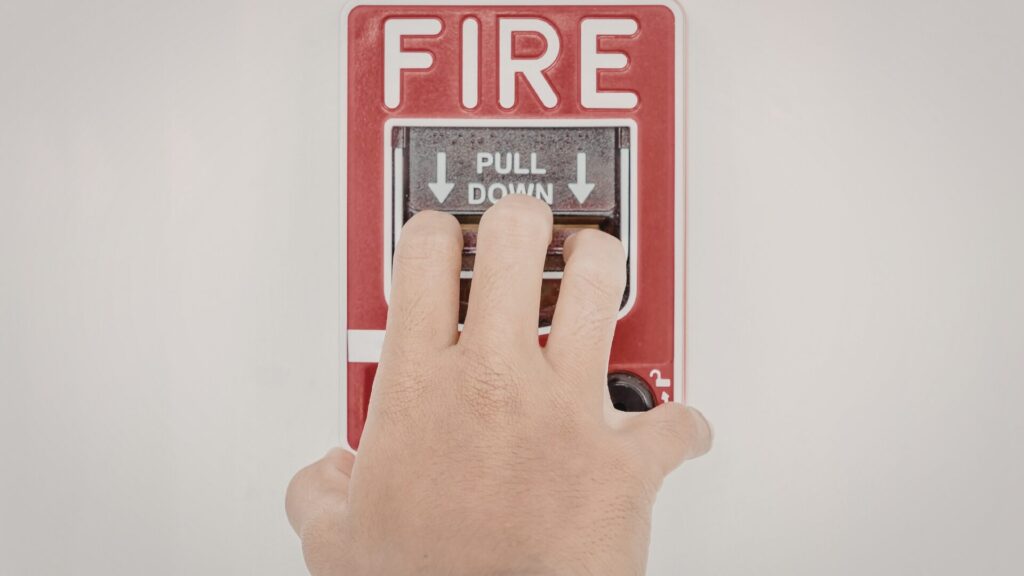
Fire alarm systems detect smoke, heat, or flame and immediately alert building occupants and, when monitored, dispatch emergency responders. Modern addressable fire alarm systems can pinpoint the exact location of an alarm within a large facility, reducing response time dramatically.
Under NFPA 72, all fire alarm systems require annual inspection, testing, and documentation. Spectrum’s fire alarm services include system design and installation, annual testing, ongoing maintenance, and UL-listed 24/7 central station monitoring.
Fire Suppression Systems
For environments where standard water sprinklers would be inappropriate or ineffective, commercial kitchens, server rooms, paint booths, and fuel storage areas, specialized suppression systems using wet chemicals, clean agents, foam, or CO₂ are required. These systems detect fire automatically and deliver the appropriate suppression agent directly to the hazard.
Spectrum’s fire suppression services include UL 300-compliant kitchen hood systems, clean agent systems, and custom suppression designs for special hazard occupancies throughout Orange County.
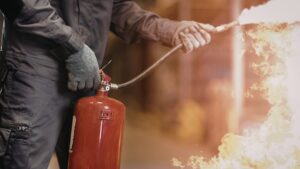
Fire Extinguishers
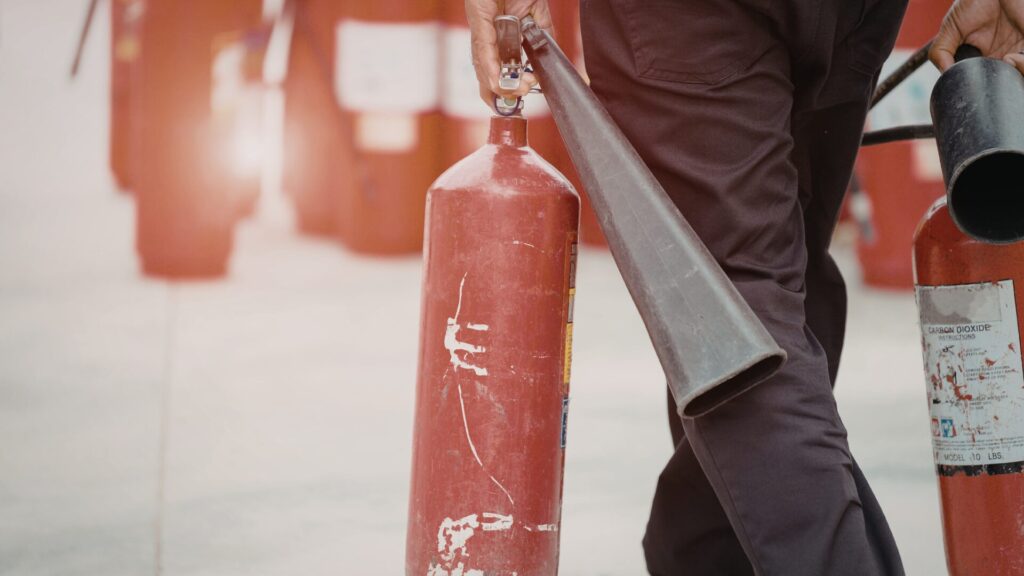
Portable extinguishers are the first line of manual intervention for small, contained fires. California Title 19 requires annual inspection and service by a licensed technician, with more frequent visual checks. Proper placement, rating, and signage are regulated by NFPA 10 and OCFA requirements. Spectrum provides complete fire extinguisher servicesincluding inspection, recharge, hydrostatic testing, and placement consulting.
Fire Pumps
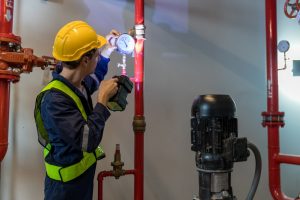
Many mid-size and large commercial properties in Orange County rely on fire pumps to maintain adequate water pressure throughout their sprinkler systems. Without a properly functioning fire pump, even the best-designed sprinkler system can fail to deliver water at the flow and pressure required to control a fire. Spectrum’s fire pump service program includes weekly run tests, annual full-load testing, and complete documentation per NFPA 25.
Fire Hydrants
On-site fire hydrants give OCFA firefighters immediate access to water supply upon arrival. Hydrant systems must be tested annually and maintained in working order. Spectrum provides fire hydrant testing and maintenance services to ensure your property’s hydrant infrastructure is ready when it matters most.
Passive Fire Protection Systems
Passive fire protection systems are built into the structure of a building and work continuously without any activation. Their purpose is to compartmentalize fire and smoke, slowing their spread and preserving the structural integrity of the building long enough for occupants to evacuate and firefighters to respond.
Key passive fire protection elements include:
Fire-Rated Wall and Floor Assemblies — Constructed of materials tested under ASTM E119 to resist fire for defined periods (1, 2, or 4 hours), these assemblies divide a building into fire compartments that contain a fire to its area of origin.
Fire Doors — Rated fire doors self-close and latch, creating a barrier against fire and smoke spread. A fire door that is propped open, has a faulty closer, or has been fitted with non-rated hardware provides zero passive protection.
Fire Dampers and Smoke Dampers — Installed in HVAC ductwork at penetrations through fire-rated assemblies, these devices automatically close when heat or smoke is detected, blocking the most common pathway for fire and smoke to spread through a building.
Firestopping — All penetrations through fire-rated walls and floors, for pipes, conduits, cables, and ducts, must be sealed with rated firestop materials to maintain the integrity of the fire barrier. This is one of the most frequently deficient areas in OCFA inspections of renovated commercial buildings.
Structural Fireproofing — Steel structures require spray-applied or board fireproofing to maintain their rated fire resistance and prevent structural collapse during a fire.
Fire Prevention vs. Fire Protection: Understanding the Difference
These two disciplines are complementary, not competing. Here’s how to distinguish them clearly:
| Feature | Fire Prevention | Fire Protection |
|---|---|---|
| When it acts | Before a fire starts | During and after a fire starts |
| Primary goal | Stop fires from igniting | Minimize damage and save lives |
| Approach | Proactive | Reactive / mitigative |
| Examples | Electrical maintenance, safe storage, employee training, housekeeping | Sprinklers, alarms, suppression systems, fire walls, fire doors |
| Who is responsible | Building occupants, management, safety officers | Fire protection contractors, AHJ inspectors |
| Code basis | Cal/OSHA Title 8, California Fire Code | NFPA 13, 25, 72, 80, 101; California Title 19 |
The critical takeaway: prevention reduces the probability of a fire; protection reduces the consequences when one occurs. A building with strong prevention but no protection system is gambling that nothing goes wrong. A building with strong protection but poor prevention is accepting unnecessary risk. Orange County code requires both, and effective fire safety demands both.
Why Both Are Required by Law in Orange County
Orange County commercial property owners must comply with a layered framework of fire safety regulations that governs both prevention and protection:
Orange County Fire Authority (OCFA)
The OCFA enforces the California Fire Code and conducts fire prevention inspections of commercial occupancies throughout the county. OCFA inspectors evaluate both prevention factors (hazardous materials storage, exit clearances, housekeeping) and protection systems (sprinkler records, alarm test documentation, extinguisher tags, fire door condition).
A failed OCFA inspection can result in correction notices, re-inspection fees, permit holds, and, in serious cases, occupancy restrictions that shut your business down until deficiencies are corrected.
California Fire Code (CFC) and Title 19
The California Fire Code incorporates and amends the International Fire Code (IFC), establishing statewide standards for fire prevention practices, hazardous materials management, and fire protection system requirements. Title 19 of the California Code of Regulations sets minimum standards for fire protection equipment servicing and inspection intervals.
Cal/OSHA Requirements
California employers are required under Title 8 to maintain fire prevention plans for workplaces with specific hazards, provide employee fire safety training, and ensure that fire protection equipment is accessible and properly maintained.
NFPA Standards
The National Fire Protection Association’s codes and standards are adopted by reference throughout California law and OCFA regulations:
- NFPA 1 — Fire Code (general fire prevention requirements)
- NFPA 13 — Sprinkler system installation
- NFPA 25 — Water-based system inspection and maintenance
- NFPA 72 — Fire alarm system testing
- NFPA 80 — Fire door inspection
- NFPA 101 — Life Safety Code
A Complete Fire Safety Program for Orange County Businesses: The Three-Layer Approach
The most effective fire safety programs for Orange County commercial properties integrate all three layers of the fire safety framework:
Layer 1 — Prevention (Stop It Before It Starts)
This is the foundation. It includes your fire prevention plan, employee training, regular housekeeping, equipment maintenance, safe storage practices, and periodic fire hazard inspections. This layer is primarily the responsibility of building management and occupants, but fire protection professionals can help identify hazards during routine system inspections.
Layer 2 — Protection: Active Systems (Detect and Suppress)
Once a fire ignites, active systems take over: alarms alert occupants and responders, sprinklers suppress the fire at its source, and suppression systems protect high-hazard areas. This layer must be properly designed for your specific occupancy type, installed by a licensed C-16 contractor, and maintained on the inspection schedules required by NFPA standards and Title 19.
Layer 3 — Protection: Passive Systems (Contain and Delay)
While active systems fight the fire, passive systems buy time by containing it. Fire-rated walls, fire doors, dampers, and firestopping ensure the fire cannot travel freely through the building while occupants evacuate and firefighters respond. This layer is built into the structure and must be maintained, fire doors inspected, dampers tested, firestop penetrations preserved through any renovation work.
When all three layers are functioning correctly, the outcome of even a serious fire incident is dramatically different than when one or more layers are missing or neglected.
How Spectrum Fire Protection Supports Your Complete Fire Safety Program in Orange County
Spectrum Fire Protection has served commercial and industrial properties across Orange County since 1987. As a licensed, bonded, and insured California fire protection contractor and proud NFPA member, we provide the full range of services that support both fire prevention and fire protection:
- Fire Sprinkler System Installation, Inspection & Repair — NFPA 13 & 25 compliant
- Fire Alarm Systems, Testing & Monitoring — NFPA 72 certified, UL-listed monitoring
- Fire Suppression Systems — Kitchen hoods, clean agents, special hazards
- Fire Extinguisher Services — Inspection, recharge, hydrostatic testing per Title 19
- Fire Pump Service & Testing — Weekly run tests, annual full-load per NFPA 25
- Fire Hydrant Testing & Maintenance — Annual flow testing and maintenance
During our service visits, our certified technicians also help identify fire prevention deficiencies, improper storage, clearance issues, blocked egress, and equipment concerns, so you can address them before an OCFA inspection or, more importantly, before a fire.
Conclusion
Fire prevention and protection are not the same thing, but they are inseparable parts of a complete fire safety strategy. Prevention reduces the probability that a fire will ever start. Protection reduces the consequences when one does.
In Orange County, where the OCFA actively enforces California’s fire codes and where the region’s dry climate and Santa Ana wind conditions create elevated wildfire interface risks, property owners cannot afford gaps in either discipline.
The best time to evaluate your fire prevention practices and protection systems is not after a close call or a failed inspection. It’s today, with a clear-eyed assessment of what you have in place, what needs attention, and who you’re trusting to keep it all working.
For complete fire prevention and fire protection in Orange County, trust the team that has been doing it since 1987.