(714) 213-8451
A fire sprinkler leaking in your commercial building is not a nuisance to ignore, it’s a compliance risk, a property damage event, and a potential signal that your entire fire suppression system needs attention. In Orange County, building owners typically have just 24 hours after the fire department shuts off your water supply to restore your system to full operational status. The clock starts the moment the leak is discovered.
This guide explains the most common causes of a fire sprinkler leaking, how to tell whether it’s an emergency or a maintenance item, and the exact steps you should take as a commercial property owner in Orange County or greater Southern California.
6 Common Causes of a Leaking Fire Sprinkler
Fire sprinkler systems operate under constant pressure. That pressure keeps the system ready to activate instantly in the event of a fire but it also means any weak point in the system will eventually show up as a leak. Here are the six most common root causes we see in commercial buildings across Orange County:
01: Corrosion & Pipe Deterioration
Steel pipes in wet-pipe systems are constantly exposed to water. Over time, internal corrosion weakens pipe walls and fittings, leading to pinhole leaks or joint failures. This is the most common long-term cause in aging systems.
02: Accidental Activation / Head Damage
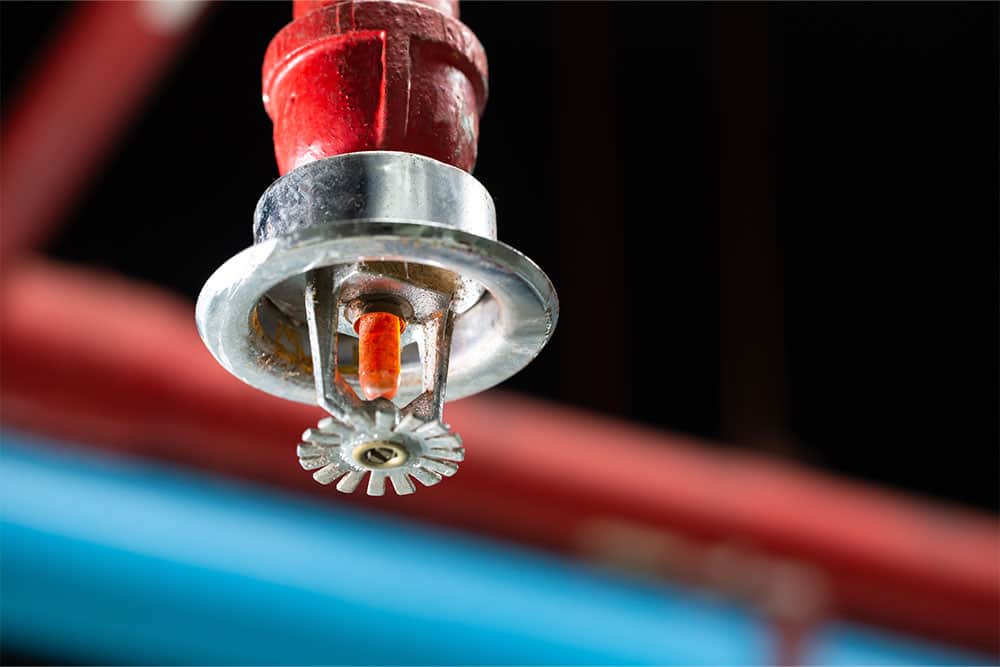
A sprinkler head can be accidentally broken by a forklift, a ladder, falling inventory, or renovation work. Once the glass bulb is broken, the head discharges and won’t stop until the system is shut down.
03: Worn or Corroded Sprinkler Heads
Individual heads have a service life. Older heads, especially those installed 25+ years ago, can develop internal seal failures or corroded bodies that allow water to seep through even when the head hasn’t activated.
04: Loose Pipe Joints & Fittings
Building settlement, seismic activity (a very real factor in California), thermal expansion, and improper installation can all loosen threaded connections and grooved couplings over time, causing slow but damaging leaks.
05: Excessive Water Pressure
When system pressure exceeds the rated capacity of components, due to a faulty pressure reducing valve or a fire pump issue, it accelerates wear on seals, gaskets, and head bodies, leading to leaks throughout the system.
06: Freeze Damage
Although rare in Orange County, unheated warehouses, parking garages, and cold-storage facilities can experience freezing during cold snaps. Water expands when it freezes, cracking pipes and heads in dry-pipe or pre-action systems.
⚠ IMPORTANT FOR PROPERTY OWNERS
A slow drip from a fire sprinkler is not just a maintenance issue, it may indicate internal corrosion that is spreading throughout the system. Every fire sprinkler inspection we perform includes pressure testing and internal pipe assessment precisely because visible leaks are often the last symptom, not the first.
Warning Signs You Shouldn’t Ignore
Not every leaking fire sprinkler announces itself with a flood. Many leaks start subtly. Here are the signs commercial property managers should watch for:
- Water staining or rust marks on ceilings around sprinkler heads
- Damp ceiling tiles or warped drywall near a sprinkler head or pipe run
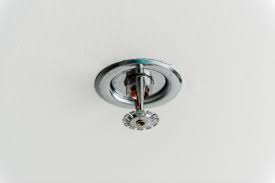
- Corrosion or mineral deposits visible on the head itself or the escutcheon plate
- A drop in system pressure that triggers the supervisory alarm on your fire alarm panel
- A spinning flow indicator on the water supply line when no fixtures are in use
- Musty odors or mold growth in areas where sprinkler pipes run above suspended ceilings
Any one of these signs warrants a call to a licensed fire sprinkler contractor. If your fire alarm system is showing a supervisory fault or low-pressure alert alongside a visible leak, treat it as an emergency.
What To Do When a Fire Sprinkler Is Leaking
The steps you take in the first few minutes after discovering a leaking fire sprinkler matter. Follow this sequence:
Locate and control the water supply
Find the main system control valve (typically a post-indicator valve or an OS&Y valve) and close it to stop the flow. Do not attempt to “plug” or patch a sprinkler head, this can interfere with the system’s ability to protect your building and may create additional liability.
Call your fire sprinkler contractor immediately
You are legally required to have your system back in service within 24 hours under NFPA 25 and most California fire codes. Spectrum Fire Protection provides emergency fire sprinkler repair across Orange County and the surrounding region.
Notify the local fire authority having jurisdiction (AHJ)
Depending on your city or county, you may be required to notify the fire marshal when a suppression system is taken offline even temporarily. Your fire sprinkler contractor can advise on local requirements and submit the necessary documentation.
Implement a fire watch if required
NFPA 25 requires that a fire watch be established when a sprinkler system is out of service for more than 10 hours in a 24-hour period. This means a designated individual must continuously patrol the affected area and be prepared to immediately notify the fire department if a fire is detected.
Document everything for your insurer
Photograph the leak, the surrounding damage, and any equipment or inventory that was affected. Your fire protection contractor should provide a written repair report documenting the cause of the leak, the repair performed, and certification that the system has been restored to full operational status.
Fire Sprinklers vs. Irrigation Sprinklers: Key Differences
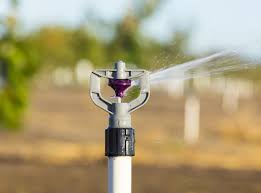
It’s worth clarifying something important: most online search results for “sprinkler leaking” describe lawn or irrigation sprinklers. If you have a lawn sprinkler leaking, that’s an irrigation problem, low head drainage, worn valve diaphragms, or cracked nozzles, and the fix is generally a DIY or landscaping matter.
A fire sprinkler leaking is a fundamentally different situation:
- Fire sprinklers operate at high pressure (typically 50–175 PSI) far higher than an irrigation system
- They are life-safety devices governed by NFPA 13, NFPA 25, and the California Fire Code,not just plumbing codes
- Repairs must be performed by licensed contractors (C-16 Fire Protection license in California) not general plumbers or handymen
- A system that is impaired may trigger insurance policy violations and require notification of your insurer
Spectrum Fire Protection holds a C16/C10 contractor license and has specialized exclusively in commercial fire protection for 39 years. If you’re unsure whether what you’re seeing is a fire system leak or another type of leak, call us and we’ll diagnose it immediately.
California Compliance: The 24-Hour Rule
Under NFPA 25 (Standard for the Inspection, Testing, and Maintenance of Water-Based Fire Protection Systems) and California’s AHJ requirements, when a fire sprinkler system is taken out of service due to a leak or repair, the building owner must:
- Restore the system to full operation within 24 hours if the fire department has become involved
- Implement an approved fire watch for the duration of any impairment
- Submit an impairment record documenting the nature of the impairment, when it began, and when it was corrected
- Ensure repairs are documented and submitted to the AHJ as part of your building’s annual fire sprinkler inspection records
Failure to comply can result in fines, a mandatory shutdown order, and complications with your commercial property insurance. If your building is in the middle of a five-year fire sprinkler certification cycle, a documented leak and repair are required to be on file with the certifying contractor.
How to Prevent Fire Sprinkler Leaks
The best way to deal with a leaking fire sprinkler is to catch the conditions that cause leaks before they become active failures. Here’s what property owners should be doing:
Schedule Annual Inspections
NFPA 25 requires annual inspection and testing of fire sprinkler systems. During a proper inspection, a licensed technician will test system pressure, visually inspect all accessible heads and fittings for corrosion or damage, and flag any components that are approaching end of life. A professional fire sprinkler inspection catches the hairline cracks and early corrosion that turn into emergency repairs if left alone.
Replace Older Sprinkler Heads
NFPA 25 recommends that older sprinkler heads, particularly those installed before 1980 or in harsh environments, be replaced or subjected to a representative sample test to verify they will still function correctly. A head that is physically intact may still fail to activate in a fire or may begin seeping due to internal seal degradation.
Monitor System Pressure
Many commercial fire systems have supervisory devices connected to the building’s fire alarm panel that report pressure drops. If you’re seeing intermittent supervisory alerts on your panel, don’t reset and ignore them, those alerts often precede an active leak by weeks or months.
Protect Heads from Physical Damage
In warehouses, manufacturing facilities, and retail spaces where forklifts, pallet jacks, and tall shelving are common, head guards should be installed on any sprinkler heads in vulnerable locations. A single strike from a forklift mast can immediately discharge a head, flooding inventory and triggering an emergency repair.
Address Underground Fire Lines
Leaks don’t always originate above the slab. Underground supply lines that feed a building’s sprinkler system can develop leaks due to corrosion, ground movement, or improper installation and they’re often only discovered during a pressure test or when water begins appearing inside the building. Spectrum also provides underground fire line repair for exactly these situations.
💡 PRO TIP
If your building is more than 20 years old and has never had a comprehensive internal pipe inspection, ask your fire sprinkler contractor about internal pipe condition assessment. Corrosion inside black steel pipe can be severe long before external signs appear.
Frequently Asked Questions
How do I know if my fire sprinkler is leaking or if it is activated?
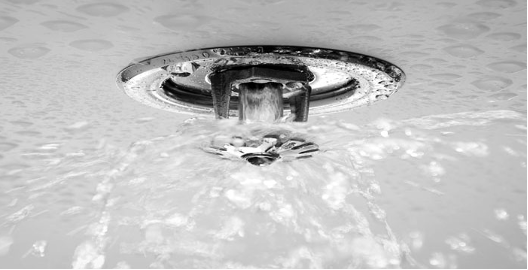
An activated sprinkler discharges at a high flow rate, typically 10–26 gallons per minute, and won’t stop until the system is shut off. A leaking head drips or seeps slowly. Either way, close the main control valve and call a licensed fire sprinkler repair contractor immediately. If the head has activated, you must also notify the fire department.
Can I repair a leaking fire sprinkler myself?
No. Fire sprinkler repairs in California must be performed by a licensed C-16 fire protection contractor. Attempting to repair or replace a sprinkler head yourself can void your system certification, violate your insurance policy, and create liability if the system fails to function in a fire.
My fire sprinkler is dripping slowly. Is this an emergency?
Yes, treat it as one. Even a slow drip indicates a compromised component in a life-safety system. Call a fire sprinkler contractor the same day. If you need to close the main water supply valve to stop the drip, do so, but be aware you’ll need to implement a fire watch and notify your AHJ if the system will be impaired for more than 10 hours.
Will a leaking sprinkler head affect my building’s fire protection?
Potentially. Depending on where the leak is and how much pressure has dropped, a leaking head may reduce the system’s ability to deliver adequate water to the affected zone. Only a pressure test and inspection can confirm whether your system remains fully functional. This is exactly what our sprinkler inspection and testing service confirms.
How much does fire sprinkler leak repair cost?
A single head replacement is typically straightforward and inexpensive. More extensive repairs, such as corroded pipe sections, underground line repairs, or multiple head replacements, vary significantly. Spectrum provides itemized, code-compliant repair estimates with photo documentation before any work begins. Request a free consultation to get an accurate assessment for your building.
Does Spectrum Fire Protection cover emergency sprinkler leaks?
Yes. We provide 24/7 emergency response for commercial buildings across Orange County, Los Angeles County, Riverside County, and San Bernardino County. Call us at (714) 213-8451 for same-day or emergency service.