(714) 213-8451
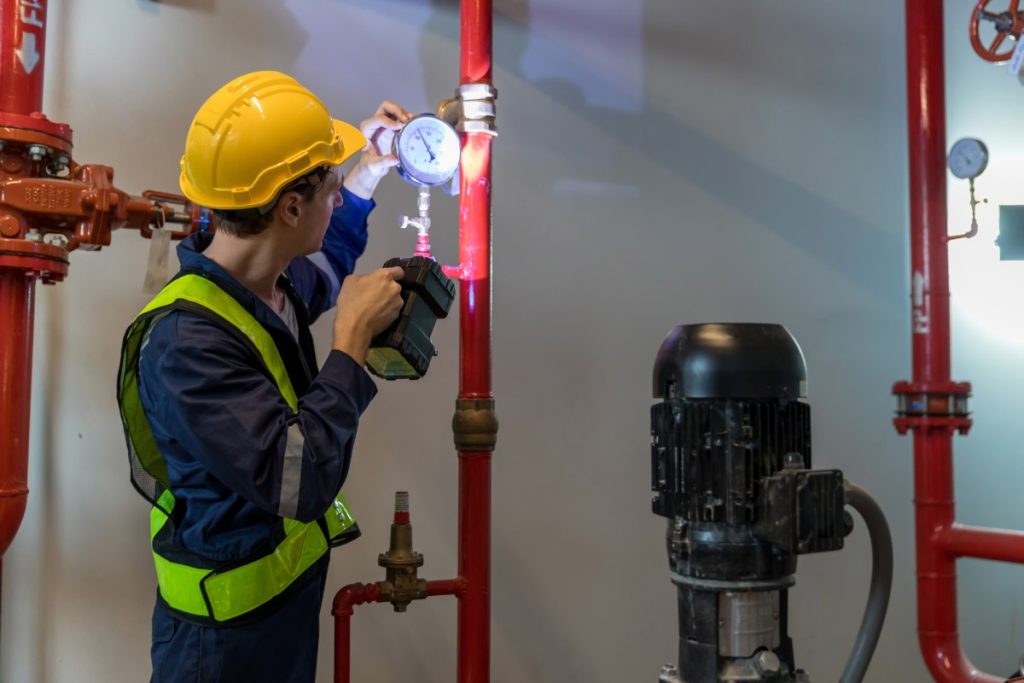
Fire suppression systems cost between $2,000 and $15,000 for most commercial applications. Restaurant kitchen systems run $3,500 to $8,500. Server room clean agent systems cost $5,000 to $20,000. Paint booth dry chemical systems range from $4,000 to $12,000. Final pricing depends on system type, coverage area, and installation complexity.
These costs include equipment, installation labor, and basic system commissioning. They don’t include ongoing monitoring fees, annual inspections, or specialized engineering for complex installations.
Average Fire Suppression System Costs by Application
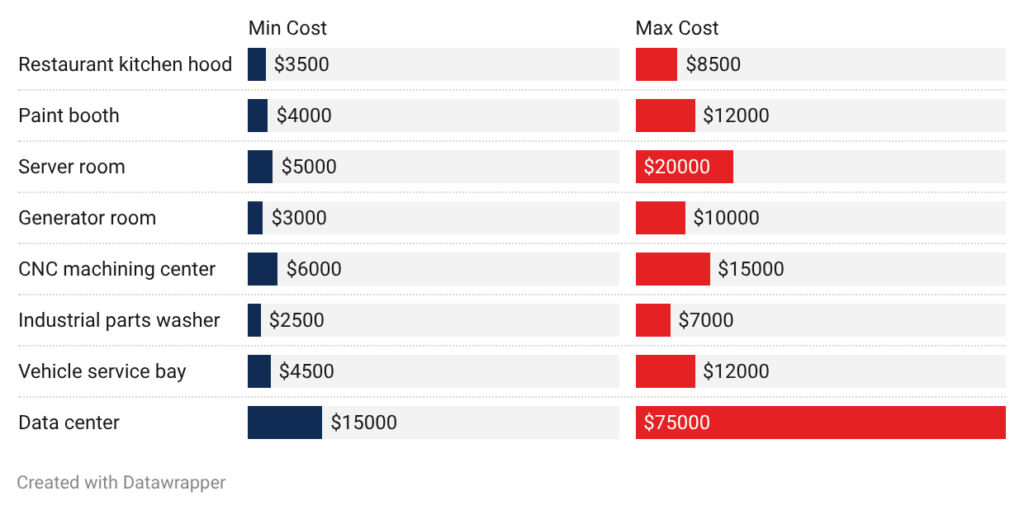
- Restaurant kitchen hood: Wet chemical systems for commercial kitchens cost $3,500 to $8,500 installed. A single 6-foot hood runs $3,500 to $5,000. Double hood systems or 10-foot hoods cost $6,500 to $8,500. Systems protecting multiple cooking appliances need more nozzles and agent storage pushing costs higher.
- Paint booth: Dry chemical systems protecting paint booths cost $4,000 to $12,000. Small automotive paint booths run $4,000 to $6,000. Large industrial booths with multiple spray zones cost $9,000 to $12,000. Powder coating booths sometimes need different suppression methods affecting pricing.
- Server room: Clean agent systems like FM-200 cost $5,000 to $20,000. A 500 square foot server room runs $5,000 to $8,000. Larger data centers with 2,000+ square feet need $15,000 to $20,000. The clean agent itself represents 40% to 50% of total system cost.
- Generator room: Suppression systems for backup generators cost $3,000 to $10,000. Small emergency generators need $3,000 to $5,000. Large commercial generators or multiple units need $7,000 to $10,000. Diesel fuel presents special fire hazards requiring specific agent types.
- CNC machining center: CNC machine suppression runs $6,000 to $15,000. Single-spindle machines cost $6,000 to $9,000. Multi-axis machining centers with enclosed work areas need $11,000 to $15,000. Coolant mist and metal dust create challenging fire suppression requirements.
- Industrial parts washer: Parts washer suppression costs $2,500 to $7,000. Small benchtop units need $2,500 to $4,000. Large industrial washers handling flammable solvents cost $5,500 to $7,000. Closed-loop washers cost less to protect than open spray washers.
- Vehicle service bay: Automotive service bays need $4,500 to $12,000. Single-bay shops run $4,500 to $7,000. Multi-bay facilities with multiple lift stations cost $9,000 to $12,000. Fleet maintenance facilities sometimes need foam systems instead of dry chemical.
- Data center: Large data centers cost $15,000 to $75,000 depending on size. A 3,000 square foot facility runs $15,000 to $25,000. Enterprise data centers over 10,000 square feet need $50,000 to $75,000. Multiple zones with separate detection and suppression add to costs.
Fire Suppression System Cost Breakdown in Orange County
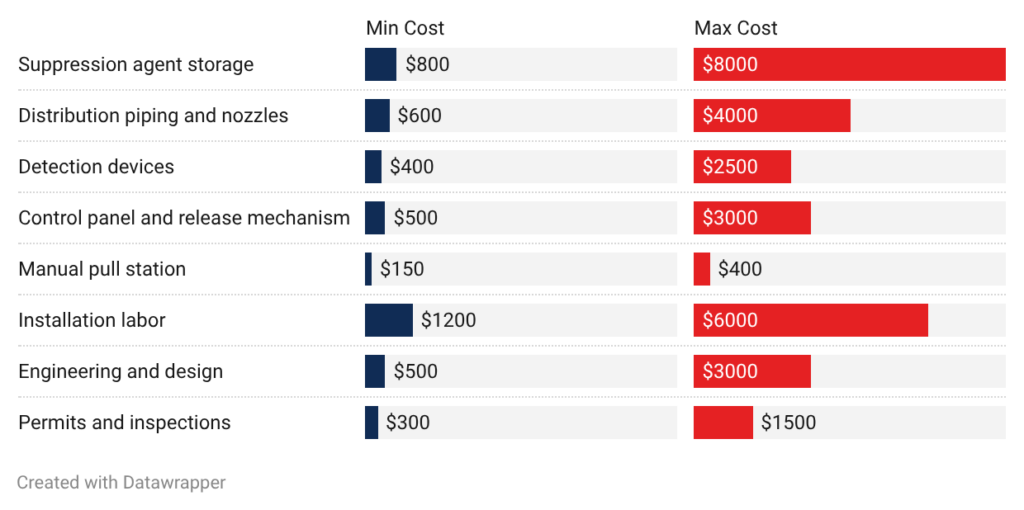
- Suppression agent storage: Agent storage tanks or cylinders cost $800 to $8,000. Small kitchen systems use single tanks at $800 to $1,500. Large clean agent systems need multiple cylinders at $5,000 to $8,000. The agent itself costs $15 to $40 per pound depending on type.
- Distribution piping and nozzles: Piping and nozzles run $600 to $4,000. Simple kitchen hood systems need $600 to $1,200. Complex paint booth systems with multiple discharge points cost $2,500 to $4,000. Stainless steel piping costs more than standard steel.
- Detection devices: Fire detection costs $400 to $2,500. Basic heat detectors run $400 to $800 for small systems. Sophisticated smoke and flame detection for large areas needs $1,500 to $2,500. Rate-of-rise heat detection costs more than fixed-temperature detection.
- Control panel and release mechanism: Control panels cost $500 to $3,000. Simple mechanical systems use pneumatic controls at $500 to $1,000. Electronic control panels with zone monitoring cost $2,000 to $3,000. Addressable systems for large facilities run highest.
- Manual pull station: Manual activation stations cost $150 to $400 installed. Basic pull stations run $150 to $250. Weatherproof stations for outdoor or harsh environments cost $300 to $400. Multiple pull stations add $150 to $400 for each additional unit.
- Installation labor: Labor costs $1,200 to $6,000. Simple kitchen hood installations run $1,200 to $2,000. Complex industrial systems need $4,000 to $6,000 in labor. Working in occupied facilities or at heights increases labor costs.
- Engineering and design: Professional design runs $500 to $3,000. Simple systems need basic layout drawings at $500 to $1,000. Complex systems require engineered plans with discharge calculations at $2,000 to $3,000. Some applications require professional engineer stamps.
- Permits and inspections: Permits cost $300 to $1,500. Simple installations run $300 to $600. Complex systems in major cities cost $1,000 to $1,500. Fire marshal acceptance testing adds to inspection costs.
Fire Suppression System Price by System Type
Wet Chemical Systems
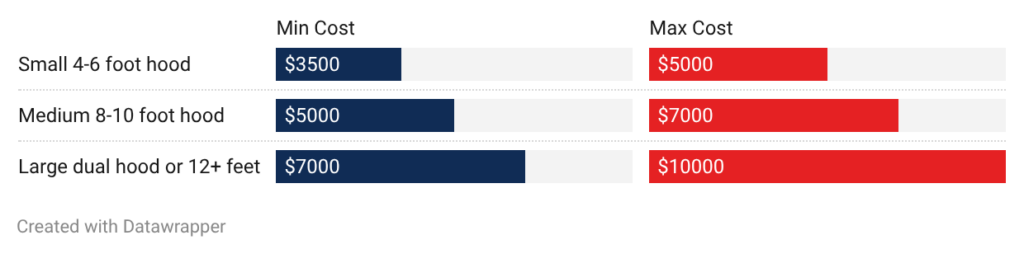
- Small hood systems: Four to six foot hoods cost $3,500 to $5,000. This includes one 1.5 to 3 gallon wet chemical tank, 3 to 5 nozzles, detection link, manual pull station, and installation. Simple single-appliance setups fall at the low end.
- Medium hood systems: Eight to ten foot hoods run $5,000 to $7,000. These systems need 4 to 8 nozzles and larger agent tanks. Double-bank cooking lines with ranges and fryers need coverage across the entire hood length.
- Large hood systems: Dual hoods or 12+ foot installations cost $7,000 to $10,000. Multiple agent tanks, 10+ nozzles, and complex piping networks drive costs up. Systems protecting both hood and plenum require additional components.
Wet chemical systems are required for commercial cooking operations. They use potassium-based agents that react with cooking oils to create a foam blanket. The agent won’t damage cooking equipment and cleanup is relatively simple.
Dry Chemical Systems
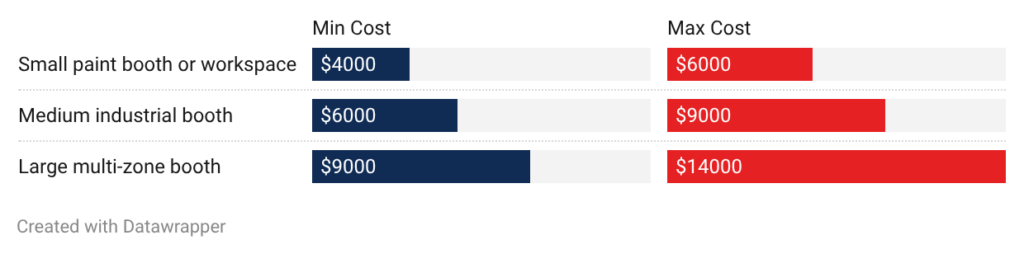
- Small booth systems: Compact paint booths cost $4,000 to $6,000. Systems use 20 to 50 pound dry chemical cylinders with 4 to 8 nozzles. Automotive body shops typically need systems in this range.
- Medium booth systems: Mid-sized industrial booths run $6,000 to $9,000. These installations use 50 to 100 pounds of dry chemical agent with 8 to 12 nozzles. Multiple discharge zones increase coverage and cost.
- Large booth systems: Big industrial booths cost $9,000 to $14,000. Systems protecting large spray areas need 100+ pounds of agent and 15+ nozzles. Some applications require foam systems instead of dry chemical.
Dry chemical systems work well for Class B (flammable liquid) and Class C (electrical) fires. The powder agent leaves residue requiring cleanup but effectively knocks down flames quickly. Common in paint booths, parts washers, and vehicle service areas.
Clean Agent Systems (FM-200, Novec 1230)
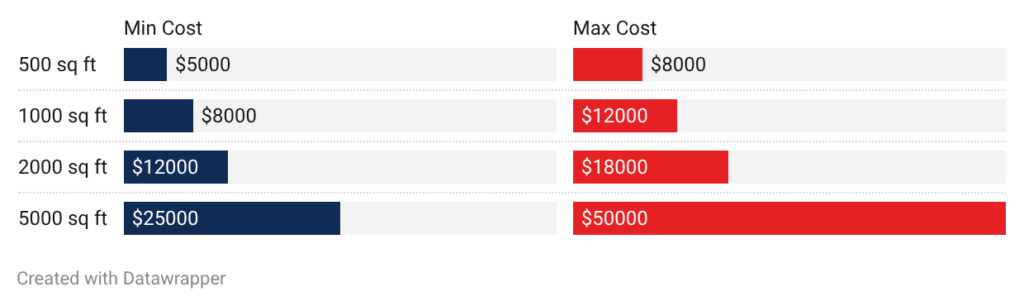
- 500 square foot coverage: Small server rooms cost $5,000 to $8,000. This includes FM-200 or Novec 1230 cylinders, piping, nozzles, detection, and control panel. Agent cost represents $2,000 to $3,000 of the total.
- 1,000 square foot coverage: Medium spaces run $8,000 to $12,000. Multiple agent cylinders provide adequate concentration throughout the protected area. Detection systems need careful placement to ensure fast activation.
- 2,000 square foot coverage: Larger areas cost $12,000 to $18,000. Systems need multiple discharge zones to maintain proper agent concentration. Rooms with high ceilings or complex layouts cost more.
- 5,000 square foot coverage: Large data centers or computer rooms need $25,000 to $50,000. Extensive piping networks, multiple agent banks, and sophisticated detection drive costs up. Some facilities need redundant systems.
Clean agent systems discharge gaseous agents that suppress fire without leaving residue. They won’t damage sensitive electronics making them ideal for data centers, server rooms, and telecommunications facilities. Agent cost is high at $30 to $50 per pound.
CO2 Systems
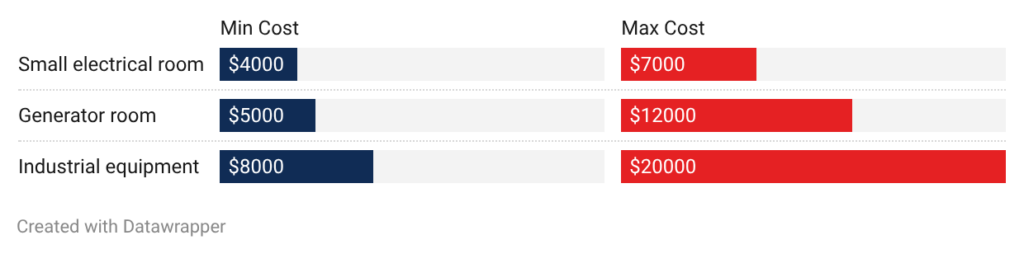
- Small electrical rooms: Compact electrical spaces cost $4,000 to $7,000 for CO2 protection. High-pressure CO2 cylinders discharge quickly to smother fires. The system works by displacing oxygen which presents safety concerns requiring proper ventilation and alarms.
- Generator rooms: Backup generator protection runs $5,000 to $12,000. Diesel generators present both electrical and fuel fire hazards. CO2 systems handle both effectively but require careful design for adequate concentration.
- Industrial equipment: Large machinery or process equipment needs $8,000 to $20,000. Print presses, transformers, and other industrial equipment benefit from CO2’s residue-free discharge. Safety interlocks prevent discharge when people are present.
CO2 systems cost less than clean agents but create breathing hazards. Rooms need pre-discharge alarms and time delays allowing evacuation. Not suitable for normally occupied spaces but effective for electrical and flammable liquid fires.
Foam Systems
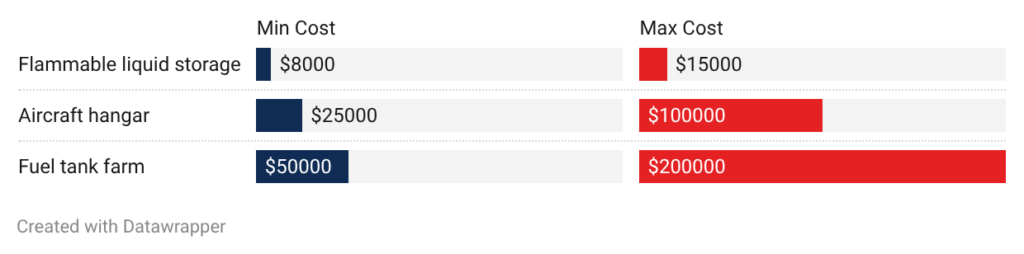
- Flammable liquid storage: Small storage areas cost $8,000 to $15,000. Foam concentrate mixes with water to create expansion ratios from 3:1 to 1000:1. Low-expansion foam works for liquid surface fires. Medium and high-expansion foam fills enclosed spaces.
- Aircraft hangars: Hangar foam systems run $25,000 to $100,000 depending on size. These specialized systems protect both aircraft and fuel spills. Deluge systems discharge foam across the entire hangar floor rapidly.
- Fuel tank farms: Large petroleum storage facilities need $50,000 to $200,000. Fixed foam systems protect multiple tanks. Foam generators and proportioning equipment add to base system costs. Some facilities need foam monitors and hydrants for manual application.
Foam systems are most expensive but necessary for large flammable liquid hazards. The foam concentrate costs $15 to $30 per gallon. Systems need water supply and proportioning equipment adding complexity and cost.
Installation Costs and Factors
Installation labor represents 30% to 50% of total fire suppression system costs. Simple installations run $1,200 to $2,500. Complex installations need $4,000 to $8,000 in labor.
New construction installations cost less than retrofits. Installing suppression during construction allows running piping before ceilings close up. Retrofit installations require working around existing equipment and finishes adding 30% to 50% to labor costs.
Ceiling height affects installation difficulty. Standard 10 to 12 foot ceilings allow normal installation methods. Ceilings over 20 feet require lifts or scaffolding adding $500 to $1,500 to labor costs. Very high ceilings in warehouses or industrial facilities can double installation labor.
Working in occupied facilities increases costs. Contractors work around business operations, often during off-hours. This constraint adds 20% to 40% to labor costs compared to vacant facilities. Some installations require temporary shutdown of protected equipment.
Electrical connections for detection and control panels add $400 to $1,200. Simple systems need basic 120V connections. Sophisticated systems need dedicated circuits with backup power. Electricians charge $75 to $120 per hour in California.
Tie-ins to existing fire alarm systems cost $800 to $2,500. Suppression systems often connect to building fire alarms for monitoring and notification. Interface modules, programming, and testing contribute to integration costs.
Ongoing Maintenance and Inspection Costs in Orange County
California requires annual fire suppression system inspections. Maintenance costs vary by system type.
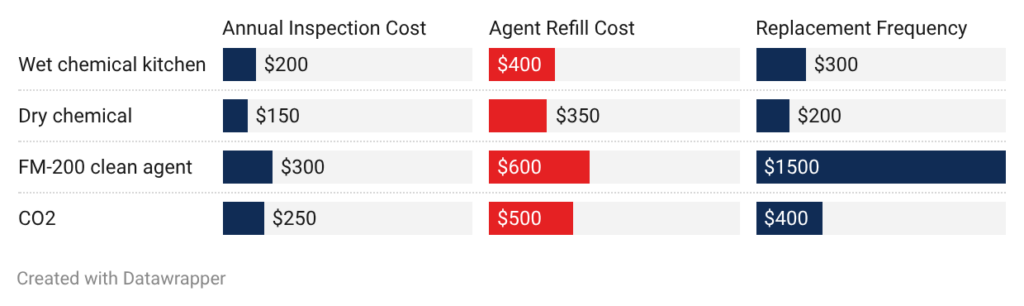
- Wet chemical kitchen systems: Annual inspections cost $200 to $400. Inspectors check nozzles, fusible links, manual pull stations, and agent tanks. Kitchen systems see heavy grease buildup requiring thorough cleaning. Agent tanks need replacement every 6 years at $300 to $800.
- Dry chemical systems: Annual inspections run $150 to $350. Technicians verify detection devices, check cylinder pressure, and test manual activation. Dry chemical agent settles over time requiring cylinder rotation every 6 months. Full agent replacement costs $200 to $600 every 6 years.
- FM-200 clean agent systems: Annual inspections cost $300 to $600. These systems need cylinder pressure checks and detection testing. The agent doesn’t degrade but cylinders need hydrostatic testing every 5 years at $200 to $400. Agent refills after discharge cost $1,500 to $5,000 depending on system size.
- CO2 systems: Annual inspections run $250 to $500. CO2 cylinders need weight verification and valve testing. Cylinders require hydrostatic testing every 5 to 10 years at $150 to $300. Agent refills cost $400 to $1,200 based on cylinder capacity.
Semi-annual inspections are required for restaurant kitchen systems. These additional inspections cost $100 to $200 each. Restaurants need at least two inspections per year totaling $300 to $600 annually.
System discharge requires immediate professional servicing. After any activation, technicians must inspect the entire system, refill agent tanks, replace fusible links or detection devices, and test operation. Post-discharge service costs $800 to $3,000 depending on system complexity.
California-Specific Requirements for Fire Suppression Systems Affecting Cost
California follows stricter fire suppression requirements than many states. These regulations affect system costs.
California Title 19 requires specific certifications for kitchen suppression systems. Only state-certified contractors can install and service restaurant systems. This requirement doesn’t increase costs directly but limits contractor options potentially affecting pricing.
Seismic bracing adds to installation costs in California. Suppression agent cylinders need seismic restraints. Large cylinder banks require substantial bracing adding $300 to $1,500 to installation costs. Piping also needs seismic supports at specified intervals.
Backflow prevention is required when suppression systems connect to potable water supplies. Foam systems and some kitchen systems need backflow preventers costing $400 to $1,200 installed. Annual testing adds $100 to $200 to maintenance costs.
California environmental regulations affect agent selection. Some older Halon systems still operating need phase-out plans. Replacing Halon systems with clean agent alternatives costs $8,000 to $30,000 depending on coverage area. The state encourages environmentally friendly agents.
Local permits vary widely across California jurisdictions. Los Angeles requires more extensive plan review than many areas. LA permit fees run $500 to $1,500 for suppression systems. Smaller cities charge $300 to $800. Plan review can take 2 to 8 weeks depending on jurisdiction.
Air quality districts regulate some suppression agents. Bay Area Air Quality Management District and South Coast Air Quality Management District have specific requirements for certain chemicals. Compliance might require different agents or additional engineering adding to costs.
Southern California Regional Pricing for Fire Suppression Systems
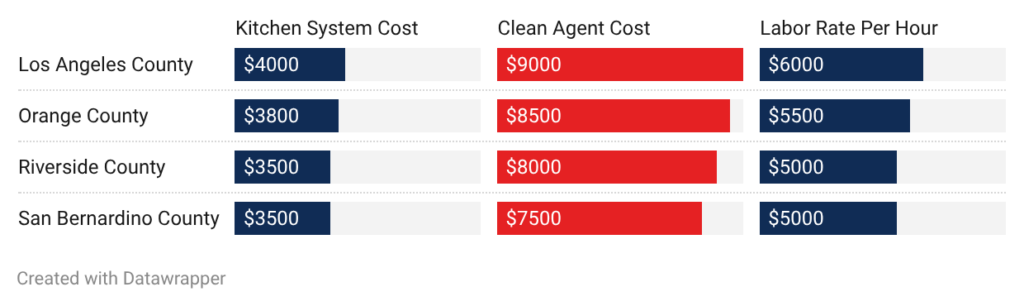
- Los Angeles County: Los Angeles County has the highest suppression system costs. Kitchen systems run $4,000 to $9,000. Clean agent systems cost $6,000 to $22,000. Labor rates run $85 to $120 per hour. Higher permit fees and stricter code enforcement drive costs up.
- Orange County: Orange County pricing falls slightly below LA. Kitchen systems cost $3,800 to $8,500. Clean agent installations run $5,500 to $20,000. Labor rates are $80 to $110 per hour. Permit fees are moderate compared to LA County.
- Riverside County: Riverside County offers lower costs than coastal counties. Kitchen systems run $3,500 to $8,000. Clean agent systems cost $5,000 to $18,000. Labor rates drop to $70 to $95 per hour. Lower permit fees and less expensive real estate reduce overhead.
- San Bernardino County: San Bernardino County has the most affordable pricing. Kitchen systems cost $3,500 to $7,500. Clean agent systems run $5,000 to $17,000. Labor rates are $65 to $90 per hour. Fewer contractors work in the area but lower operating costs benefit customers.
Regional price differences add up significantly for multi-location businesses. A restaurant chain installing kitchen suppression in 5 locations could save $3,000 to $7,500 by considering regional pricing differences across Southern California.
Final Thoughts
Fire suppression system prices range from $2,000 to $75,000 depending on application and system type. Restaurant kitchens need $3,500 to $8,500 for wet chemical systems. Server rooms require $5,000 to $20,000 for clean agent protection. Paint booths cost $4,000 to $12,000 for dry chemical systems.
System type, coverage area, and installation complexity determine final costs. California requirements for seismic bracing, backflow prevention, and strict permitting add to base system costs. Annual maintenance runs $150 to $600 depending on system type. Many facilities also combine suppression systems with fire sprinkler services and fire hydrant services for comprehensive fire protection coverage.
Spectrum Fire Protection designs and installs fire suppression systems throughout Los Angeles County, Orange County, Riverside County, and San Bernardino County. We hold California contractor licenses and specialize in kitchen, clean agent, and industrial suppression systems. Call us at (714) 213-8451 to discuss your fire suppression needs and receive a detailed quote.