(714) 213-8451
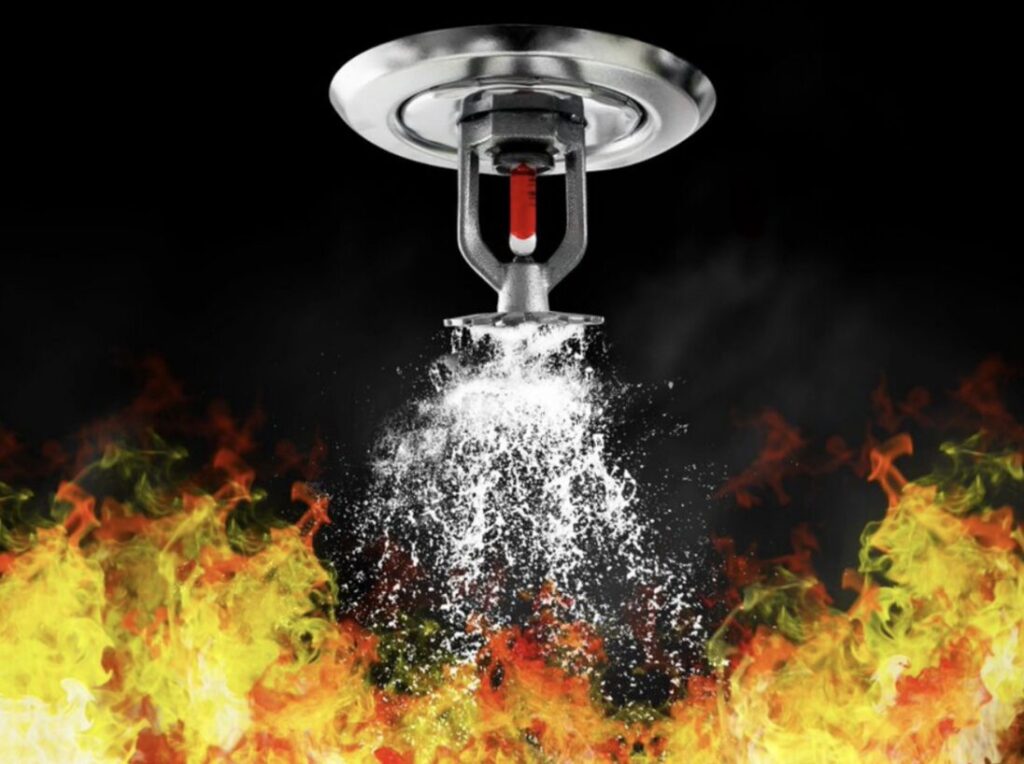
Wet pipe sprinkler systems keep water in pipes ready to flow immediately when fire activates a sprinkler head. Dry pipe systems fill pipes with compressed air instead of water. When a sprinkler activates, air escapes first, then water flows. The main difference is response time and where each system works. Wet systems discharge water instantly. Dry systems delay 30 to 60 seconds while air exhausts.
Most buildings use wet pipe systems because they cost less and work reliably. Dry pipe systems protect spaces where pipes might freeze. Understanding when each system makes sense saves money and ensures proper fire protection.
Quick Comparison: Wet vs Dry Sprinkler Systems
| Feature | Wet Pipe System | Dry Pipe System |
|---|---|---|
| Pipes contain | Pressurized water | Compressed air or nitrogen |
| Response time | Immediate | 30-60 second delay |
| Installation cost per sq ft | 1.50-3.50 | 2.50-4.50 |
| Annual maintenance cost | 400-800 | 600-1200 |
| Freeze protection | No | Yes |
| Suitable locations | Heated buildings | Unheated or freezing areas |
| Complexity | Simple | More complex |
| Reliability | Highest | High |
| Water damage risk | Higher if pipes leak | Lower until activation |
Wet pipe systems work in heated buildings where temperatures stay above 40°F. Dry pipe systems protect unheated warehouses, parking garages, and loading docks where freezing occurs. Most California commercial buildings use wet pipe systems. Dry pipe appears in cold storage facilities and unconditioned spaces.
What Is a Wet Pipe Sprinkler System
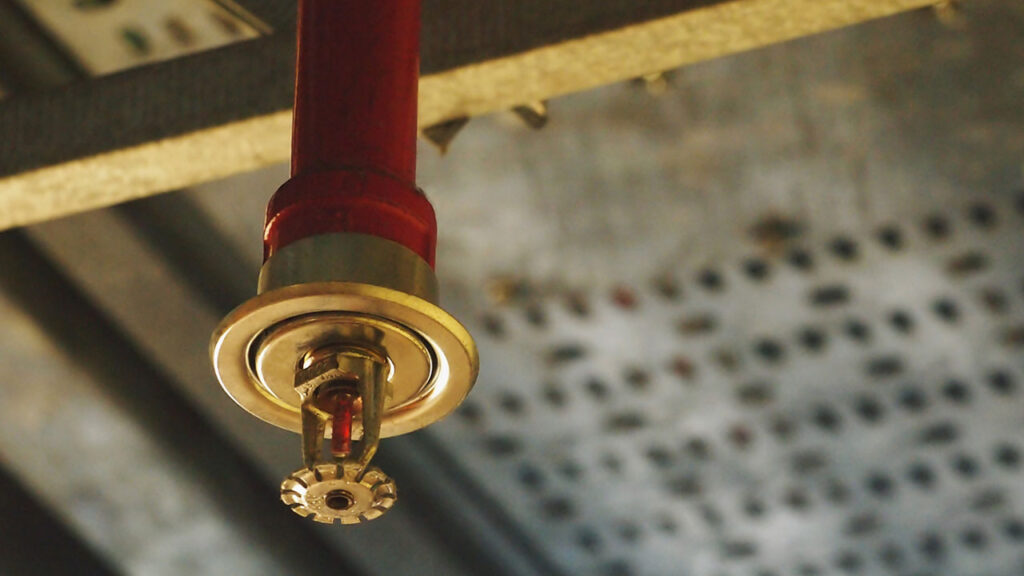
Wet pipe systems are the simplest fire sprinkler design. Pipes stay filled with pressurized water at 50 to 150 PSI connected to a municipal water supply or fire pump. Water waits behind each sprinkler head ready to flow.
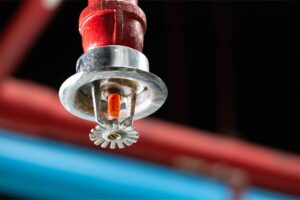
Sprinkler heads contain heat-sensitive elements – usually glass bulbs filled with liquid. The liquid expands when heated. At a specific temperature between 135°F and 286°F, the bulb breaks. Water immediately flows from that sprinkler head only.
The system includes a main control valve where water enters the building. An alarm test valve allows testing without triggering building alarms. Flow switches detect water movement and activate fire alarm systems. A backflow preventer stops sprinkler water from contaminating drinking water.
When fire heats a room, ceiling temperatures rise quickly. The nearest sprinkler head activates first, usually within one to two minutes of fire ignition. Water flows at 15 to 25 gallons per minute from that head. About 85% of fires are controlled by one sprinkler head.
Wet pipe systems respond instantly because water is always present. No delay exists between sprinkler activation and water discharge. This immediate response controls fires while they’re small, minimizing damage.
What Is a Dry Pipe Sprinkler System
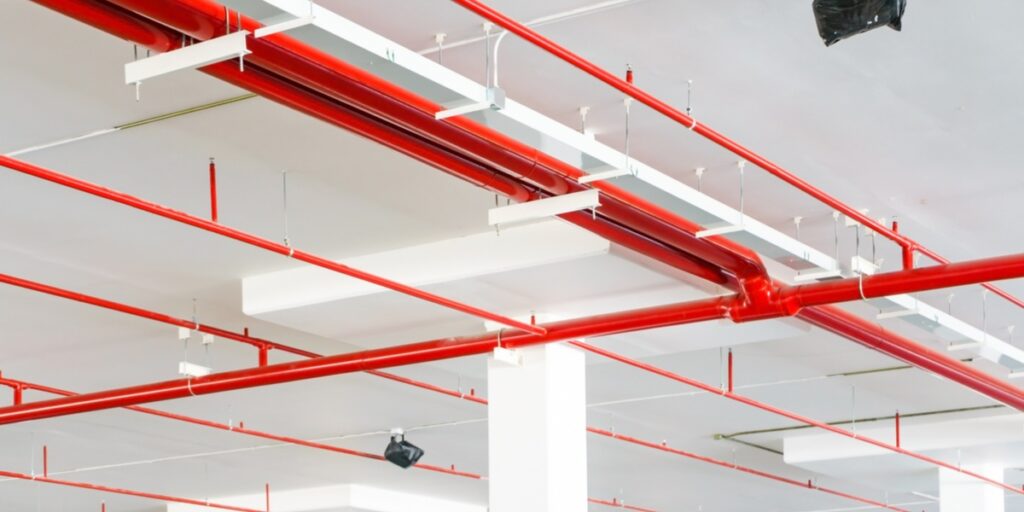
Dry pipe systems solve the freezing problem. Pipes contain compressed air or nitrogen at 20 to 50 PSI instead of water. A special dry pipe valve holds water back. Water waits under higher pressure (110 to 150 PSI) at the dry pipe valve location in a heated mechanical room.
When fire activates a sprinkler head, compressed air escapes through the open head. Air pressure throughout the system drops. When air pressure falls below the water pressure threshold, the dry pipe valve trips open. Water rushes into the pipes traveling toward the open sprinkler head.
This process creates delay. Air must exhaust completely before water enters the system. Then water travels from the dry pipe valve to the activated sprinkler. NFPA 13 requires water to reach the most remote sprinkler within 60 seconds. System size is limited to ensure this timing requirement.
Air compressors maintain pressure in dry pipe systems. Air leaks slowly through pipe joints and fittings. Compressors automatically replenish lost air maintaining the 20 to 50 PSI required. Some systems use nitrogen bottles instead of compressors.
Quick-opening devices help reduce water delivery time. These devices sense rapid air pressure drop and mechanically speed dry pipe valve operation. Accelerators or exhausters can reduce water delivery time from 60 seconds to 30 or 40 seconds.
Key Differences Between Wet and Dry Systems
Operation Method
Wet pipe operation is straightforward. Heat breaks a sprinkler head. Water flows immediately. That’s it. One step from fire to water discharge.
Dry pipe operation involves multiple steps. Heat breaks a sprinkler head. Air escapes. Pressure drops. Dry pipe valve trips. Water fills pipes. Water finally discharges. Several steps from fire to water discharge create the time delay.
Response Time
Wet pipe systems provide instant response. Fire activates a sprinkler. Water flows within seconds. The fire gets suppressed while small and manageable.
Dry pipe systems delay water discharge 30 to 60 seconds. Fire continues growing during this delay. More sprinkler heads might activate. Larger fires mean more fire damage even though the system eventually controls it.
Research shows this delay matters. Fires double in size every 60 seconds in typical commercial occupancies. A fire 2 feet across when the first sprinkler activates grows to 4 feet across during a 60-second delay. More water ultimately flows. More damage occurs.
Installation Cost
Wet pipe systems cost $1.50 to $3.50 per square foot installed. A 10,000 square foot warehouse needs $15,000 to $35,000. Simple design keeps costs down. Fewer components mean less labor.
Dry pipe systems cost $2.50 to $4.50 per square foot installed. The same 10,000 square foot warehouse needs $25,000 to $45,000. The 30% to 50% premium covers air compressors, dry pipe valves, quick-opening devices, and additional installation complexity.
Material costs are similar. Pipe, sprinkler heads, and hangers cost roughly the same. The difference comes from additional dry pipe components and installation labor. Setting up and testing dry pipe valves takes more time than wet pipe valve trim.
Maintenance Requirements
Wet pipe maintenance is simple. Annual inspections take 2 to 4 hours. Technicians test alarm devices, check sprinkler heads, verify water pressure, and document findings. Annual inspections cost $400 to $800 for most commercial buildings.
Dry pipe maintenance is more involved. Air compressors need service. Air pressure requires monitoring. Dry pipe valves need testing and adjustment. Annual inspections take 4 to 6 hours and cost $600 to $1,200.
Dry pipe systems need trip testing every three years. This test verifies the system delivers water within 60 seconds. Contractors activate the system, measure response time, and document results. Trip testing costs $400 to $800 beyond annual inspection fees.
Reliability
Wet pipe systems are most reliable. The National Fire Protection Association tracks sprinkler system performance. Wet pipe systems operate successfully 94% to 96% of the time when needed.
Dry pipe systems work 85% to 90% of the time. The additional components create more failure points. Air compressors fail. Dry pipe valves stick. Corrosion from condensation blocks pipes. These problems reduce reliability compared to wet pipe systems.
Both systems are reliable enough for code compliance. But wet pipe edges out dry pipe when conditions allow using either system type.
When to Use Wet Pipe Sprinkler Systems
Use wet pipe systems whenever possible. They cost less, maintain easier, and respond faster than alternatives. Wet pipe is the default choice unless specific conditions prevent their use.
Climate and Temperature Requirements
Wet pipe systems work in heated buildings where all spaces containing sprinkler pipes stay above 40°F year-round. Most California commercial buildings meet this requirement. Office buildings, schools, retail stores, restaurants, and hotels all maintain temperatures preventing freezing.
Check every space containing sprinkler pipes. Main occupied areas stay warm. But what about:
- Attic spaces with sprinkler piping
- Mechanical rooms with exterior exposure
- Loading dock areas with frequent door openings
- Vestibules and entryways
If every square inch of sprinkler piping stays above 40°F, wet pipe works. If any section might freeze, dry pipe or heating solutions are needed.
Building Types
Wet pipe systems work in:
Office buildings with climate control throughout. HVAC systems maintain comfortable temperatures preventing any freezing risk.
Retail stores where customer comfort demands heating. Even large big-box stores maintain adequate temperatures for wet pipe systems.
Schools and universities in heated classroom buildings. Cafeterias, gyms, and administrative spaces all stay warm enough.
Hospitals and healthcare facilities requiring precise temperature control. Patient comfort ensures pipes never approach freezing.
Hotels and apartments where residents expect heated spaces. Living areas, corridors, and mechanical spaces all stay heated.
Manufacturing facilities with climate-controlled production areas. Clean rooms, pharmaceutical manufacturing, and electronics assembly maintain temperatures for both products and wet pipe systems.
Restaurants where kitchen heat and dining comfort prevent freezing. Even walk-in coolers above 32°F can use wet pipe protection.
Southern California Applications
Coastal California rarely sees freezing temperatures. Los Angeles County, Orange County, and coastal areas of Ventura County use wet pipe systems almost exclusively. Buildings don’t need dry pipe protection because outdoor temperatures rarely drop below 40°F.
Inland valleys see occasional freezing overnight temperatures. Riverside County and San Bernardino County buildings still primarily use wet pipe systems. Interior heated spaces stay well above freezing. Only specific unconditioned areas need dry pipe protection.
Mountain and desert areas experience regular freezing. Big Bear, Lake Arrowhead, and high desert communities see sustained freezing temperatures. But even in these areas, heated building interiors use wet pipe systems. Only unheated spaces need dry pipe.
A typical approach in California: wet pipe systems throughout heated areas with dry pipe in specific unconditioned spaces. This hybrid approach uses each system type where appropriate.
When to Use Dry Pipe Sprinkler Systems
Dry pipe systems protect areas where pipes might freeze. Use dry pipe when heating spaces isn’t practical or cost-effective. The 30% to 50% cost premium for dry pipe is justified when it’s the only option.
Climate and Temperature Requirements
Dry pipe systems work in spaces that might drop below 40°F. This includes:
- Unheated warehouses and storage buildings
- Parking garages open to weather
- Loading docks with frequent door openings
- Outdoor covered areas and canopies
- Cold storage and freezer warehouses
- Attic spaces in uninsulated buildings
- Seasonal buildings used only in warm months
California applications focus on unconditioned spaces. Few California buildings are entirely unheated. But portions of buildings lack climate control and need dry pipe protection.
Building Types
Parking structures are the most common dry pipe application in California. Multi-level parking garages open to weather use dry pipe systems. Even in mild coastal climates, overnight temperatures occasionally approach freezing. Dry pipe prevents the risk of frozen pipes.
Cold storage warehouses storing refrigerated or frozen products need dry pipe. Interior temperatures stay well below freezing. Wet pipe systems would freeze solid within hours.
Unheated warehouses in industrial areas sometimes lack climate control. Large distribution centers with minimal insulation and no heating systems use dry pipe. The cost of heating millions of cubic feet exceeds the dry pipe premium.
Loading docks with roll-up doors opening frequently expose sprinkler pipes to cold air. Even if the warehouse is heated, loading dock areas might need dry pipe because doors open constantly during cold weather.
Outdoor canopies covering equipment, vehicle parking, or storage areas need dry pipe. These structures provide roof protection but no walls or climate control.
Aircraft hangars protecting planes need large open spaces. Heating these massive volumes is expensive. Many hangars use dry pipe systems throughout.
Hybrid Systems
Most buildings use wet pipe with dry pipe in specific areas. A warehouse might use wet pipe throughout heated office and production spaces. The loading dock and outdoor canopy use dry pipe. This hybrid approach is common and cost-effective.
The building has two separate sprinkler systems. A wet pipe system protects 90% of the building. A small dry pipe system protects the 10% at risk of freezing. This costs far less than dry pipe throughout the entire building.
Cost Comparison: Wet vs Dry Sprinkler Systems
Installation Costs
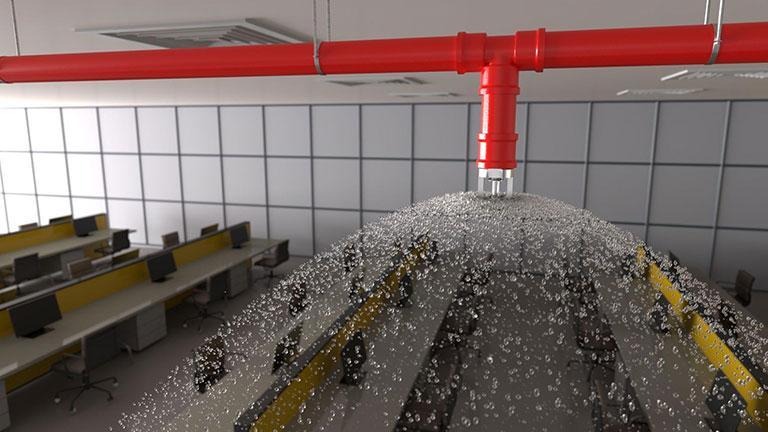
Wet pipe installation runs $1.50 to $3.50 per square foot. A 5,000 square foot building costs $7,500 to $17,500. A 20,000 square foot building costs $30,000 to $70,000.
Dry pipe installation runs $2.50 to $4.50 per square foot. The same 5,000 square foot building costs $12,500 to $22,500. The 20,000 square foot building costs $50,000 to $90,000.
The cost difference for a 10,000 square foot space:
- Wet pipe: $15,000 to $35,000
- Dry pipe: $25,000 to $45,000
- Difference: $10,000 to $10,000 more for dry pipe
That $10,000 difference buys freeze protection. In a truly unheated space, it’s money well spent. In a heated space, it’s $10,000 wasted on unnecessary complexity.
Annual Maintenance Costs
Wet pipe annual maintenance costs $400 to $800. Inspections cover sprinkler heads, alarm devices, control valves, and backflow preventers. Simple systems with few components take less time to inspect.
Dry pipe annual maintenance costs $600 to $1,200. Inspections cover everything wet pipe systems have plus air compressors, air pressure monitoring, and dry pipe valve testing. The additional components and complexity increase inspection time and cost.
Every three years, dry pipe systems need trip testing at $400 to $800. Averaged over three years, this adds $130 to $270 to annual costs. Total annual dry pipe maintenance averages $730 to $1,470 compared to $400 to $800 for wet pipe.
Ten-Year Cost Comparison
Looking at total ownership costs over 10 years:
Wet pipe system (10,000 sq ft):
- Installation: $25,000
- Maintenance (10 years): $6,000
- Total: $31,000
Dry pipe system (10,000 sq ft):
- Installation: $35,000
- Maintenance (10 years): $10,000
- Total: $45,000
The dry pipe system costs $14,000 more over 10 years. That’s real money that could go to other building improvements. But if the space freezes and wet pipe fails, the cost of system failure far exceeds $14,000.
Maintenance Comparison: What Each System Needs
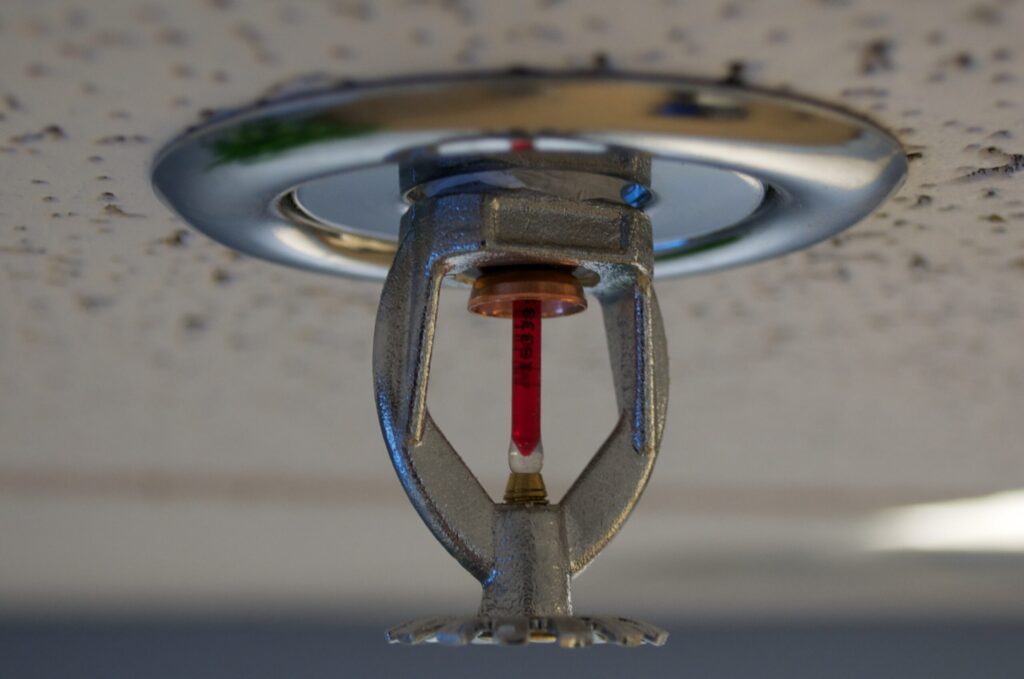
Wet Pipe Maintenance Tasks
Monthly: Building staff should check that control valves remain open. Closed valves are the number one cause of sprinkler system failure. Monthly checks take 5 minutes.
Quarterly: Test alarm devices by opening the alarm test valve. Verify water flows and alarms sound. Check pressure gauges throughout the system. Quarterly testing takes 30 minutes.
Annually: Professional inspection by licensed fire sprinkler contractors. Test all alarm devices. Inspect all sprinkler heads for damage or obstruction. Verify control valves operate smoothly. Check backflow preventer operation. Document all findings. Annual inspection takes 2 to 4 hours and costs $400 to $800.
Every 5 years: Internal pipe inspection to check for corrosion and obstructions. Contractors drain the system and examine pipe interiors. Five-year inspection costs $800 to $2,500.
Dry Pipe Maintenance Tasks
Weekly: Check air compressor operation and air pressure readings. Verify pressure stays within specified range. Weekly checks take 10 minutes but must happen consistently.
Monthly: Test air compressor by allowing system to lose pressure and verifying compressor restarts automatically. Check for air leaks throughout the system. Document pressure readings. Monthly tasks take 30 to 45 minutes.
Quarterly: Full alarm testing plus dry pipe valve inspection. Verify quick-opening devices work properly. Check for condensation in low points of piping. Quarterly inspection takes 45 to 60 minutes.
Annually: Professional inspection covering everything in wet pipe inspection plus air compressor service, dry pipe valve testing, and comprehensive air pressure monitoring. Annual inspection takes 4 to 6 hours and costs $600 to $1,200.
Every 3 years: Trip test verifying water reaches the most remote sprinkler within 60 seconds. Contractors activate the system fully and measure delivery time. Trip testing costs $400 to $800.
Every 5 years: Internal pipe inspection plus air compressor major service. Five-year work costs $1,200 to $3,500 for dry pipe systems.
Maintenance Expertise Required
Wet pipe maintenance requires basic fire sprinkler knowledge. Many contractors can service wet pipe systems. Competitive bidding is easy with numerous qualified contractors.
Dry pipe maintenance requires specialized knowledge. Contractors must understand air compressor systems, dry pipe valve operation, and air pressure dynamics. Fewer contractors work on dry pipe systems. Some rural areas have limited dry pipe expertise.
This expertise difference affects response time for service calls. Wet pipe contractors respond within 24 hours for most issues. Dry pipe specialists might need several days to schedule service, especially in areas with few qualified contractors.
Performance Comparison: How Each System Fights Fire
Response Time Impact
Wet pipe systems discharge water within 5 to 15 seconds of sprinkler activation. The sprinkler head activates. Water immediately flows. Fire suppression begins instantly.
Dry pipe systems discharge water within 30 to 60 seconds of sprinkler activation. The sprinkler head activates. Air exhausts for 20 to 40 seconds. Water travels through pipes for 10 to 20 seconds. Finally water flows.
This 30 to 60 second delay allows fires to grow. A small trash can fire might spread to adjacent combustibles. A single activated sprinkler in a wet pipe system might become two or three activated sprinklers in a dry pipe system.
More activated sprinklers mean more water discharge. More water means more water damage to inventory and equipment. Fire damage is worse. Water damage is worse. Total loss increases.
Fire Control Effectiveness
Both systems eventually control fires when properly designed. But wet pipe systems control fires faster and with less total damage.
NFPA research shows average fire damage in buildings with wet pipe systems runs 20% to 30% lower than buildings with dry pipe systems. The instant response makes that much difference.
Some high-value occupancies can’t accept the dry pipe delay. Data centers, museums, and clean rooms use pre-action systems instead. Pre-action costs even more than dry pipe but eliminates accidental discharge risk while minimizing response delay.
System Reliability
Wet pipe systems operate successfully 94% to 96% of the time when fires occur. The 4% to 6% failure rate comes from:
- Closed control valves (60% of failures)
- System shut off for maintenance (15% of failures)
- Frozen or broken components (15% of failures)
- Insufficient water supply (10% of failures)
Dry pipe systems operate successfully 85% to 90% of the time. The higher failure rate comes from:
- Air compressor failures (25% of dry pipe failures)
- Dry pipe valve malfunctions (20% of failures)
- Corrosion blocking pipes (15% of failures)
- Closed valves (20% of failures)
- Insufficient water supply (15% of failures)
- Other causes (5% of failures)
Both systems are reliable enough for life safety. But wet pipe reliability is measurably higher.
California Climate Considerations
Coastal Areas
Los Angeles County, Orange County, and coastal San Diego County rarely experience freezing temperatures. These areas use wet pipe systems almost exclusively. The mild climate eliminates any need for freeze protection.
Even overnight lows in winter stay above 40°F in most coastal areas. Buildings with minimal heating maintain adequate temperatures for wet pipe systems.
Parking structures in coastal areas sometimes use dry pipe as a precaution. Even though freezing is rare, the exposed nature of parking structures creates some risk during unusually cold weather.
Inland Valleys
Riverside County and San Bernardino County experience occasional freezing overnight temperatures. Interior building spaces stay heated and use wet pipe systems without problems.
Specific applications need dry pipe:
- Open parking structures
- Loading docks with frequent door openings
- Unheated warehouse spaces
- Outdoor canopies
Hybrid systems are common. Wet pipe protects 90% of the building. Dry pipe protects the 10% at risk of freezing.
Mountain and Desert Areas
High elevation areas like Big Bear, Lake Arrowhead, and mountain resort communities experience regular freezing temperatures from November through March. Desert areas like Victorville and Barstow see similar winter conditions.
Even in these areas, heated building interiors use wet pipe systems. Only truly unheated spaces need dry pipe. The key question: Does the space stay above 40°F year-round?
A Big Bear restaurant uses wet pipe throughout dining areas, kitchens, and indoor spaces. The outdoor patio cover might use dry pipe because it’s exposed to mountain winter temperatures.
Making the Climate Decision
California’s mild climate means most buildings use wet pipe systems. Only specialized applications need dry pipe:
- Cold storage and freezer warehouses
- Unheated industrial buildings
- Parking structures
- Loading docks
- Outdoor covered areas
Don’t assume California’s mild climate eliminates all freezing risk. Check overnight low temperatures for your specific location. If winter overnight lows approach 32°F and the space isn’t heated, consider dry pipe.
Converting Between Wet and Dry Systems
Converting Wet Pipe to Dry Pipe
Conversion becomes necessary when building use changes. A heated warehouse converts to cold storage. The existing wet pipe system will freeze. Dry pipe conversion is required.
Conversion involves:
- Draining the wet pipe system
- Installing dry pipe valve and trim
- Adding air compressor or nitrogen supply
- Installing quick-opening devices
- Modifying alarm connections
- Testing and commissioning
Conversion costs $3 to $6 per square foot. A 10,000 square foot area costs $30,000 to $60,000 to convert. This approaches the cost of installing a new dry pipe system.
Sometimes alternatives are cheaper:
- Adding building heating to maintain temperatures
- Insulating and heat-tracing pipes
- Installing pre-action systems in specific areas
Analyze all options before committing to dry pipe conversion.
Converting Dry Pipe to Wet Pipe
Conversion makes sense when conditions change. A warehouse adds climate control. The unheated building becomes heated. Dry pipe is no longer necessary.
Converting to wet pipe involves:
- Removing air compressor and dry pipe valve
- Installing wet pipe trim and backflow preventer
- Filling system with water
- Modifying alarm connections
- Testing and commissioning
Conversion costs $2 to $4 per square foot. A 10,000 square foot area costs $20,000 to $40,000 to convert. The conversion eliminates ongoing air compressor maintenance and reduces annual inspection costs by $200 to $400.
The conversion pays for itself over time through reduced maintenance costs. A $30,000 conversion saving $300 per year in maintenance breaks even in 100 years. But the improved reliability and faster response time provide additional value beyond maintenance savings.
When Conversion Makes Sense
Consider conversion when:
- Building use changes permanently
- Heating systems are added or removed
- Dry pipe system reaches end of useful life
- Corrosion problems plague dry pipe system
- Air compressor requires expensive replacement
Don’t convert just to save maintenance costs. The conversion cost rarely justifies maintenance savings alone. But when other factors align, conversion makes good sense.
Common Mistakes in System Selection
Installing Dry Pipe in Heated Spaces
Some contractors recommend dry pipe systems “just to be safe” even in heated buildings. This wastes 30% to 50% more than necessary. The extra cost buys nothing useful in a heated space.
A 10,000 square foot office building stays heated year-round. Wet pipe works perfectly. Installing dry pipe wastes $10,000 in installation costs and adds $300 per year in maintenance. Over 20 years, this mistake costs $16,000.
Using Wet Pipe Where Freezing Occurs
This mistake is worse. A wet pipe system in a freezer warehouse will freeze within hours. Frozen pipes burst causing water damage. The building loses fire protection entirely.
Repairing frozen pipe damage costs $5,000 to $20,000. Installing the correct dry pipe system after the failure adds another $25,000 to $45,000. Total cost: $30,000 to $65,000. Getting it right initially would have cost $25,000 to $45,000.
Ignoring Hybrid System Options
Many buildings need both wet and dry pipe systems. Heated areas use wet pipe. Unheated areas use dry pipe. Using one system type throughout the building either wastes money (all dry pipe) or creates freeze risk (all wet pipe).
A warehouse with heated offices and unheated warehouse space should use wet pipe in offices and dry pipe in the warehouse. This costs less than dry pipe throughout while providing proper protection everywhere.
Not Considering Heat Trace Alternatives
Heat trace cables wrapped around sprinkler pipes prevent freezing in small areas. Installing heat trace in a 200 square foot loading dock vestibule costs $1,500 to $3,000. Installing dry pipe to protect that same area costs $5,000 to $9,000.
Heat trace makes sense for small areas that would otherwise need dry pipe. Large areas need dry pipe because heat trace installation and operating costs become excessive.
Overlooking Long-Term Maintenance Costs
Focus solely on installation cost misses the total picture. A wet pipe system costing $25,000 with $6,000 in 10-year maintenance totals $31,000. A dry pipe system costing $35,000 with $10,000 in 10-year maintenance totals $45,000.
The $10,000 installation difference becomes a $14,000 total difference. This matters when both system types would work in the application.
Final Thoughts
Wet pipe and dry pipe sprinkler systems both provide fire protection. Wet pipe systems work in heated buildings offering instant response, lower costs, and simpler maintenance. Dry pipe systems protect unheated spaces where freezing would damage wet pipe systems.
California’s mild climate means most buildings use wet pipe systems exclusively. Dry pipe appears in cold storage facilities, parking structures, and unheated industrial spaces. Hybrid systems using both types are common in buildings with both heated and unheated areas.
Choose wet pipe unless freezing is a genuine concern. The 30% to 50% cost premium for dry pipe is justified only when necessary. Don’t waste money on dry pipe protection you don’t need.
Spectrum Fire Protection designs and installs fire sprinkler systems throughout Los Angeles County, Orange County, Riverside County, and San Bernardino County. Our team evaluates your building conditions and recommends the appropriate system type. We handle installations, conversions, and maintenance for all sprinkler system types. Call us at (866) 441-2421 to discuss fire sprinkler protection for your building.