


Fire Marshal Inspection Checklist for Orange County Commercial Properties
In Orange County, a fire marshal inspection is the single moment that determines whether your commercial property keeps operating, faces a notice of violation, or - in extreme cases — gets shut down. With more than 200,000 commercial properties under the jurisdiction of OCFA and Orange County's city fire departments - restaurants, hotels, warehouses, schools, offices, apartments, healthcare facilities, retail, manufacturing - fire marshals conduct thousands of inspections every year. Every one of them follows a methodical, system-by-system checklist.
The good news: that checklist isn't a secret. The systems inspectors check, the deficiencies they cite most often, the documentation they require - all of it is knowable in advance. Properties that prepare pass cleanly. Properties that don't, fail. The difference between the two isn't luck. It's preparation.
This is the complete fire marshal inspection checklist for Orange County commercial properties, built from 39 years of preparing OC buildings across every commercial property type to pass their inspections. Whether you operate a restaurant in Anaheim, a warehouse in Irvine, a school district in Santa Ana, an office tower in Newport Beach, or a hotel in Huntington Beach, this guide gives you the full system-by-system breakdown of what the fire marshal will check when they arrive.
For an overview of all our fire protection services across Orange County, visit our Orange County fire protection homepage. For industry-specific deep dives, see our cluster pages linked throughout this guide - restaurants, schools, warehouses, food trucks, and more. By the time you finish reading, you'll know exactly what to expect when the fire marshal walks through your door.
Understanding Fire Marshal Inspections in Orange County
Who Conducts Fire Marshal Inspections in OC
In Orange County, fire marshal inspections are conducted by either OCFA (Orange County Fire Authority) or by the fire department of the city where your property is located. OCFA covers approximately 23 of OC's 34 cities plus all unincorporated areas, while cities including Anaheim, Fullerton, Garden Grove, Huntington Beach, Orange, Newport Beach, and a few others maintain their own fire departments and conduct their own inspections.
All authorities follow the same foundational standards: the California Fire Code (which adopts and amends the International Fire Code), California Title 19 administrative regulations, and the relevant NFPA standards for each system type. So whether OCFA or a city fire marshal arrives at your property, the checklist they work from is fundamentally the same.
How Often You'll Be Inspected
Most commercial occupancies in OC are inspected on the following schedule:
- Standard commercial uses: annual inspection
- High-hazard occupancies (healthcare, large assembly, industrial): more frequent, sometimes quarterly
- New businesses: typically inspected within the first 90 days of opening
- Construction or tenant improvement projects: permit-driven inspections separate from annual
- Complaint-driven or surprise inspections: no notice, triggered by complaints or specific events
Two Types of Inspection Visits
Scheduled annual inspections are announced in advance — typically 1 to 4 weeks of notice. You'll get a letter or email telling you the inspection window and listing what to have ready. Complaint-driven and follow-up inspections arrive with no warning. The fire marshal can also make an unannounced visit if they were in the area for another job and noticed something concerning.
A separate inspection process applies for new construction, tenant improvements, or system installations — those trigger their own approval and inspection through the AHJ's plan check and field inspection process.
The Complete Fire Marshal Inspection Checklist
What follows is the full system-by-system checklist that OC fire marshals work through during a commercial inspection. Not every system applies to every property — your sprinkler section won't be inspected if you don't have a sprinkler system. But every property has at least 6 to 8 of these systems, and the inspector will check each one that applies.
1. Fire Sprinkler Systems
Required under California Fire Code for most buildings over 5,000 square feet, certain occupancy classes (assembly, healthcare, hazardous storage), and any building over 55 feet tall. Per NFPA 25, the inspector will verify:
- Current quarterly inspection records (control valves, alarm devices, gauges)
- Annual main drain test and trip test (dry systems) documented
- 5-year internal pipe inspection completed and on file
- 25-year sample testing of sprinkler heads, where applicable
- All main control valves locked in open position with current tamper switches
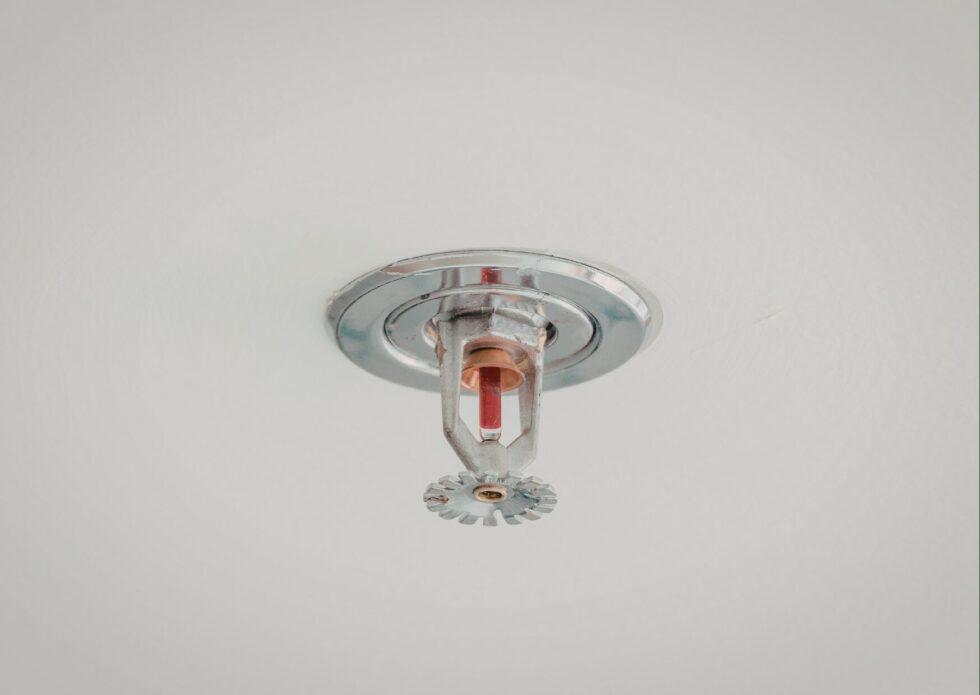
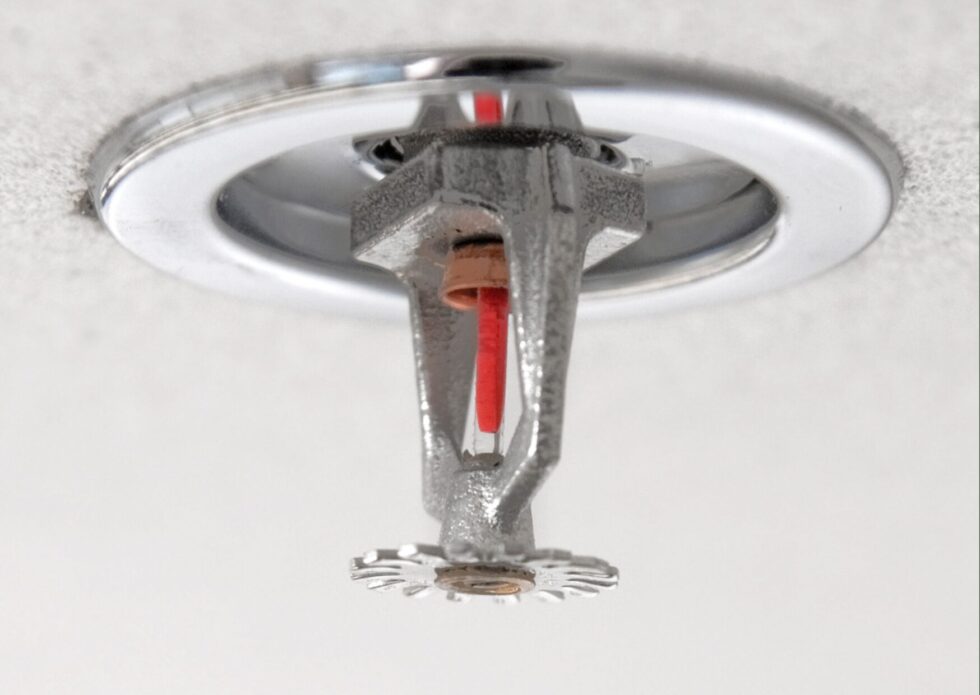
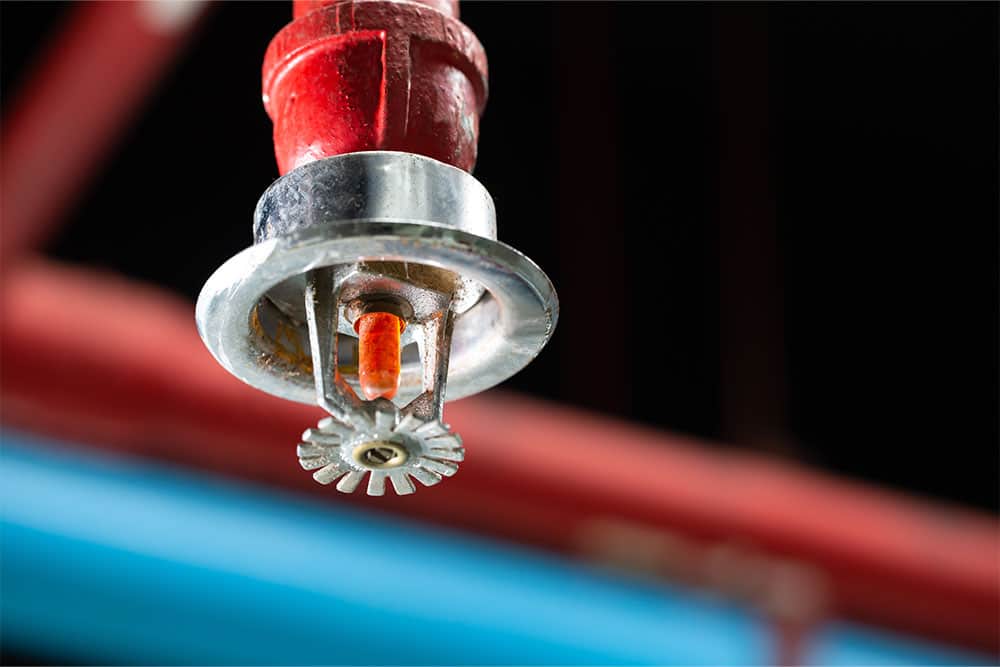
- 18-inch storage clearance maintained under every sprinkler head
- No painted, damaged, or missing sprinkler heads
- Spare sprinkler head cabinet stocked with correct types and matching wrench
- Fire department connection (FDC) accessible, capped, signed, free of debris
- Backflow preventer current annual testing certificate
- Quarterly visual inspection records on-site
2. Fire Alarm Systems
Required by California Fire Code for assembly occupancies over certain sizes, healthcare facilities, dormitories, hazardous occupancies, and many other building types. Per NFPA 72, the inspector will check:
- Current annual inspection certificate from a licensed contractor
- Quarterly inspection records on-site
- Battery backup tested annually (90-minute capacity for most systems)
- Smoke detector sensitivity testing performed every 2 years
- Pull stations accessible, mounted 42 to 48 inches above the floor
- Notification appliances (horns, strobes) installed per NFPA 72 candela ratings and spacing
- Central station monitoring certificate from a UL-listed monitoring company
- Off-premise transmission test signal verified within last 12 months
- No painted-over or blocked devices
- Panel access clear with 36 inches working clearance
- Annunciator panel labeling current and accurate
For deep details, see our cluster page on the fire alarm inspection checklist, and our supporting article on when fire alarm monitoring is required.
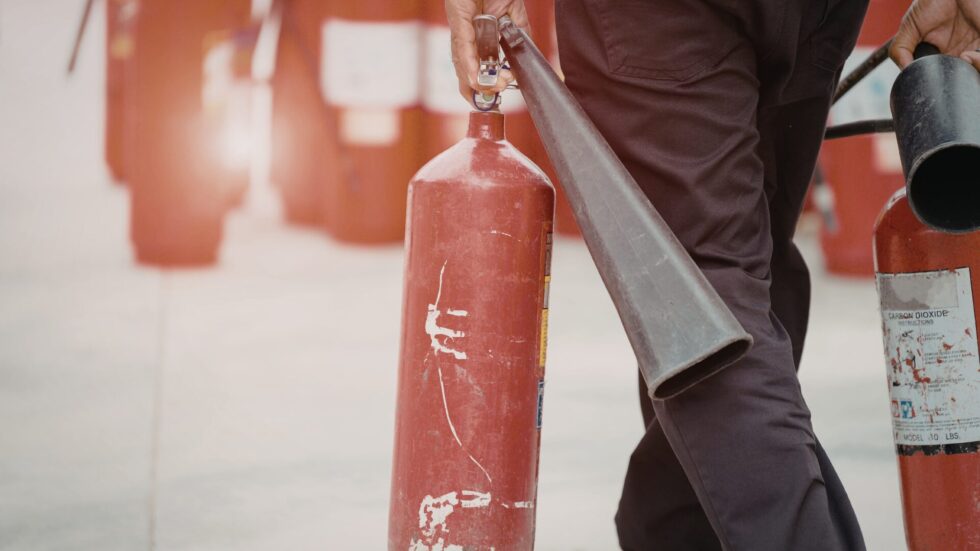
3. Portable Fire Extinguishers
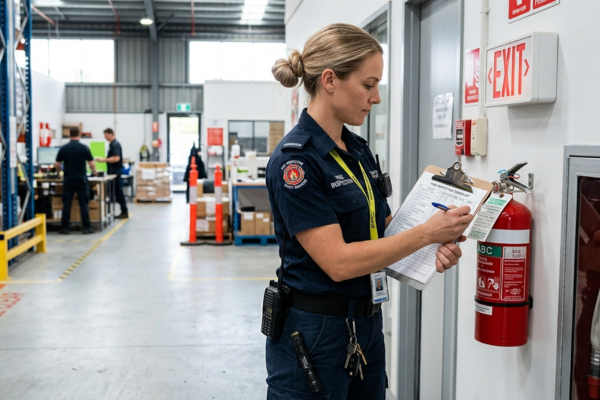
Every commercial property in OC needs portable extinguishers per NFPA 10 and California Title 19. Inspectors check:
- Travel distance: maximum 75 feet to Class A protection (most commercial spaces)
- Mounting: top of extinguisher no more than 5 feet from floor (3.5 feet for units over 40 lbs)
- Current annual maintenance tag (Title 19 requirement)
- Monthly visual inspection record (initials and date on tag)
- Pressure gauge needle in green operating range
- Pull pin intact, tamper seal in place
- No physical damage, corrosion, or missing hose nozzles
- Class K extinguisher within 30 feet of any cooking appliance using vegetable or animal oils
- CO2 or clean agent extinguishers for electrical rooms and server rooms where applicable
- 6-year maintenance interval current
- 12-year hydrostatic test current
- Visible signage above mounting location
For comprehensive extinguisher compliance details, see our fire extinguisher maintenance checklist and our supporting article on fire extinguisher requirements for commercial buildings.
4. Kitchen Hood Fire Suppression Systems
Applies to any building with commercial cooking equipment producing grease-laden vapors — restaurants, hotels, schools, hospitals, employee cafeterias, country clubs, food courts. Per NFPA 17A, NFPA 96, and California Title 19:
- Semi-annual UL 300 suppression system service current (every 6 months)
- Fusible link replacement performed annually
- Hood and duct cleaning at the frequency required by your cooking volume per NFPA 96
- Manual pull station within 10–20 feet of the hood, accessible and unobstructed
- Suppression nozzles cover all cooking appliances under the hood
- Gas shutoff valve connected to the suppression system and operates automatically
- K-class extinguisher within 30 feet of cooking equipment
- Hood, filter, and duct grease deposits not exceeding 1/8 inch (NFPA 96)
- Hood cleaning records on-site for past 12 months
For full coverage, see our cluster pages on the fire inspection checklist for restaurants and the NFPA 96 inspection checklist.
5. Exit Signs and Emergency Lighting
The second-most-cited deficiency category in OC commercial inspections:
- All exit signs illuminated 24/7 (NFPA 101 / California Building Code)
- Battery backup operates for minimum 90 minutes during a power outage
- Annual 90-minute load test documented with current sticker on each fixture
- Monthly visual inspection logged
- Emergency lights illuminate all paths of egress to minimum 1 foot-candle average, 0.1 foot-candle minimum
- Exit signs visible from every point in the building requiring egress direction
- No exit signs blocked by decor, signage, displays, or seasonal decorations
- Letter height minimum 6 inches with 3/4 inch stroke width
- Self-luminous exit signs (tritium) within their service life
6. Paths of Egress and Exit Hardware
Inspectors will physically open every required exit:
- All required exits unlocked from inside during occupied hours
- Panic hardware on doors serving 50+ occupants (assembly use) or any high-occupancy commercial use
- Exit doors swing in direction of egress for assembly occupancies
- Minimum 36 inches clear width maintained for occupant loads up to 49; wider for higher loads
- Travel distance to exit not exceeding California Fire Code limits by occupancy type
- Exit paths clear of all storage, equipment, decorations, or temporary obstructions
- Exit doors operate without keys, tools, or special knowledge
- Stairwell signage current (floor number, exit direction, level of discharge)
- Elevator recall keyed to fire alarm and tested annually
- Required fire doors self-close and self-latch — no wedges, no improper hold-opens
7. Posted Occupancy Load
Required for assembly occupancies (most uses with 50+ occupants):
- Occupancy capacity sign posted conspicuously near the main entrance
- Posted load matches the approved floor plan on file with the AHJ
- Actual occupancy not exceeding the posted limit
- Sign formatting compliant with California Fire Code Section 1004.9
8. Fire Pumps (Where Installed)
Required in many large commercial buildings to maintain water pressure for sprinklers. Per NFPA 25:
- Weekly running test performed by building staff and logged (electric pumps: 10 minutes; diesel: 30 minutes)
- Annual flow test by a licensed contractor
- Pump room with 36 inches clearance on all sides of equipment
- Diesel pump fuel tank full, no leaks, day tank operational
- Electric pump on dedicated circuit with proper labeling
- Jockey pump operational and properly cycling
- All pressure gauges within manufacturer-specified ranges
- Pump room ventilation adequate, no storage in room
9. Fire Hydrants and Standpipes (Where Installed)
Per NFPA 25:
- Hydrant annual visual inspection current
- 5-year volumetric flow test current
- Hydrants painted per local color-coding scheme (indicating flow capacity)
- Hydrant outlets free of debris, caps in place
- Standpipe valves accessible in each stairwell
- 5-year hydrostatic test of standpipe current
- Standpipe outlet caps in place, no debris
10. Electrical Safety
Although full electrical inspections belong to the building department's electrical inspector, the fire marshal will note any obvious electrical hazards:
- 36-inch clearance maintained in front of all electrical panels
- No daisy-chained power strips (power strip plugged into power strip)
- No extension cords used as permanent wiring
- All circuit breakers labeled accurately
- GFCI outlets within 6 feet of any water source
- No exposed wiring or junction boxes without covers
- No high-wattage equipment (heat lamps, space heaters, fryers) plugged into power strips
- Battery storage rooms (where applicable) properly ventilated and signed
11. Storage Areas and Hazardous Materials
- No combustible storage near heat sources (water heaters, boilers, fryers)
- Hazardous materials stored per their Safety Data Sheets and California Fire Code
- Propane, LPG, and compressed gas cylinders stored outdoors per code, secured upright, capped when not in use
- 18-inch sprinkler head clearance maintained at all times
- 24-inch ceiling clearance for areas without sprinklers
- High-pile storage (12 feet or higher) requires special permit, smoke detection, and engineered sprinkler design
- Flammable liquid storage in compliant cabinets, properly labeled, ventilated
- Dumpster area has 5-foot clearance from the building (10 feet recommended)
12. Special Hazard Suppression Systems (Where Installed)
For server rooms, data centers, electrical rooms, paint booths, and other special hazards:
- Clean agent (FM-200, NOVEC 1230) annual inspection current
- Aerosol suppression (Stat-X) annual inspection current
- Detection circuit tested with each annual inspection
- Cylinder weight verification current
- Manual release station accessible
- Audible and visual pre-discharge alarms operational
- Door enclosure verified for proper hold time after discharge
13. Records and Documentation
Have all of this ready before the inspector arrives. The fastest way to fail an inspection that should have passed is missing paperwork.
- All current inspection tags visible on every device and system
- Sprinkler ITM (Inspection, Testing, Maintenance) records past 2 years
- Fire alarm inspection certificate and quarterly logs
- Fire extinguisher annual service tags and monthly inspection records
- Hood and duct cleaning records past 12 months (if applicable)
- Suppression system service records past 24 months
- Fire pump weekly run logs (if applicable)
- Emergency lighting 90-minute test results past 2 years
- Smoke detector sensitivity testing records (every 2 years)
- Hydrant flow test certificates
- Tenant fire safety training records (where applicable)
- Hot work permits and program documentation
- Written emergency action plan and evacuation procedures
- Building floor plans showing occupancy loads, exit paths, and life safety system locations
Inspection and Service Frequency Requirements by System
A consolidated reference for every commercial property in OC. Some items are inspected by your contractor; others by the fire marshal directly. Frequencies are based on California Fire Code, Title 19, and NFPA standards in effect for 2026.
Industry-Specific Inspection Considerations
While the core checklist above applies to every commercial property, specific industries have unique requirements that fire marshals know to look for. If your property falls into one of these categories, the industry-specific cluster pages go deeper than the general guidance here.
Restaurants and Commercial Kitchens
Kitchen suppression compliance and K-class extinguishers dominate restaurant inspections. Hood cleaning records, fusible link replacement, and grease management under NFPA 96 are the most-cited issues. See our complete fire inspection checklist for restaurants for the restaurant-specific deep dive.
Schools and Educational Facilities
Schools face unique inspection considerations including documented fire drill records (monthly during school year for K-12), classroom occupancy postings, chemistry lab safety, gym and assembly hall capacity, and summer inspection windows when schools schedule maintenance. See our fire inspection checklist for schools.
Warehouses and Distribution Centers
Warehouses have the most complex sprinkler requirements due to high-pile storage. ESFR sprinkler verification, in-rack sprinkler systems, commodity classification, fire pump status, flue spaces, and hot work permits are the inspector's main focus. See our warehouse fire safety checklist.
Food Trucks and Mobile Food Vendors
Mobile food units face their own specific requirements: propane system inspections, NFPA 96 compliance for mobile hoods, gas leak testing, suppression systems, and event permits. See our food truck fire inspection checklist.
Hotels and Hospitality
Hotels face cross-occupancy challenges: kitchen suppression for restaurant areas, sprinkler systems across multiple floors, evacuation procedures for guests, laundry room compliance, pool area safety, and balcony fire safety. Hotels typically require the most comprehensive integrated life-safety inspections of any commercial property type.
Healthcare Facilities
Hospitals, surgery centers, and skilled nursing facilities face additional NFPA 99 requirements covering medical gases (oxygen, nitrous oxide), defend-in-place evacuation systems, emergency power, and stricter inspection cadences (often quarterly). Healthcare facilities are typically inspected more frequently than any other commercial property type.
Multi-Family Residential (Apartments and Condos)
Apartments and condo complexes balance commercial common-area inspections with unit-level requirements: common-area suppression and alarms, unit-level smoke alarm verification, balcony fire safety, garbage chute compliance, and central station monitoring of fire alarms.
Data Centers and Server Rooms
Special hazard suppression dominates data center inspections: clean agent systems (FM-200, NOVEC), aerosol systems (Stat-X), VESDA air sampling smoke detection, raised-floor wiring inspections, and battery backup safety.
Manufacturing and Industrial
Industrial inspections vary widely by process. Common items: hazardous materials storage and inventory, dust collection systems for combustible dusts, hot work programs, special hazard suppression for paint booths or chemical processes, and process safety management for highly hazardous chemicals.
The 15 Most Common Reasons OC Properties Fail Fire Marshal Inspections
Based on our 39 years of pre-inspection work across Orange County, these are the issues that cause the most failures across all commercial property types:
- Expired or missing inspection tags — the most common failure across all property types
- Blocked or obstructed exits — storage, dollies, deliveries blocking required egress
- Burned-out or blocked exit signs — including signs blocked by seasonal decorations
- Sprinkler clearance violations — storage within 18 inches of sprinkler heads
- Hood suppression past semi-annual service date — especially common after staff turnover
- Grease accumulation in kitchen hoods or ducts — exceeding NFPA 96 limits
- Daisy-chained power strips — particularly in break rooms, back offices, and IT closets
- Locked or chained exit doors — intentional security measures that violate egress requirements
- Missing K-class extinguisher in kitchens — common in small commercial kitchens
- Occupancy load not posted — or seating exceeding posted limit during inspection
- Emergency lighting failures — failed 90-minute load test or dead batteries
- Painted sprinkler heads — from interior renovation work
- Fire pump weekly tests not documented — the test was done, but no log exists
- Backflow preventer testing certificate expired — often missed because it's annual
- Records missing or incomplete — even when the actual work was performed correctly
How to Prepare in the 30 Days Before Your Fire Marshal Inspection
A disciplined 30-day plan turns a potentially stressful inspection into a routine visit. Here's the week-by-week sequence:
Week 4 (30 Days Out): Audit and Document Pull
- Walk through your entire property with this checklist. Note every potential issue.
- Pull every service record, inspection certificate, and log for the past 24 months.
- Identify gaps: what's missing, what's expired, what's overdue.
- Create a deficiency list with priority ranking (safety-critical first, paperwork last).
Week 3 (21 Days Out): Schedule and Service
- Schedule all overdue services with licensed contractors. Annual extinguisher service can typically be done within 1 week. Sprinkler and alarm inspections may require 2 weeks of scheduling.
- Order any parts or replacement items needed (extinguisher recharges, exit sign batteries, sprinkler escutcheons, etc.).
- If you suspect a major issue (failed sprinkler test, alarm panel problems), call a contractor immediately — these can take longer to resolve.
Week 2 (14 Days Out): Physical Corrections
- Walk through with maintenance staff and correct every visible deficiency: signage, decor blocking exits, sprinkler clearance, storage organization.
- Test every exit door — verify panic hardware works, doors are unlocked, paths are clear.
- Test exit signs and emergency lighting manually (push the test button — verify the unit illuminates).
Week 1 (7 Days Out): Final Walkthrough and Records
- Conduct a final pre-inspection walkthrough using this checklist.
- Assemble all inspection records, certificates, and logs into a single binder or digital folder.
- Brief all staff on what to do if the inspector arrives — who greets them, where records are kept, who can answer technical questions.
- Verify nothing has been moved, stored, or installed in the past week that could create a violation.
- Confirm the inspection appointment time and prepare any required staff to be present.
What Happens During the Actual Inspection
A typical OC commercial fire marshal inspection takes between 30 minutes (small office) and 4 hours (large complex facility). Here's the standard sequence:
1. Arrival and Records Review
The inspector arrives, identifies themselves with credentials, and typically starts by asking to review your records binder. Having everything organized and ready can shave 30 minutes off the inspection time and creates a positive first impression.
2. Exterior Walkthrough
Most inspectors start outside. They'll check the fire department connection (FDC), nearby hydrants, dumpster placement, exit door operation from outside, and any propane or LPG storage. They'll verify your building address is visible from the street (a small but commonly cited item).
3. Interior Walkthrough
The inspector enters and works through every accessible space. They'll typically follow the path of egress in reverse — starting at exits and working toward common areas, then through tenant spaces, mechanical rooms, and storage. They take notes and photos of any deficiencies.
4. System-Specific Verification
At each major system (sprinkler riser room, fire alarm panel, fire pump room, kitchen suppression area), the inspector will verify equipment matches the records you provided. They may ask staff to demonstrate basic operations or describe emergency procedures.
5. Discussion of Findings
Before leaving, the inspector will walk you through any deficiencies they identified. This is the time to ask clarifying questions — once a notice of violation is issued, the corrections are essentially locked in. Be respectful and ask for guidance on the most efficient way to address each issue.
6. Documentation
You'll receive either a clean inspection report (everything passed) or a notice of violation listing each deficiency, the applicable code section, and the correction window. Re-inspection dates are scheduled at this time.
What Happens If You Fail Your Fire Marshal Inspection
A failed inspection in Orange County typically triggers one of three outcomes depending on severity:
- Minor violations: Notice of violation issued, 30-day re-inspection window to correct
- Major violations: 15-day correction window plus possible operational restrictions (no open-flame cooking, no use of affected systems, restricted occupancy)
- Imminent hazard: Immediate closure order — the building or affected section cannot be occupied until corrections are verified by re-inspection
We cover the full process — what to expect, how to respond, what to do in the first 24 hours, and how to recover quickly — in our supporting guide on what happens if you fail a fire inspection.
When to Hire a Pre-Inspection Service
A licensed C-16 fire protection contractor can perform a pre-inspection walkthrough 2 to 4 weeks before your official fire marshal inspection. Benefits:
- Identify issues before the fire marshal does — corrections happen with no violation notice on your record
- Time to schedule remediation work properly rather than scrambling under a 15-day correction order
- Often less expensive than the combination of fines + emergency contractor visits + business disruption
- Builds an ongoing relationship with a contractor who knows your property — making annual maintenance smoother in subsequent years
- Documentation that you proactively pursued compliance can favorably influence inspector discretion
When hiring a pre-inspection service, verify the contractor holds a C-16 fire protection contractor license from CSLB, is approved by your local AHJ (OCFA or your city fire department), carries adequate insurance, and has direct experience with your property type.
Spectrum Fire Protection has provided expert fire protection in Orange County since 1987. We're a family-owned, OCFA-approved, NFPA member contractor (C-16 #886810) serving every commercial property type across all 34 OC cities — restaurants, hotels, schools, warehouses, offices, healthcare, manufacturing, multi-family, and more. Our pre-inspection assessments help OC commercial owners enter their fire marshal inspections with confidence.
Frequently Asked Questions
How often do commercial buildings need fire marshal inspections in Orange County?
Most commercial occupancies in Orange County receive an annual fire marshal inspection from OCFA or their city fire department. High-hazard occupancies (healthcare facilities, large assembly spaces, certain industrial uses) may be inspected more frequently — sometimes quarterly. Newly opened businesses are typically inspected within their first 90 days of operation.
Who conducts fire marshal inspections in Orange County?
OCFA (Orange County Fire Authority) handles inspections in approximately 23 of OC's 34 cities and all unincorporated areas. Cities including Anaheim, Fullerton, Garden Grove, Huntington Beach, Orange, and Newport Beach maintain their own fire departments and conduct their own inspections. All authorities follow the same California Fire Code, Title 19, and NFPA standards.
How long does a fire marshal inspection take?
Inspection time varies by property size and complexity. A small office or retail space typically takes 30 to 60 minutes. A mid-sized restaurant or hotel takes 1 to 2 hours. Large commercial complexes, hospitals, or industrial facilities can take 3 to 4 hours or more. Properties with complete documentation ready typically inspect 30 to 50 percent faster than properties where the inspector has to wait for records.
Can the fire marshal shut down my business?
Yes, in cases of imminent hazard the fire marshal can issue an immediate closure order. This is rare and typically reserved for situations like inoperative fire suppression systems in occupied buildings, completely blocked egress, or active code violations creating immediate life safety risk. Most violations are resolved through a notice of violation with a correction window — usually 15 to 30 days depending on severity.
Do I have to be present for the fire marshal inspection?
You don't personally have to be present, but a knowledgeable representative (owner, manager, maintenance lead, or designated employee) must be on-site to provide access to all areas, answer questions about systems and operations, and receive the inspection findings. Inspections without an authorized representative present are usually rescheduled.
What's the difference between a fire marshal inspection and a fire department inspection?
In Orange County, the terms are often used interchangeably. The fire marshal is the formal title of the official conducting fire code enforcement inspections, whether they work for OCFA or a city fire department. The inspection covers fire and life safety code compliance — separate from the building department's structural inspections and the health department's food safety inspections, which are conducted by different agencies.
How much does it cost to fix common fire code violations?
Costs vary widely. Simple corrections (replacing exit sign bulbs, organizing storage for sprinkler clearance, posting occupancy signs) can be done in-house for under $100. Mid-range corrections (annual extinguisher service, hood suppression certification, fire alarm inspection) range from $300 to $1,500 depending on system size. Major corrections (sprinkler retrofits, alarm system upgrades, full hood replacement) can run $5,000 to $50,000+ depending on scope.
Can I appeal a fire marshal violation?
Yes. Each AHJ in Orange County has an appeals process for contested findings. The process typically involves a written appeal within 10 to 30 days of the violation notice, followed by a hearing before a fire code appeals board. However, you should still correct the cited deficiency during the appeal process — failing to correct because you intend to appeal usually escalates the situation. Talk to a licensed contractor or attorney before pursuing an appeal.
How do I prepare a multi-tenant building when I'm only the owner?
Multi-tenant inspections require coordination between the property owner and individual tenants. The owner is responsible for building-wide systems (sprinklers, alarms, common-area extinguishers, exits, electrical infrastructure). Tenants are responsible for their suite-specific items (their own extinguishers, kitchen suppression where applicable, exit clearance in their space). Best practice: give tenants 30 days advance notice of the inspection, share this checklist with them for their specific spaces, and conduct a building-wide walkthrough together 2 weeks before the inspection.
What if I just took over the building and don't have historical records?
This is common with new property acquisitions or new tenants in existing buildings. Contact the previous owner or tenant for records first. If unavailable, contact the previous service contractors (sprinkler company, alarm company, extinguisher company) — they often retain service records for past clients. If records still can't be located, the most reliable path is to schedule a full inspection cycle on all systems immediately to establish a current baseline. The fire marshal will not accept "we just bought the building" as an excuse for missing records, but they may grant a brief grace period if you can demonstrate active progress.
Pass Your Next Fire Marshal Inspection With Spectrum
Fire marshal inspections in Orange County are systematic, thorough, and consequential. They're not the place to wing it. With 39 years of experience preparing OC commercial properties for OCFA and city fire department inspections — across restaurants, hotels, schools, warehouses, offices, healthcare, manufacturing, multi-family, retail, and every other commercial property type — Spectrum Fire Protection handles every system on the checklist above under one licensed C-16 contractor.
We serve commercial properties across every Orange County city, with 24/7 emergency response for any sprinkler, alarm, suppression, or extinguisher issue that comes up between scheduled services. Family-owned, OCFA-approved, NFPA member, BBB A+ accredited, authorized distributors of Amerex, Stat-X, and Hochiki the credentials your property needs to stay compliant year-round.
Call (714) 597-6883 or request a free quote from our Orange County fire protection team to schedule your annual service, pre-inspection assessment, or 24/7 emergency support.
.png)

.png)

.png)


.png)