

Fire pump services Orange County
When a fire pump fails, everything downstream fails with it. Sprinkler systems and standpipes that depend on boosted pressure become unable to deliver the flow they were designed around- and the failure usually stays invisible until the day it matters.
Under NFPA 25, that's why fire pumps carry one of the most demanding test schedules in fire protection: weekly inspections, no-flow tests measured in weeks not months, and a full annual flow test benchmarked against the original acceptance curve. Miss them and you're exposed on three fronts — fire marshal citations, insurance carrier findings, and liability if the system underperforms during an actual event.
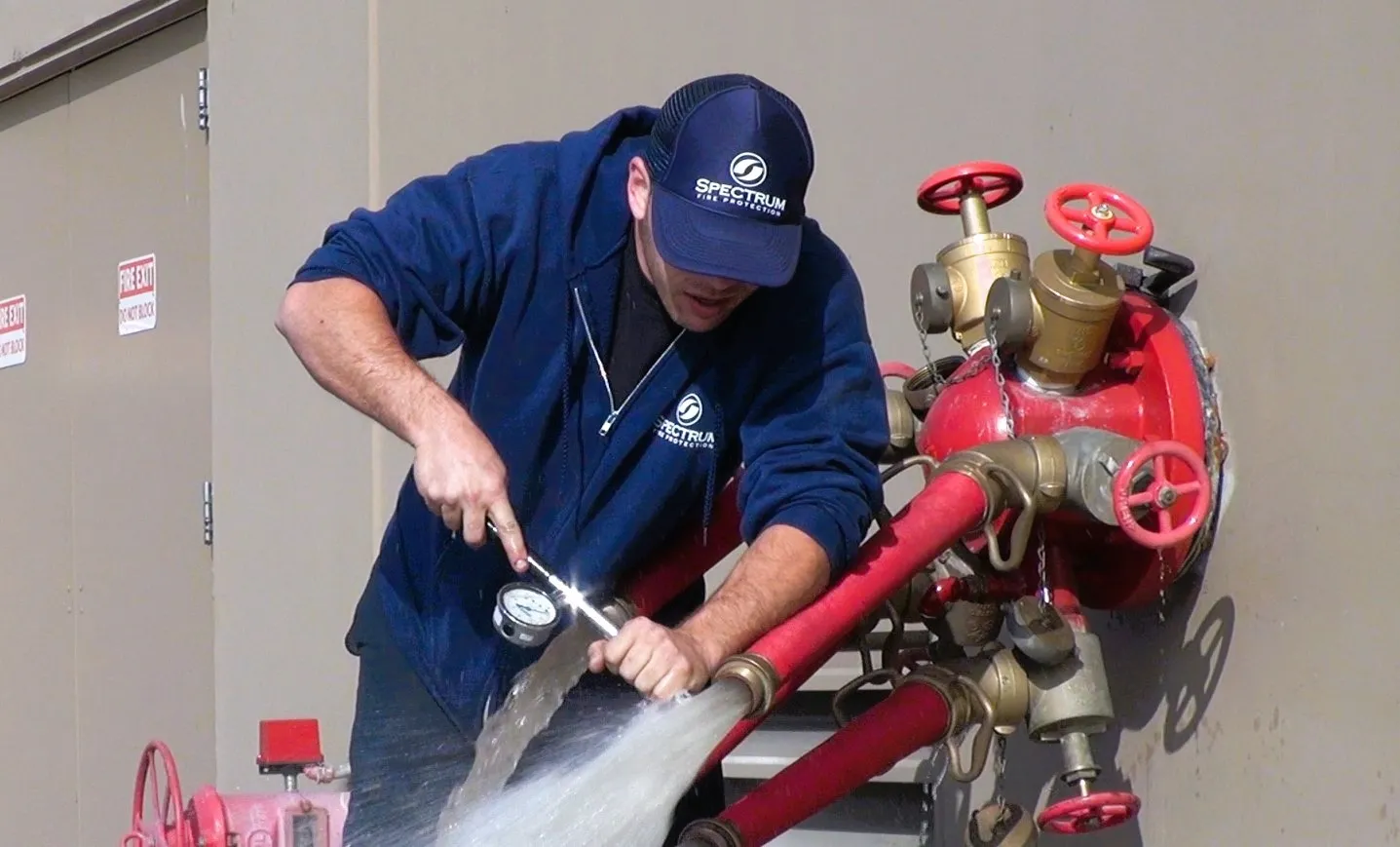
Spectrum Fire Protection services diesel and electric fire pumps across Orange County. We handle weekly and monthly no-flow testing, annual flow testing with certified documentation, controller and jockey pump service, and emergency repair. Every test is documented in a format your AHJ and your insurance carrier will accept
Why Fire Pump Testing Is Different
Most fire protection equipment is tested annually. Fire pumps are not, and the reason is mechanical: a pump that sits idle develops seized bearings, dried packing, corroded impellers, and drained batteries. The equipment degrades from not running.
That's why NFPA 25 requires the pump to be started and run on a short cycle year-round, and why the annual flow test compares present output against the original acceptance test rather than against a pass/fail threshold. A pump can still start, still build pressure, and still have lost enough capacity to fail when the system calls for full flow.
Two failure modes we find most often in Orange County buildings:

Pumps that start but under-deliver. Weekly churn tests pass because they only confirm the pump runs. Capacity loss shows up only under flow.
Support equipment that fails first. Dead batteries, degraded diesel fuel, a jockey pump that has stopped holding system pressure, or a controller that no longer transfers. The pump is fine; the system still won't perform.
Our Fire Pump Services

Weekly & Monthly No-Flow Testing
Routine no-flow (churn) testing confirms the pump starts on demand and runs at operating pressure without discharging water.
- Diesel-driven pumps: weekly, 30-minute run
- Electric-driven pumps: monthly, 10-minute run - weekly where the installation requires it
- Suction and discharge pressure recorded and logged
- Packing gland adjustment and bearing check
- Alarm and supervisory signal verification
- Written log maintained on site for fire marshal review

Annual Flow Testing
The annual test is the only one that measures whether the pump can still deliver design capacity.
- Flow measured at churn, 100%, and 150% of rated capacity
- Results plotted against the original acceptance curve
- Suction and discharge pressure recorded and logged
- Relief valve and circulation relief operation verified
- Certified documentation prepared for AHJ and insurance submittal
- Degradation flagged with clear repair recommendations

Fire Pump Inspection
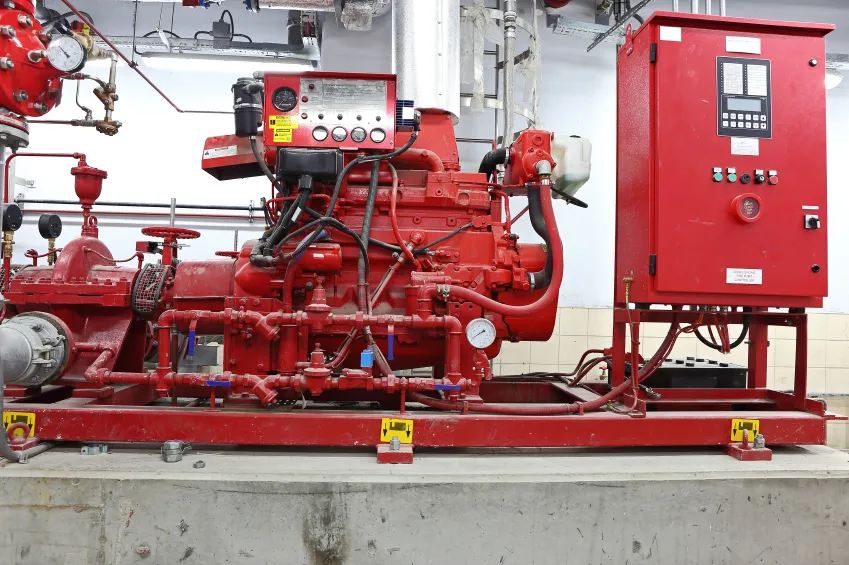
Visual and mechanical inspection of the full pump assembly and pump room.
- Pump room temperature, ventilation, and heater operation
- Valve positions verified and supervised
- Diesel fuel level and condition; battery charge and terminal condition
- Controller lamps, alarms, and transfer switch
- Corrosion, leakage, and coupling condition
- Jockey pump cycling and pressure maintenance

Fire Pump Repair
When testing identifies a deficiency, we repair it rather than handing you a report and leaving.
- Packing, seal, and bearing replacement
- Controller and transfer switch repair
- Diesel engine service, battery and fuel system work
- Jockey pump repair and replacement
- Relief valve service
- Emergency response for pumps out of service
Fire Pump Compliance Requirements in Orange County
Fire pump testing in Orange County follows NFPA 25, NFPA 20, the California Fire Code, California Title 19, and OCFA requirements. Individual water districts and insurance carriers may impose additional conditions.
Key requirements:
Weekly inspection of the pump, pump room, and support equipment
Weekly no-flow test for diesel-driven pumps - 30 minutes
Monthly no-flow test for electric-driven pumps - 10 minutes, weekly where required by the installation
Annual flow test at churn, 100%, and 150% of rated capacity
Annual results compared against the original acceptance test curve
Diesel fuel quality tested annually and maintained at required level
Pump room temperature maintained per NFPA 20
All valves supervised and in the correct position
Complete records retained and available for fire marshal review
Keep your original acceptance test curve on file. Without it, annual results can't be benchmarked against the pump's design performance, and the test loses much of its value. We record and retain every result we produce, so your compliance record only gets stronger from the first visit forward.
How Our Fire Pump Service Works
System survey. We document pump type, driver, controller, rated capacity, and existing test history before scheduling anything.
Baseline review. We review your original acceptance test curve and prior annual results so present performance can be measured against the pump's design benchmark.
Scheduled testing. Weekly, monthly, and annual intervals are scheduled and tracked so nothing lapses.
Testing and documentation. Every reading is recorded on site, with results plotted against the acceptance curve on annual tests.
Deficiency reporting. Any finding is documented with a clear description, code reference, and repair recommendation.
Repair and re-test. We complete repairs and re-test to confirm compliance is restored.
AHJ submittal. Completed reports are prepared in the format your fire authority accepts.
Why Orange County Property Managers Choose Spectrum Fire Protection
Certified technicians experienced with diesel and electric drivers and all major controller manufacturers
NFPA 20 and NFPA 25 compliant testing on every visit
Flow test results plotted against acceptance curves, not just recorded
Scheduled interval tracking so weekly and monthly tests don't lapse
Repairs completed in house - one contractor for testing and correction
24/7 emergency response for pumps out of service
39 years serving Orange County, C-16 and C-10 licensed, CSLB #886810
TRUSTED BY ORANGE COUNTY Business Owners
Fire Pump Service Areas in Orange County
We proudly deliver fire sprinkler services to every corner of Orange County, including:

Fullerton, OC
Brea, OC
Cypress, OC
Santa Ana, OC
Irvine,OC
Huntington Beach, OC
Garden Grove, OC
Costa Mesa, OC
Placentia,OC
La Palma, OC
Yorba Linda, OC
Stanton, OC
Tustin, OC
Buena Park,OC
Westminster, OC
Orange, OC
Industries We Serve
Commercial office buildings and business parks
Industrial facilities and warehouses
Schools, colleges, and universities
Retail centers and shopping plazas
Hospitals and healthcare facilities
Municipal and government properties
Active construction sites
Hotels and hospitality properties
Fire Pump Service FAQs
How often Does a Fire Pump Needs To Be Tested?
Under NFPA 25, the pump is inspected weekly and run without flow on a short cycle - weekly for diesel-driven pumps, monthly for most electric-driven pumps. A full flow test at churn, 100%, and 150% of rated capacity is required annually. Some installations and some insurance carriers require more frequent testing.
What's the difference between a churn test and an annual flow test?
A churn test runs the pump with no water discharging. It confirms the pump starts and builds pressure, but says nothing about capacity. The annual flow test discharges water at rated and overload conditions to measure actual output against the original acceptance curve. A pump can pass churn tests every week and still fail its annual test.
What happens if my fire pump fails the annual flow test?
Measured degradation must be investigated and corrected under NFPA 25. We document the shortfall, identify the cause - impeller wear, suction restriction, driver or controller issues - and provide repair recommendations. After repair we re-test and issue updated documentation. If the pump is out of service, an impairment program and possible fire watch may be required until it is restored.
Do you service both diesel and electric fire pumps?
Yes. Diesel pumps carry the heavier maintenance burden — weekly 30-minute runs, battery and fuel system service, annual fuel quality testing — while electric pumps require controller and transfer switch attention. We service both, along with jockey pumps and controllers.
Request a Free Quote
.png)

.png)


.png)