

Fire Extinguisher Recharge
Professional fire extinguisher recharge services throughout Orange County and Los Angeles County. California State Fire Marshal License E-2293.
WHY CHOOSE OUR EXPERT RECHARGE SERVICE?
Our experienced technicians provide professional fire extinguisher recharge services throughout Orange County and Los Angeles County. With specialized equipment, prompt mobile service, and California State Fire Marshal licensing, we help businesses keep their fire extinguishers ready for use.
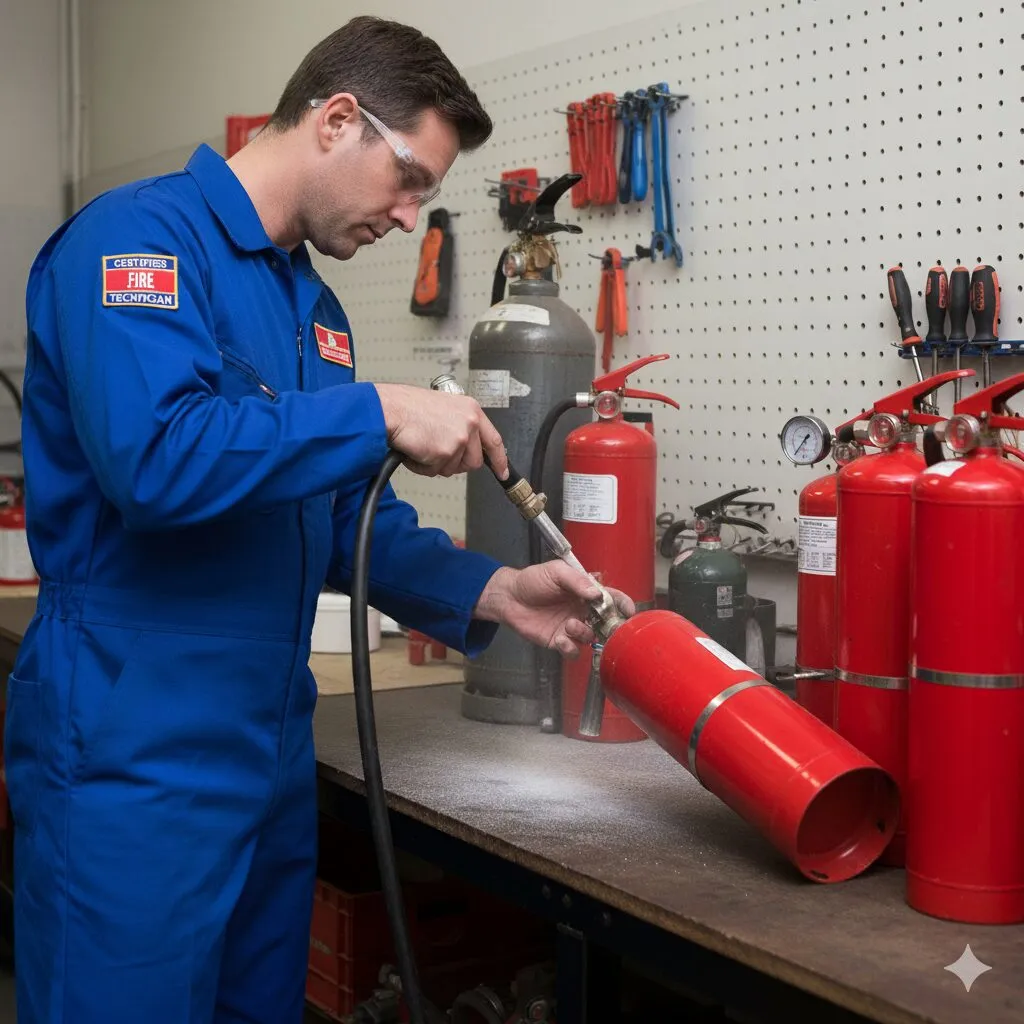
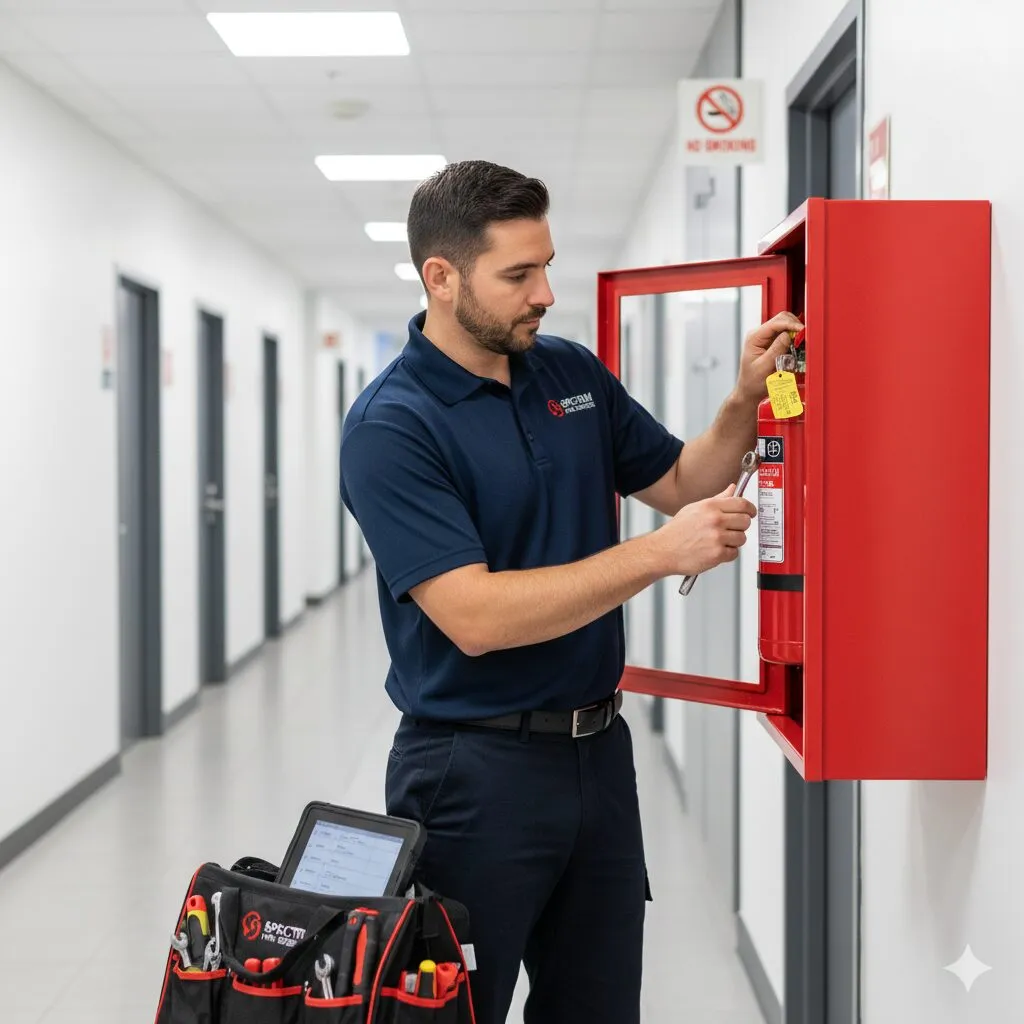
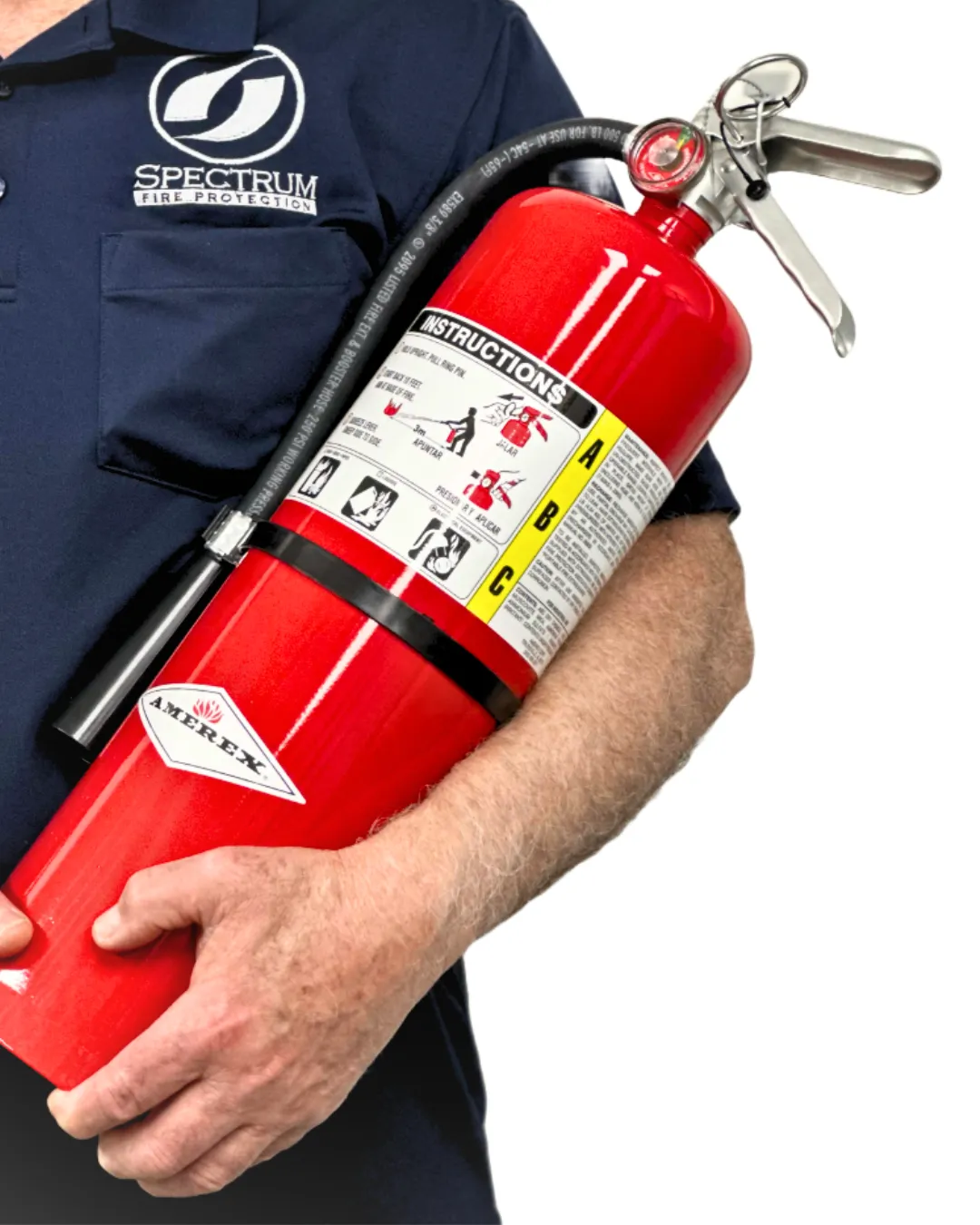

State Fire Marshal Licensed E-2293: Spectrum Fire Protection holds California State Fire Marshal Concern License E-2293, authorizing our company to service and sell fire extinguishers. Our trained technicians provide professional inspection, maintenance, and recharge services to help businesses maintain fire safety compliance.
Fast Mobile Service: Our fully equipped mobile service vehicles provide convenient on-site fire extinguisher recharge services throughout Orange County and Los Angeles County. We respond promptly to service requests, helping businesses minimize downtime and keep their fire protection equipment ready.
Fully Equipped Mobile Units: EOur mobile service vehicles carry specialized equipment and supplies to inspect, maintain, and recharge fire extinguishers at your location. This allows our technicians to complete many services on-site, reducing downtime and eliminating unnecessary trips to a service facility.
Free Estimates & Transparent Pricing: We provide free estimates and competitive pricing for fire extinguisher recharge services. Our customers receive clear, upfront pricing with no hidden fees, helping businesses plan their fire protection maintenance costs with confidence.
TRUSTED BY ORANGE COUNTY Business Owners
What Else Your Building Might Need

Fire Extinguisher Inspection
A recharge resets the clock, but it doesn't replace the ongoing check. We handle the monthly, annual, 6-year, and 12-year schedule that keeps a freshly recharged unit compliant long after today.

Fire Extinguisher Recharge
Fire extinguisher recharge service for discharged or low-pressure fire extinguishers. We refill with the correct extinguishing agent, replace internal seals, pressure-test the cylinder, and return your extinguisher to fully certified operational status with new certification tags.

Fire Extinguisher Training
A recharged extinguisher only helps if someone on-site actually knows how to grab it and use it. We run OSHA 1910.157 compliant training with live discharge practice, not a slideshow.

Fire Extinguisher Sales
Some units can't be recharged, a cracked cylinder or a failed hydrostatic test means replacement, not a refill. We supply every class on the spot as an Amerex authorized dealer.
Fire Extinguisher Cabinets
A freshly recharged extinguisher still needs somewhere visible and code-compliant to live. We install cabinets that meet NFPA 10's mounting and accessibility requirements.
Signs Your Fire Extinguisher Needs a Recharge
Fire extinguishers can lose their effectiveness over time, sometimes without obvious signs. Recognizing potential problems early helps businesses maintain reliable fire protection and address service needs before an emergency occurs. Watch for these five warning signs.
Any use, even partial: Even a brief discharge can reduce the amount of extinguishing agent available. Under NFPA 10, rechargeable fire extinguishers must be serviced and recharged after use, even when only a small amount of agent has been discharged.
Pressure gauge outside the green zone: If the gauge needle falls outside the green operating range, the extinguisher should be inspected by a qualified technician. Low pressure may indicate the need for recharging, while excessive pressure requires professional evaluation.
Weight noticeably lighter than the label: An extinguisher weighing less than its specified full weight may have lost extinguishing agent. A qualified technician can verify the weight, inspect for leakage, and determine whether recharging or additional service is required.
Visible damage or corrosion: Inspect the extinguisher for corrosion, dents, damaged hoses, leaking components, or broken handles. These conditions require professional evaluation, as some extinguishers may need repair or replacement rather than simply recharging.
Reaching its 6-year mark: Under NFPA 10, rechargeable stored-pressure dry chemical fire extinguishers that require a 12-year hydrostatic test generally must undergo internal maintenance every six years. This service includes examination of internal components and recharging the extinguisher before returning it to service.
FIRE EXTINGUISHER RECHARGE SERVICE AREAS
Spectrum Fire Protection provides professional fire extinguisher recharge and maintenance services throughout Orange County, including the following cities:

Brea, CA
Cypress, CA
Garden Grove, CA
Costa Mesa, CA
Placentia, CA
La Palma, CA
Yorba Linda, CA
Stanton, CA
Tustin, CA
Buena Park, CA
Westminster, CA
Orange, CA
FIRE EXTINGUISHER RECHARGE FAQS
Do I Need to Recharge My Extinguisher After Every Use, Even a Small One?
Yes. Under NFPA 10, rechargeable fire extinguishers must be serviced and recharged after any discharge, even if only a small amount of extinguishing agent was used. A qualified technician should inspect the extinguisher and restore it to service according to the manufacturer's instructions.
Can I Recharge My Own Fire Extinguisher?
Fire extinguisher recharging should be performed by qualified professionals using the proper equipment, extinguishing agent, and manufacturer-approved procedures. In California, companies providing fire extinguisher recharge services must hold the appropriate State Fire Marshal license. Improper recharging can compromise extinguisher performance and create serious safety risks.
What's the Difference Between Recharging and Hydrostatic Testing?
Recharging restores the proper amount of extinguishing agent and, when applicable, pressurizes the extinguisher according to manufacturer specifications. Hydrostatic testing evaluates the cylinder's ability to safely withstand pressure. Depending on the extinguisher type, hydrostatic testing is generally required every 5 or 12 years under NFPA 10. These are separate maintenance procedures, although recharging may be performed after hydrostatic testing.
What Happens If My Extinguisher Can't Be Recharged?
If a fire extinguisher fails inspection, hydrostatic testing, or no longer meets manufacturer specifications, it may need to be removed from service and replaced. Our technicians evaluate the extinguisher's condition and recommend the appropriate solution. Spectrum Fire Protection also supplies replacement fire extinguishers to help businesses maintain reliable fire protection.
Request a Free Quote
.png)

.png)


.png)