

Fire Pump Testing Services in Orange County
Why Fire Pump Testing Matters
A fire pump exists for one reason: to boost water pressure when the municipal supply alone can't meet what a building's sprinkler or standpipe system actually needs. When it works, nobody notices. When it doesn't, and a fire pump that hasn't been tested is far more likely not to, the sprinkler system it feeds can underperform at the exact moment a fire is already burning, delivering less water at lower pressure than the system was designed around.
That's the entire reason NFPA 25 requires fire pumps to be exercised weekly and load-tested annually, not because the code is being cautious for its own sake, but because a pump sitting idle for months develops problems, worn bearings, a degraded starting battery, a controller that no longer responds correctly, that a quick visual check won't catch.
Why Choose Us for Fire Pump Testing in Orange County?
Fire pump testing is specialized work, and it shows in how few contractors actually do it well. Here's what sets Spectrum apart.

State Fire Marshal & C-16 Licensed: Testing a fire pump assembly, especially an annual flow test that takes the pump offline and runs it at 150 percent of rated capacity, requires qualified personnel under NFPA 25. Our C-16 license and State Fire Marshal credentials cover that work directly, not through a subcontractor.
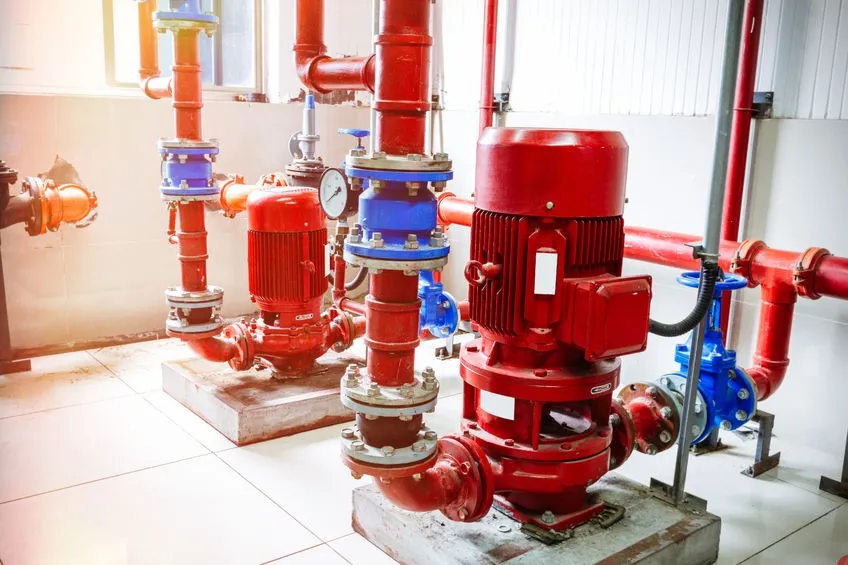
Diesel and Electric, Both Handled In-House: Diesel engine-driven pumps and electric motor-driven pumps have different weekly requirements and different failure points. We test both without bringing in a specialist for whichever type your building runs.
Testing Scheduled to Minimize Downtime: An annual flow test takes the fire pump offline, and normal building operations need to work around that window. We schedule around your building's occupancy, not the other way around.
Documentation Built for Your AHJ and Insurer: Every test generates the raw data NFPA 25 actually requires, pressures, amperage, pump speed, compared against the manufacturer's pump curve, not just a pass or fail checkbox.
Our Fire Pump Services

Weekly & Monthly No-Flow Testing
A pump that hasn't run in weeks doesn't announce that it won't start until the day it's actually needed. No-flow testing exercises the pump under its own power on a diesel-weekly, electric-monthly schedule (weekly wherever the installation requires it), confirming automatic start, normal operating pressure, and alarm signals every cycle, with results logged on-site for your fire marshal to review.

Annual Flow Testing
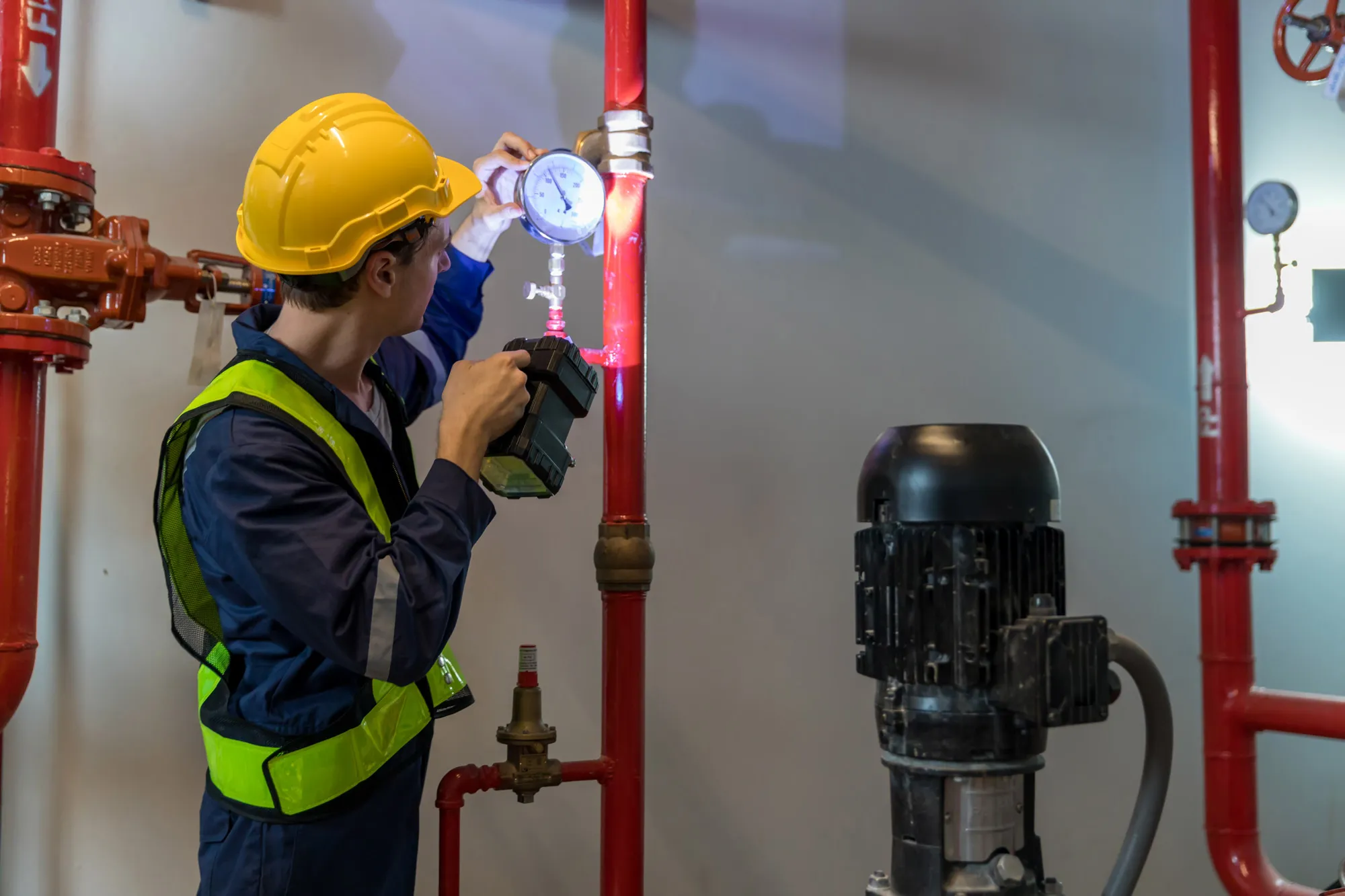
Weekly testing confirms a pump starts. Annual flow testing is the only check that confirms it can still deliver the water and pressure it was originally designed for. We run it through churn, 100 percent, and 150 percent of rated capacity, plot the results against your pump's original acceptance curve, and flag any degradation with a clear repair recommendation, not just a pass or fail.

Fire Pump Inspection
A pump can look fine sitting in the corner of a mechanical room and still be one closed valve away from failing when it's needed. Routine inspection covers what a quick glance won't catch: pump room ventilation and heater operation, valve position, diesel fuel and battery condition, controller lamps and alarms, and jockey pump cycling, all checked on a set schedule, not whenever someone happens to walk through.

Fire Pump Repair
When testing or inspection turns up a problem, packing, bearings, a failed controller, a fuel or battery issue, we fix it instead of just writing it up and leaving. Emergency response is available for a pump that's gone out of service entirely, since every hour it sits down is an hour closer to a required fire watch.
What Our Fire Pump Testing Covers
NFPA 25 sets out distinct testing tiers for a fire pump assembly, each catching a different kind of failure. We run all of them, not just whichever one is easiest to schedule.
Weekly Churn Test: A no-flow test that runs the pump under its own power without discharging significant water, confirming automatic start, controller response, and alarm signals. Diesel engine pumps run for at least 30 minutes; electric motor pumps typically run about 10 minutes.
Annual Flow Test: The pump is taken offline and run through its full performance range, no-flow, 100 percent of rated capacity, and 150 percent of rated capacity, with pressure and flow recorded at each point and compared against the original pump curve. A healthy pump has to produce at least 65 percent of rated pressure at 150 percent flow.
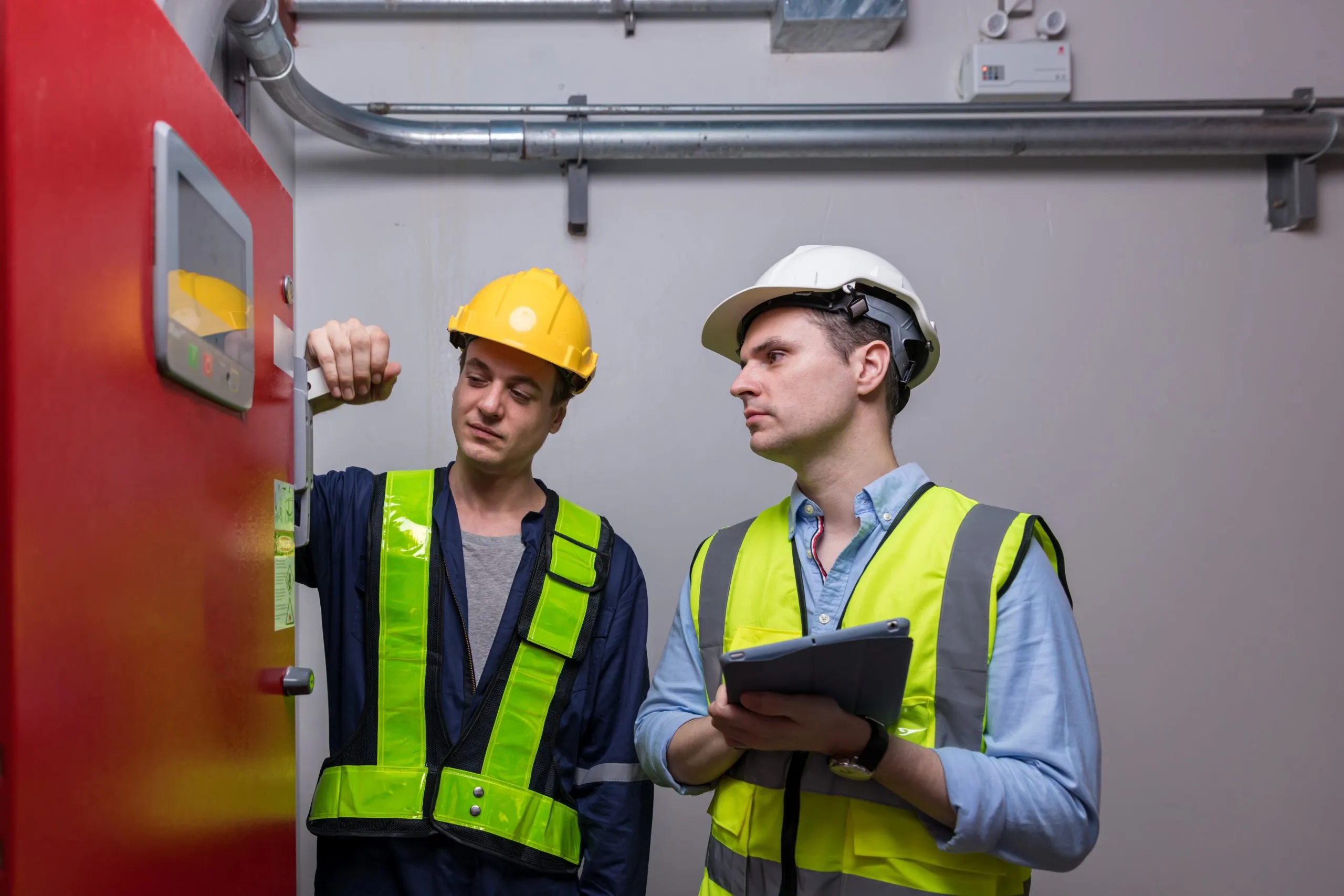
Controller & Alarm Verification: Automatic start on pressure drop, transfer to backup power, and every supervisory and trouble alarm get verified at each test, not just the pump itself. A pump that runs fine but won't start automatically hasn't actually been tested.
Documentation & Reporting: Suction and discharge pressures, voltage and amperage, pump speed at each flow rate, and time delay intervals for starting, stopping, and power transfer, recorded and retained, ready for your AHJ or insurance carrier to review.
Electric vs. Diesel: Different Pumps, Different Requirements
Not every fire pump in Orange County gets tested the same way. The right approach depends on the driver type and the assembly.
Electric Motor-Driven Pumps: Typically tested weekly for about 10 minutes, verifying the motor starts on pressure drop and runs cleanly. Some jurisdictions allow monthly testing if the pump runs on a reliable, dedicated power source.
Diesel Engine-Driven Pumps: Require a longer 30-minute weekly run to keep the engine, battery, and fuel system in working order, along with engine-specific checks electric pumps don't need: fuel level, coolant, oil pressure, and battery charge.
Jockey Pumps: Don't require the same regular performance testing as the main fire pump, but still need inspection to confirm proper function and correct pressure-setting alignment with the rest of the system.
Variable-Speed vs. Constant-Speed Assemblies: Constant-speed pumps are tested at no-flow, rated flow, and 150 percent of rated flow. Variable-speed assemblies are tested across more points, since their performance curve behaves differently across the range.
TRUSTED BY ORANGE COUNTY Business Owners
Fire Pump Service Areas in Orange County
We proudly deliver fire sprinkler services to every corner of Orange County, including:

Fullerton, OC
Brea, OC
Cypress, OC
Santa Ana, OC
Irvine,OC
Huntington Beach, OC
Garden Grove, OC
Costa Mesa, OC
Placentia,OC
La Palma, OC
Yorba Linda, OC
Stanton, OC
Tustin, OC
Buena Park,OC
Westminster, OC
Orange, OC
Industries We Serve
Commercial office buildings and business parks
Industrial facilities and warehouses
Schools, colleges, and universities
Retail centers and shopping plazas
Hospitals and healthcare facilities
Municipal and government properties
Active construction sites
Hotels and hospitality properties
Fire Pump Service FAQs
How often Does a Fire Pump Needs To Be Tested?
NFPA 25 requires a weekly no-flow churn test for most fire pumps, diesel pumps for at least 30 minutes, electric pumps for about 10 minutes, plus a full annual flow test that runs the pump through its complete performance range. Some jurisdictions allow monthly churn testing for electric pumps on a reliable power source.
Does Testing My Fire Pump Shut Down My Sprinkler System?
Weekly churn tests don't affect your sprinkler system, since the pump runs without discharging significant water. The annual flow test does take the fire pump offline for the test window, so we schedule it for a time that minimizes disruption and coordinate with building management in advance.
How Long Does an Annual Fire Pump Flow Test Take?
Most annual flow tests take a few hours, depending on pump size, the number of test points required, and whether it's a constant-speed or variable-speed assembly, which needs testing across more flow points than a constant-speed pump.
What Happens If My Fire Pump Fails Its Annual Test?
A pump that doesn't meet its performance curve, producing less than 65 percent of rated pressure at 150 percent flow, for example, needs repair or adjustment before it's returned to service. We identify the specific issue, whether it's mechanical wear, a control problem, or a water supply issue, and provide a clear path back into compliance.
Request a Free Quote
.png)

.png)


.png)