

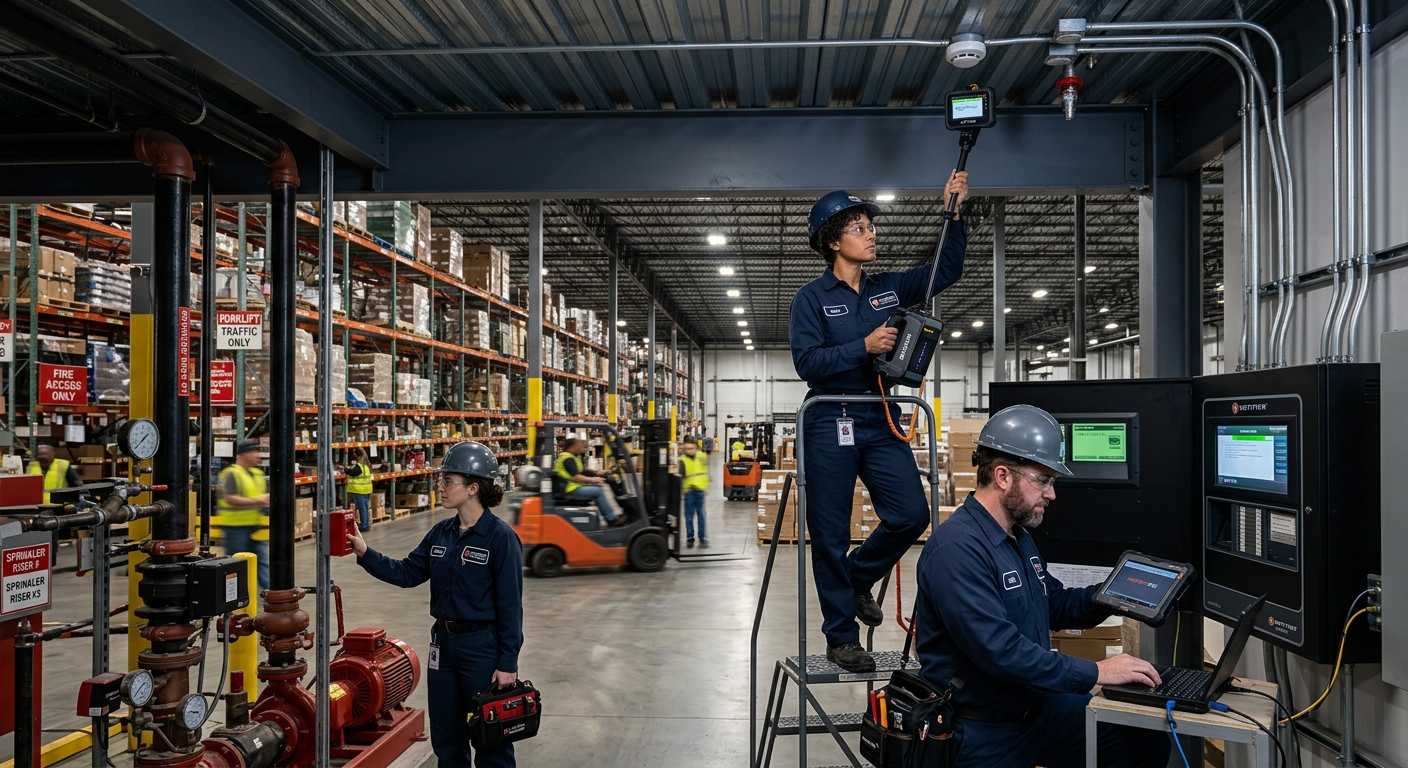
Quick answer: Under NFPA 101, a fire watch is generally required once a fire alarm system has been out of service for more than 4 cumulative hours in a 24-hour period (10 hours for a sprinkler system), and the clock adds up across multiple short outages in the same day, it doesn't reset with each repair attempt. California's Title 19 sets an even earlier trigger: the fire department and fire code official have to be notified immediately once a required system goes down, not after 4 hours pass. A valid fire watch means dedicated, trained personnel physically patrolling the entire affected area on a documented schedule, not your existing staff doing their regular jobs with one eye on the hallway.
If your system is down right now, the fastest path is the step-by-step section further down. If you have a little more time, here's the full picture of what's actually required and why.
What "Fire Watch" Actually Means
NFPA 101, the Life Safety Code, defines a fire watch as assigning one or more people to a specific set of tasks: watching for fire, notifying the fire department and building occupants of an emergency, controlling fire hazards, and assisting with evacuation. The key word is assigning. An earlier edition of the code puts it even more plainly: a fire watch requires some special action beyond normal staffing, like posting an additional guard to walk the affected areas.
That distinction trips up a lot of building owners. Your existing front desk staff or building engineer noticing things is not a fire watch. A fire watch is a dedicated, documented patrol function, performed by someone whose only job during that shift is watching for fire, with no other duties competing for their attention.
The 4-Hour Rule for Fire Alarms (and the 10-Hour Rule for Sprinklers)
This is the number worth getting exactly right. Under NFPA 101, Section 9.6.1.6, when a required fire alarm system is out of service for more than 4 hours in a 24-hour period, the authority having jurisdiction has to be notified, and the building either has to be evacuated or an approved fire watch has to be provided. Section 9.7.6 sets a separate threshold for automatic sprinkler systems: more than 10 hours in a 24-hour period before the same fire watch-or-evacuate decision applies.
NFPA 72 adds a related, slightly different notification trigger on top: authorities having jurisdiction generally need to be informed if a fire alarm system is inoperable for more than 8 hours, so they can determine what mitigating steps are appropriate, from simple occupant notification up to a full fire watch. In practice, most buildings should treat the 4-hour NFPA 101 threshold as the number that matters, since it's the one most consistently enforced and the one most local fire authorities reference directly.
The Misconception That Gets Property Owners in Trouble
Here's the part most guidance glosses over: the 4-hour and 10-hour windows are cumulative across a 24-hour period, not a single consecutive outage. If your fire alarm system goes down for 90 minutes in the morning during a repair, gets restored, then goes down again for another 3 hours that afternoon for a follow-up fix, that's 4.5 cumulative hours in the same 24-hour window, and the fire watch threshold has been crossed, even though no single outage lasted more than 3 hours.
Property owners who assume the clock resets every time a technician gets the system back online, even briefly, are the ones most likely to get caught out of compliance without realizing it. If your system has gone down more than once in the same day, add the outages together before assuming you're still under the threshold.
California's Starting Point Is Earlier: Notify Immediately
NFPA 101's 4-hour and 10-hour windows are the national baseline, but California's Title 19 sets a stricter starting point. Under Title 19, Division 1, Section 904.1(c), when a required fire protection system goes out of service, the fire department and fire code official have to be notified immediately, not after a grace period. From there, the fire code official decides whether the building needs to be evacuated or a fire watch put in place, and that fire watch stays active until the system is restored.
In practice, this means Orange County property owners shouldn't wait to see if a repair gets completed within 4 hours before making that call. Notification happens the moment monitoring or detection goes down, and the fire watch decision follows from there, on the fire code official's timeline, not a self-imposed one.
What Actually Counts as a Valid Fire Watch
A fire watch that would actually satisfy an AHJ inspection has several concrete requirements, not just "someone keeping an eye on things":
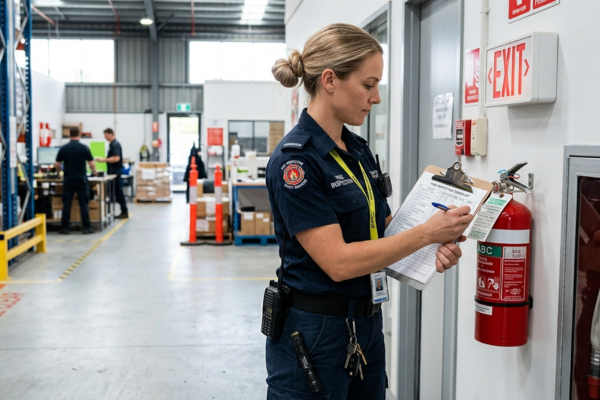
Trained personnel. Fire watch staff need to know how to recognize early signs of fire, how to use a fire extinguisher, and how to execute the building's evacuation procedure. This is typically a contracted security guard service or a fire protection contractor's staff, not an untrained employee pulled from another role.
Continuous patrol of the entire affected area. Every room and space covered by the impaired system, including unoccupied and hidden areas like storage rooms and mechanical spaces, needs to be part of the patrol route. Standing at a front desk doesn't meet this requirement.
A documented patrol interval. Standard commercial buildings commonly patrol on an hourly basis; higher-risk or higher-occupancy buildings, hospitals, high-rises, and assembly venues, are often held to a tighter 15-minute interval. The exact frequency is set by the AHJ or an approved fire watch plan, so it's worth confirming rather than assuming a default applies.
A direct way to notify the fire department. Fire watch personnel need a working phone or radio on them at all times, not a plan to walk back to an office phone if something happens.
A logbook. Every patrol round gets logged, kept on the premises, and made available for inspection. If a fire marshal or deputy state fire marshal asks for it and it doesn't exist or isn't current, that's treated as its own compliance failure.
Step by Step: What to Do the Moment Your System Goes Down
1. Notify your fire authority immediately. Don't wait to see if the repair finishes quickly. California's Title 19 requires notification the moment a required system goes out of service.
2. Call your fire protection contractor right away. A same-day service call to diagnose and repair the issue is almost always faster and cheaper than the cost of a multi-day fire watch.
3. Start tracking outage time immediately, cumulatively. Note the exact time the system went down. If it comes back online and drops again later the same day, add the durations together rather than treating each outage as a fresh clock.
4. Arrange a fire watch before you hit the threshold, not after. If repair isn't going to be completed well within the applicable window, get a fire watch in place proactively rather than waiting for a citation to force the issue.
5. Document everything. Keep records of when the system went down, when the fire authority was notified, when the fire watch started, and when the system was restored. This is the same documentation habit Title 19 already expects for routine inspections.
6. Confirm restoration with your fire authority before standing down the fire watch. The fire watch stays in effect until the system is verified back in service, not until a technician believes the repair is complete.
How Much a Fire Watch Actually Costs
Fire watch services are typically billed hourly per guard, and costs scale with how large the building is and how many patrol routes are needed to cover it within the required interval. For most single-guard commercial properties, a multi-day fire watch commonly costs more than the entire year's monitoring bill would have. This is the practical argument for treating fire alarm monitoring reliability as a cost-control issue, not just a compliance one: the fastest, cheapest fire watch is the one you never have to arrange because the system came back online before the threshold was crossed.
How to Avoid Needing One in the First Place
Most fire watch situations trace back to one of a few preventable causes:
A single point of failure in the monitoring path. A building running on a single, unsupervised communication path has no backup if that path fails. Dual-path monitoring, cellular plus IP running simultaneously, means one failure doesn't take the whole connection down and trigger the clock in the first place.
Slow response from a monitoring or service provider. The gap between a system going down and a technician arriving to fix it is where most fire watch situations actually happen. A provider offering 24/7 emergency service rather than next-business-day scheduling is often the difference between a same-day fix and a multi-day fire watch bill.
Aging equipment nobody flagged. Batteries, communicators, and panels that are past their reliable service life fail more often and take longer to source replacement parts for. Regular inspection and proactive replacement is cheaper than emergency repair under a fire watch deadline.
A Note on Fire Watches for Hot Work
Everything above covers fire watches triggered by an impaired fire protection system. There's a separate, related requirement for hot work, welding, cutting, and similar operations that can generate sparks or heat, which typically requires its own fire watch during the work and for a period afterward, commonly around 30 minutes, to catch any smoldering material before it becomes a fire. That's a distinct trigger from a system outage and worth knowing about separately if your building has ongoing construction or maintenance work planned.
Frequently Asked Questions
How many hours can a fire alarm be down before a fire watch is required?
Under NFPA 101, the general threshold is more than 4 cumulative hours in a 24-hour period for a fire alarm system, and more than 10 cumulative hours for a sprinkler system. California's Title 19 requires notifying the fire department and fire code official immediately once a required system goes out of service, rather than waiting to see if the 4-hour window will be exceeded.
Can my own employees perform a fire watch?
Only if they're specifically assigned to the fire watch as their sole duty during that time and are trained to recognize fire hazards, use an extinguisher, and execute evacuation procedures. An employee doing their normal job while occasionally checking the building does not meet the requirement. Most buildings contract this out to a security guard service or fire protection company rather than pulling staff off other duties.
What happens if I don't arrange a fire watch when one is required?
A fire code official can issue a citation, and depending on the severity, order the building evacuated or closed until the system is restored or a compliant fire watch is put in place. An insurance carrier can also treat an unmonitored, unwatched building as outside the terms of its policy if a fire occurs during that window.
Does a fire watch need to cover the entire building or just the affected area?
It needs to cover every area affected by the impaired system, which for most buildings with a single, building-wide fire alarm system effectively means the entire building. Larger buildings with zoned or partially independent systems may be able to limit the fire watch to the specific zone that's actually impaired, worth confirming with your fire authority rather than assuming.
How quickly can a fire alarm monitoring provider respond to get my system back online?
Response time varies by provider, which is exactly why it matters when you're choosing one before an emergency happens rather than during one. Spectrum Fire Protection provides 24/7 emergency response for monitored accounts specifically because the gap between an outage and a repair is the window a fire watch requirement lives in.
The Bottom Line
A fire watch exists because a building without a working fire alarm or sprinkler system has lost a real layer of protection, not because of paperwork for its own sake. The 4-hour and 10-hour NFPA 101 thresholds are cumulative, California's Title 19 starts the notification clock immediately, and a fire watch that would actually satisfy an inspection requires trained personnel, full coverage, a set patrol interval, and a logbook, not a favor from whoever's at the front desk.
The cheapest fire watch is the one you never need. Spectrum Fire Protection has provided 24/7 emergency response for Orange County commercial fire alarm systems since 1987. Visit our fire alarm monitoring page to see how dual-path monitoring and fast response keep most buildings from ever crossing the threshold, or contact us directly if your system is down right now.


.png)

.png)

.png)


.png)