

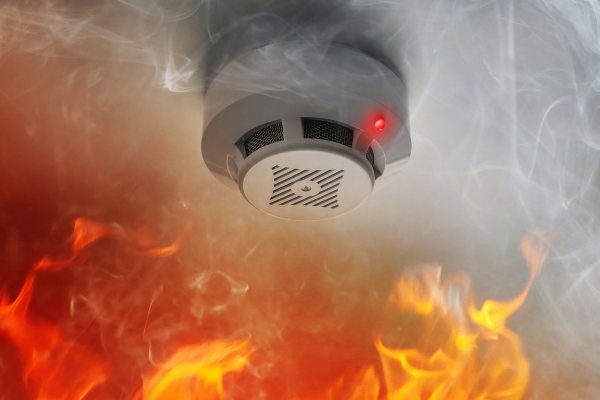
Fire alarm monitoring is one of the most misunderstood requirements in commercial fire safety. Building owners often assume that if they have a fire alarm system, they are covered. Others believe monitoring is optional or something only large commercial buildings need. In reality, California requires fire alarm monitoring for a wide range of commercial properties, and getting it wrong exposes owners to code violations, insurance problems, and slower fire response when it matters most.
The question of whether your building needs fire alarm monitoring depends on several factors: what type of occupancy your building is classified as, how big it is, whether it has fire sprinklers, what your local fire authority requires, and what your insurance carrier expects. These factors do not always line up neatly, and the requirement often comes from a source most owners never think to check.
This guide breaks down exactly when fire alarm monitoring is required in California, what monitoring actually is, and how to figure out whether your specific building needs it. After 39 years of fire protection work in Orange County, we have seen many owners caught by surprise when they learn their building has been out of compliance for years. This article helps you avoid that situation.
What Fire Alarm Monitoring Actually Is
Fire alarm monitoring is a service where a professional central station watches your fire alarm system 24 hours a day, 7 days a week, 365 days a year. When your fire alarm activates, the central station receives the signal within seconds, verifies the alarm is real, and dispatches the fire department to your property. All of this happens automatically, whether your building is occupied or empty.
This service is completely separate from having a fire alarm system. Your fire alarm system consists of the control panel, detectors, pull stations, notification devices (horns and strobes), and wiring installed in your building. That system by itself can make noise when a fire is detected, but the noise only helps people who are physically in the building or nearby. It does nothing to call the fire department.
Fire alarm monitoring connects your local fire alarm system to the outside world. Without monitoring, a fire that starts in an empty building at night could burn for hours before anyone notices and calls 911. With monitoring, the fire department is dispatched within seconds of the alarm activating. This difference can be measured in millions of dollars of property loss and, in worst cases, in lives.
Modern fire alarm monitoring uses UL-listed central stations that meet strict operational standards. NFPA 72 (the National Fire Alarm Code) governs how these stations must operate, how quickly they must respond to signals, and how they must document their activities. UL 827 is the specific standard that governs central station listing.
When Fire Code Requires Monitoring
California adopts the International Fire Code (IFC) and International Building Code (IBC) as the basis for state fire and building requirements, then modifies specific sections through the California Fire Code (CFC) and California Building Code (CBC). Both codes contain multiple provisions that require fire alarm monitoring in specific situations.
The most common code trigger for monitoring is a fire sprinkler system. When a building has fire sprinklers, the California Fire Code typically requires that sprinkler activation signals be monitored by a UL-listed central station. This applies even if the building would not otherwise require a fire alarm system. The reasoning is simple: sprinklers activating means there is a fire, and someone needs to dispatch the fire department automatically.
A second common trigger is building occupancy classification. California Building Code categorizes buildings into occupancy groups (A, B, E, F, H, I, M, R, S, U), and each group has different fire alarm monitoring requirements based on occupant load, building size, number of stories, and specific use characteristics. We break these down in detail in the next section.
A third trigger is building height. Any building over a certain height (typically 55 feet, but varying by jurisdiction) is classified as a high-rise and faces stricter fire protection requirements including monitored fire alarm systems. High-rise buildings in Orange County's downtown areas, the Anaheim Resort District, and larger commercial developments almost always require monitoring.
Fire Alarm Monitoring Requirements by Occupancy Type
California Building Code occupancy classifications drive most fire alarm monitoring requirements. Here is what typically applies to each major group. Individual jurisdictions may have stricter requirements, and specific building characteristics can change these thresholds.
Group A: Assembly Occupancies
Assembly occupancies include restaurants, theaters, houses of worship, community centers, banquet halls, and event venues. Monitoring is typically required when occupant load exceeds 300 people (for Group A-2 restaurants and drinking establishments) or 100 people (for other Group A occupancies). Sprinklered assembly buildings almost always require monitoring.
Group B: Business Occupancies
Business occupancies include offices, banks, medical clinics, professional services, and educational uses above 12th grade. Monitoring is typically required when total occupant load exceeds 500 people, when the building is over 3 stories, or when the building is sprinklered. Many Class A office buildings and medical office complexes fall into required-monitoring territory.
Group E: Educational Occupancies
Educational occupancies include K-12 schools, daycare centers, and similar facilities. Fire alarm systems are almost universally required in Group E buildings, and monitoring is required in most cases. Private schools, charter schools, and college buildings serving K-12 grades all face these requirements.
Group F: Factory and Industrial Occupancies
Factory occupancies (F-1 moderate hazard and F-2 low hazard) require monitoring based on size, hazard classification, and sprinkler status. Manufacturing facilities, food processing plants, and industrial operations often fall into required-monitoring territory.
Group H: High-Hazard Occupancies
High-hazard occupancies handle materials that are especially flammable, explosive, toxic, or reactive. These buildings almost always require monitored fire alarm systems regardless of size. Chemical facilities, certain research operations, and hazardous materials storage all fall into Group H.
Group I: Institutional Occupancies
Institutional occupancies include hospitals, surgical centers, nursing homes, assisted living facilities, and detention facilities. These buildings always require monitored fire alarm systems due to the vulnerable populations they house. The Joint Commission, CMS regulations, and California Department of Public Health add additional monitoring requirements beyond fire code.
Group M: Mercantile Occupancies
Mercantile occupancies include retail stores, shopping centers, and wholesale operations. Monitoring is typically required when total floor area exceeds 12,000 square feet or when the building is sprinklered. Most shopping centers, big-box retailers, and multi-tenant retail buildings require monitoring.
Group R: Residential Occupancies
Residential occupancies split into R-1 (hotels, motels), R-2 (apartments, condominiums), R-3 (single-family and duplex), and R-4 (small assisted living). Group R-1 and R-2 buildings over 3 stories or with more than 16 units almost always require monitored fire alarm systems. Hotels in the Anaheim Resort District and multi-family properties across Orange County typically fall into required-monitoring territory.
Group S: Storage Occupancies
Storage occupancies (S-1 moderate hazard and S-2 low hazard) require monitoring based on total storage area, storage height, and commodity classification. Warehouses over 12,000 square feet or with high-piled storage typically require monitored fire alarm systems, and the requirement expands significantly for high-hazard storage.
Group U: Utility Occupancies
Utility occupancies include private garages, agricultural buildings, and small accessory structures. Monitoring is typically not required for these buildings unless they are attached to or associated with a larger building that requires monitoring.
Insurance Company Requirements (Often Stricter Than Code)
Building owners often discover their fire alarm monitoring requirement not from the fire code but from their insurance carrier. Commercial property insurance policies typically include specific fire safety requirements that go beyond what fire code demands, and monitoring is one of the most common.
Insurance carriers require monitoring for two reasons. First, monitoring reduces claim severity by getting fire departments to the scene faster. A monitored building with a fire will typically see less damage than an unmonitored building with the same fire, which reduces the insurance carrier's exposure. Second, monitoring provides documentation of when fires occurred, when alarms activated, and when responders arrived, which reduces investigation costs and litigation exposure.
The specific requirements vary by carrier, policy type, and building characteristics. Some carriers require monitoring for any commercial property they cover. Others require it only for properties over certain values, in certain locations, or with certain occupancy types. Some carriers offer premium discounts for monitoring beyond what code requires.
The consequences of not meeting insurance monitoring requirements can be severe. Carriers can refuse to renew policies, cancel policies mid-term for non-compliance, deny claims when fires occur without required monitoring, or dramatically increase premiums at renewal. If your commercial insurance has been renewed in the past few years, check your policy documents for fire alarm monitoring requirements. Do not assume you know what applies.
Local Fire Authority Requirements
Beyond state code and insurance requirements, local fire authorities can impose their own monitoring requirements. In Orange County, OCFA member cities generally follow OCFA-adopted amendments to state fire code, while independent city fire departments (Anaheim, Fullerton, Santa Ana, Costa Mesa, Huntington Beach, Newport Beach, Garden Grove, Orange) may have their own local amendments.
Local amendments can require monitoring in situations where state code does not require it. Common examples include historic districts (where fire response time is critical due to older construction), specific neighborhoods where fire risk is elevated, buildings near critical infrastructure, or buildings that have experienced previous fires or false alarm issues.
Local fire authorities can also require monitoring during specific circumstances such as active construction on the property, tenant improvements, ongoing hot work operations, or when previous fire safety issues have not been fully corrected. These situational requirements are less common but still catch property owners by surprise.
The best way to verify local requirements is to contact your fire authority directly and ask about your specific building. Fire prevention bureaus can pull your property records, check applicable amendments, and give you a definitive answer. You can also contact us for a free consultation to review your building.Do not rely on general information from the internet for a decision this consequential.
Types of Fire Alarm Monitoring Systems
Fire alarm monitoring has evolved significantly over the past two decades. Understanding the different types helps you evaluate what your building has now and what it may need going forward.
Digital Alarm Communicator Transmitter (DACT)
DACT systems use two phone lines to transmit alarm signals to the central station. When an alarm occurs, the DACT dials the central station over the primary line, and if that fails, over the secondary line. DACT was the dominant monitoring method for decades and is still widely used, but it has significant limitations. Phone lines can fail during storms. Line quality has degraded as carriers moved from copper to VoIP. And copper phone service is being phased out across most of California.
IP-Based Monitoring
IP-based monitoring uses your internet connection to send alarm signals to the central station. Signals arrive in fractions of a second, and the system continuously verifies its connection to the central station (which DACT cannot do). IP monitoring is faster and more reliable than phone-line based methods, but it depends on your internet service. If the internet goes down, monitoring goes down.
Cellular Monitoring
Cellular monitoring uses commercial cellular networks (typically LTE) to transmit alarm signals. This method is fast, reliable, and independent of your building's phone or internet infrastructure. Cellular has become the standard for new installations because it avoids the reliability problems of phone lines and does not depend on internet uptime.
Radio Monitoring
Radio monitoring uses dedicated radio networks to transmit alarm signals. This method is highly reliable and independent of phone or internet infrastructure, but coverage varies by location and equipment costs are higher. Radio monitoring is used primarily in specialized applications and high-security buildings.
Dual-Path Monitoring
Dual-path monitoring uses two independent communication methods, typically cellular plus IP or cellular plus radio. If one path fails, the other continues transmitting. NFPA 72 increasingly requires dual-path monitoring for higher-hazard occupancies, and many insurance carriers prefer dual-path even when not code-required.
What NFPA 72 Requires From Monitoring Services
NFPA 72 sets the standards that legitimate fire alarm monitoring services must meet. When you contract for monitoring, verifying the service meets these standards protects you from monitoring failures that could invalidate your insurance or violate code.
UL 827 Central Station Listing
The monitoring service you use must operate a UL 827 listed central station. This listing verifies the station meets strict physical, operational, staffing, and technology requirements. Non-listed central stations do not meet code, and their monitoring services may not be accepted by fire authorities or insurance carriers.
Response Time Requirements
NFPA 72 requires central stations to acknowledge alarm signals within 30 seconds and dispatch fire department response within 90 seconds. Legitimate monitoring services track and report these response times. If your monitoring provider cannot demonstrate consistent NFPA 72 response time performance, they may not be providing compliant service.
Testing Requirements
Monitored fire alarm systems must be tested per NFPA 72 schedules, including verification that alarm signals actually reach the central station. Annual testing typically includes a full communication test between your fire alarm panel and the central station. Documentation of these tests must be maintained.
Documentation and Records
Central stations must maintain detailed records of every signal received, every response initiated, and every communication with the property owner and fire department. These records can be requested for insurance investigations, code compliance verification, and litigation support.
Consequences of Not Having Required Monitoring
Building owners who discover their monitoring is required often want to know what happens if they simply do not comply. The consequences fall into several categories, any of which can be more expensive than the monitoring itself.
Code Violations
Fire authorities can cite buildings for lacking required monitoring, with escalating penalties for continued non-compliance. Initial citations typically come with correction periods of 30 to 90 days. Failure to correct within the timeframe can result in administrative fines, cease-and-desist orders, or in extreme cases, occupancy restrictions.
Insurance Consequences
Commercial property insurance policies that require monitoring can be voided if the requirement is not met. This means a fire loss could result in claim denial, leaving the property owner personally liable for damages that would otherwise be covered. Even without a fire, discovery of non-compliance at renewal can result in coverage denial or premium increases.
Slower Fire Response
Without monitoring, someone must call 911 for the fire department to be dispatched. In occupied buildings during business hours, this usually happens quickly. In unoccupied buildings, on weekends, or at night, delays of hours are common. Fire size doubles approximately every 30 seconds during the growth phase. A monitored building sees fire department response in 5 to 10 minutes; an unmonitored building may not see response for hours.
Legal and Financial Liability
When a fire occurs in a building that should have had monitoring but did not, plaintiff attorneys focus on this non-compliance in liability cases. Property owners face lawsuits from injured occupants, adjacent property owners, tenants, and others who suffered losses due to slower fire response. These cases are difficult to defend when the underlying code violation is clear.
Business Interruption
Fires that would have been small if caught early become total losses when monitoring delays response. Business interruption from a monitored fire might be weeks. Business interruption from an unmonitored fire that grew to a total loss might be years, and in some cases the business never reopens.
How to Know If Your Building Needs Monitoring
Given the complexity of fire alarm monitoring requirements, how does a building owner know if their specific property needs monitoring? Several sources of information should be checked. Check Your Building Permits and Certificate of Occupancy
Your building's original construction permits and certificate of occupancy identify the building's occupancy classification, sprinkler status, and fire alarm requirements. These documents may specify monitoring requirements. Older buildings may have been permitted before current monitoring requirements existed.
Review Your Fire Alarm Inspection Reports
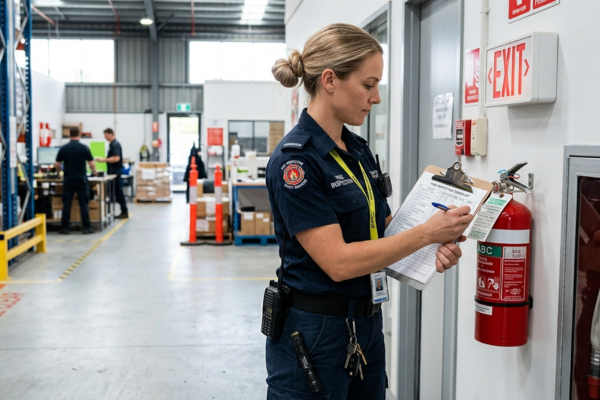
If you have a fire alarm system, your most recent annual inspection report should indicate whether the system is monitored and by whom. Reports from qualified inspectors may also note whether monitoring is required for your occupancy but currently absent.
Contact Your Local Fire Authority
Your local fire prevention bureau can review your building's status and confirm what fire code requires. They can also identify any local amendments that apply. A phone call to OCFA or your city fire department is often the fastest way to get a definitive answer.
Review Your Insurance Policy Documents
Your commercial property insurance policy contains specific fire safety requirements that must be met to maintain coverage. Review the policy declarations, endorsements, and any loss control reports for mentions of fire alarm monitoring requirements.
Consult a Fire Protection Contractor
A licensed fire protection contractor can review your building, existing systems, and applicable codes to give you a definitive answer about monitoring requirements. Spectrum Fire Protection offers free consultations that include monitoring requirement assessment for Orange County commercial properties.
How Fire Alarm Monitoring Actually Works
Understanding how monitoring works helps building owners appreciate what they are paying for and what to expect during an actual fire event.
When a fire alarm activates in your building (from a smoke detector, heat detector, sprinkler flow switch, or manual pull station), your fire alarm control panel processes the signal. The panel activates local notification devices (horns and strobes) so people in the building know to evacuate. At the same time, the panel transmits an alarm signal to the central station through whatever communication method you have installed.
The central station receives the signal, typically within a few seconds of activation. Trained operators immediately look up your account, verify the alarm type and location, and begin the response protocol. For most fire alarms, this means dispatching the fire department to your property without delay. NFPA 72 requires this dispatch to happen within 90 seconds of signal receipt.
While dispatching the fire department, the central station also begins contacting the property owner, designated contacts, and any others on your call list. This ensures that responsible parties know a fire may be in progress at their property and can meet the fire department on scene.
Throughout this process, the central station documents every action taken, every call made, and every response received. This documentation becomes the official record of the incident for insurance claims, code compliance verification, and any subsequent investigations.
After the incident is resolved, the central station follows up to confirm the alarm was real, was a false alarm, or resulted from a system malfunction. This information helps identify patterns and address recurring issues before they cause real problems.
Common Mistakes About Fire Alarm Monitoring
Building owners often make the same mistakes about monitoring. Recognizing these patterns helps you avoid them in your own operations.
Believing a Fire Alarm Is Enough
Many owners assume that having a fire alarm system means their building is protected. The alarm makes noise when it detects fire, but that noise only helps if someone is nearby to hear it. For most commercial buildings that are unoccupied part of the day (nights, weekends, holidays), an unmonitored alarm system provides no automatic fire department response.
Not Verifying Monitoring Actually Works
Some buildings have monitoring contracts in place but never verify the monitoring actually works. When a fire occurs, they discover the signal was never received, the phone line was disconnected, the internet was down, or the monitoring company went out of business. Annual monitoring testing (typically part of your fire alarm annual inspection) catches these problems before they matter.
Using Outdated Communication Methods
Buildings with DACT monitoring installed 15 or 20 years ago are increasingly at risk because copper phone service is being phased out across California. VoIP replacement lines often do not transmit alarm signals reliably. Buildings need to migrate to cellular or IP-based monitoring, but many have not because they are unaware of the issue.
Not Updating Contact Information
Monitoring services depend on current contact information to reach responsible parties during an alarm. Employees change. Phone numbers change. Property managers change. If your monitoring account still lists people who left years ago, the central station will not be able to reach anyone during an actual fire, and your response is compromised.
Cheaping Out on Monitoring Service
Some property owners choose the lowest-priced monitoring service without checking whether it meets NFPA 72 requirements or has proper UL 827 central station listing. These budget services often fail during actual emergencies. The savings of a few dollars a month become extremely expensive when the monitoring fails during a fire.
When to Add Monitoring to an Existing System
Buildings that currently do not have monitoring often need to add it. Common situations that trigger this need include several changes in the building's status or circumstances.
Building Renovation or Occupancy Change
Any significant renovation typically triggers a new permit, which in turn triggers a review of current code requirements. Buildings that were compliant when originally constructed may not meet current monitoring requirements after renovation. Similarly, changes in occupancy (converting office space to medical use, adding restaurant space to retail, etc.) can trigger monitoring requirements.
Insurance Carrier Change
Switching insurance carriers often means new requirements. A carrier that did not require monitoring may be replaced by one that does. Read new policy documents carefully at every renewal to identify new requirements before they cause problems.
After a Fire in the Area
Local fire authorities sometimes tighten requirements after significant fires in the community. Buildings that were previously exempt from monitoring may find themselves subject to new local amendments. Watch for updates to local fire code that could affect your property.
Building Sale or Refinancing
Real estate transactions and refinancing typically involve fire safety inspections that may identify monitoring gaps. Buyers, sellers, and lenders all want to know that fire safety systems are current, which often means monitoring must be in place.
Adding Sprinkler Systems
Any building that adds a fire sprinkler system typically must add monitoring at the same time. The California Fire Code specifically requires that sprinkler flow signals be monitored, so a new sprinkler installation without monitoring will not pass inspection.
Working With a Fire Protection Contractor
Adding monitoring to an existing fire alarm system requires a licensed contractor with the appropriate expertise. Spectrum Fire Protection now offers fire alarm monitoring services for Orange County commercial properties, backed by our 39 years of local experience and our C-10 electrical contractor license required for fire alarm work. We can assess your existing system, recommend the appropriate monitoring method, and connect your building to a UL 827 listed central station.


.png)


.png)

.png)


.png)